Woodlands.co.uk

Blog - Defra

Tree Health Pilot Scheme, targeting pests and diseases.  Finding out about the THP and SPHNs

Tree Health Pilot Scheme, targeting pests and diseases.  Finding out about the THP and SPHNs

by Ruth, 26 July, 2023, 1 comments

We first became aware of the tree health pilot (THP) scheme in 2021 when we received a Statutory Plant Health Notice (SPHN) for trees infected by one of the specified pests. The THP scheme has been designed to help slow the spread of pests and diseases affecting trees in England. There are grants available for larch trees with Phytophthora ramorum, spruce trees affected by Ips typographus, sweet chestnut trees with Phytophthora ramorum or sweet chestnut blight, oak trees with oak processionary moth (OPM) and ash trees with ash dieback. In our case, the Larger Eight-toothed Spruce Bark Beetle [Ips typographus] had been found in the Norway spruce and we were instructed to fell, move, process and destroy all spruce trees in the defined area of the wood. Strict but clear directions were given regarding the ‘how, when and where’ for the felling and processing. An initial site visit and ongoing support from the Forestry Commission and their Plant Health Forestry Team allowed us to follow the process of applying for a THP grant with ease. We submitted the application and received confirmation that the grant application was successful, at which point it was over to the team undertaking the felling. Once complete a final inspection from the Forestry Commission took place to ensure we adhered to the agreed method statement (as specified in the SPHN) and then we were able to submit the claim. This claim was processed and received – all within approx. 3 weeks. Fast forward to 2023. One of the woods we are managing in the southeast (which lies within the Ips typographus demarcated area) has a small stand of Norway spruce (approx. 0.5 hectare). Some of the trees are damaged, stressed or dead, and at risk of providing the right conditions for the eight-toothed spruce bark beetle. Advice from the Forestry Commission is: How does felling healthy spruce help the situation? This reduces the opportunity for colonisation [of the beetle] and may sometimes be required as a precaution to ensure that trees that could be potentially infested are removed. Removing spruce as a host from the demarcated area entirely will limit the possibility of populations of Ips typographus establishing and prevent spread to other areas. Predicted climate change means that what is currently healthy spruce may not remain so over future years, hence early felling could reduce the risk of these areas becoming future outbreak sites. We decided to investigate whether the THP scheme could support the proactive felling and extraction of the Norway spruce. We submitted an Expression of Interest for the THP scheme, the Forestry Commission undertook a site visit and were able to confirm there was no Ips found in the wood, and we were eligible to apply for the grant. We concurrently applied for a felling licence to clear fell the compartment of Norway spruce. It is worth noting, if an SPHN is served then normally there are no restocking conditions applied however restocking and maintenance grants are available to support restoring woodland In this case there are restocking conditions in line with the felling licence – an opportunity to plant and enable native broadleaves to thrive – that can also be grant-aided. An application for the THP scheme was submitted and we subsequently received a grant offer which was accepted. What next? A pre-felling survey was required in order to determine pest freedom for Ips typographus, and the authorisation for harvesting operations remains valid for 3 months. [caption id="attachment_40238" align="aligncenter" width="675"] Galleries formed by the beetles[/caption] An inspection for Ips typographus will need to take place before any felled timber can be taken off site – the advice is to fell and move the timber quickly rather than leaving stacks in the wood. The felling commences this week and should only take 5 days, and we plan to restock with native broadleaves over the winter. The Forestry Commission has produced a very useful guide Ips typographus: Guidance on the movement restrictions of spruce trees - Forestry Commission (blog.gov.uk) but throughout the whole process the Forestry Commission and Plant Health team have been really supportive and quick to answer queries about Ips, the THP grant scheme and the forestry operations. My advice if you have a stand of Spruce – is to speak to your Forestry Commission Woodland Officer about getting involved with the Tree Health Pilot scheme or visit their website to find out more: Tree health pilot scheme - GOV.UK (www.gov.uk) Last week we hosted a number of people from the Forestry Commission, the Plant Health Forestry team, Forest Research, and DEFRA. They are continually evolving the scheme to understand how best to provide this vital funding to woodland owners to enable and encourage management of spruce and Ips. We were pleased to say they have, however,  not found it in the wood!
Too hot, too dry.

Too hot, too dry.

by The blog at woodlands.co.uk, 4 August, 2022, 1 comments

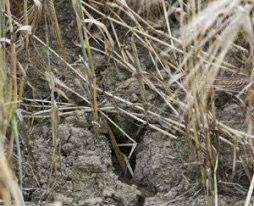
The UK has experienced some of the highest temperatures ever recorded in recent weeks, and in some parts of the country this has coincided with very low levels of rainfall.  It was the driest July on record for East Anglia, southeast and southern England, according to provisional statistics from the Met Office.  July was also the first time the UK exceeded temperatures of 40°C: on 19 July during an intense heatwave.   These conditions are not without their effects on wildlife.  Whilst warmth can accelerate plant growth and development, and also speed up insect life cycles, but the recent very high temperatures have significant effects, for example:  Drying of the soil As the soil dries, so earthworms burrow down deeper.  Insects, woodlice, spiders, etc avoid the surface of soil, hiding in litter so birds like song thrushes, robins and blackbirds struggle to find something to eat. Consequently, they are less likely to produce a second brood of chicks. This scarcity of invertebrates also affects ground feeding mammals, like hedgehogs (and badgers in more rural locations). Wetland areas dry out; for example grazing pasture that floods in winter - like the Ouse Washes.  This makes it difficult for birds to find food. Lack of water for plant growth Reduced rainfall and high rates of evaporation from the soil (and plants) mean that there is considerably less water available for plant growth.  The growth of leaves is reduced so that there is less material for caterpillars and other insects to eat.  With fewer leaves , there are also reduced surfaces for butterflies and other insects to lay eggs. High temperatures High temperatures and lack of water can affect many animals (including us). Rivers are running at very low levels and some have more or less disappeared.  DEFRA’s latest assessment of principal salmon rivers, such as the River Test shows that 74% of rivers in England are now ‘at risk’. The Environment Agency has noted the flow rate in the Waveney as 'exceptionally low', while other rivers in East Anglia like the Great Ouse  the  Yare, and the Little Ouse are described  as 'notably low'. The young of birds like swallows and swifts are at risk of fatal overheating (the young and old of various species are often more susceptible to heat stress).  Bumblebees cannot forage at high temperatures. Their bodies are covered with ‘hairy coats’ so they can fly when it is cool; but these become a burden in hot spells.High temperatures also shorten flowering time, and hence the availability of pollen and nectar for pollinators (bees, bumblebees, overflies, butterflies). Wild fires. [caption id="attachment_35352" align="aligncenter" width="650"] Woodland recovering from a fire[/caption] High temperatures increase the risk of wild fires, especially on moorland and heathland.  These fires can spread quickly and over wide areas. Young chicks (e.g. Dartford Warblers), eggs, snakes, lizards, small mammals, dragonflies and butterflies are lost.  Accumulated nutrients and stored carbon are lost from the ecosystems. The site of Springwatch Wild Ken Hill in coastal Norfolk suffered an intense fire during the recent hot spell.  The area is home to turtle doves, the grasshopper warbler and other rare birds.   It is hoped that most escaped but mammals, reptiles and amphibians, late-nesting and juvenile birds may not have fared well.   Grassland and woodland fires have also been reported at various sites across the country.  The UK is not alone in facing these problems, Spain, Italy, Portugal, Greece, France and Germany have all lost many thousands of hectares to wildfires. [caption id="attachment_38699" align="aligncenter" width="700"] what was once was grass .....[/caption]  
Rethinking the British countryside - more trees, fewer sheep?

Rethinking the British countryside – more trees, fewer sheep?

by Angus, 25 July, 2022, 0 comments

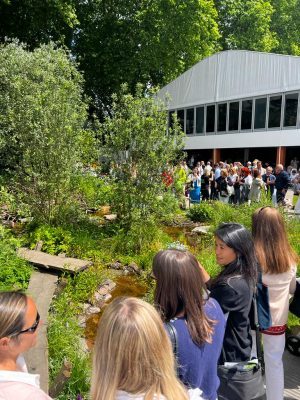
Perhaps it all started with a "No-shave November" (or "Movember") when men realised that they could go for a month without shaving and no one would mind.  It may also have been good for them as they thought more about men's health and they let nature take its course.  A few years later people started wondering about other habitual cutting, such as mowing their lawns religiously.  "No Mow May" was invented in 2019 by Plantlife with the idea that less cutting of grass would allow wildflowers to flourish.  The official reason for this concession to conservation was to allow the wild flowers and pollinators to thrive, but it may also have become popular because it allows maintenance teams to work a bit less hard during May.  In any event it's now so popular that about 36% of lawn owners now join in every year.  But it's spilled over well beyond just the month of May - many owners of lawns have questioned whether they really want so much short grass when alternatives are more interesting - and better for wildlife.  Even at the 2022 Chelsea Flower show there were several gardens demonstrating rewilding. So rethinking the scorched earth policy has now spread from men's chins to gardens and parks - but will it spread further?  What about our hillsides? For eighty years we have been intensively grazing these with sheep and cattle as if our lives depended on it - which maybe they did in 1942, when war-time convoys of food from the US were being torpedoed.  Even after grazing ceased to be a necessity sheep continued to dominate our hillsides with grants to sheep farmers making it profitable to use their four-legged lawnmowers at scale.  Farmers even grubbed out hedges in the 1970s, described by Oliver Rackham as the locust years, which made the countryside look even neater and tidier.  According to DEFRA there are currently about 32 million sheep in the UK, a third of them in Wales.  Land used for rough grazing and grassland makes up about 50% of the UK's total land area.  So for several generations now the UK has used half of its land to raise animals for eating, but times are changing rapidly.  Whereas those with meat-free diets used to be a tiny minority their numbers are growing rapidly - already at least 14% of the population is meat-free and for those of university age (18-23) the number is up to 25%, and rising. The combination of reduced demand for meat and increasing awareness that we can happily stop cutting the grass is prompting a rethink of how we use the British countryside.  Much of the grazing land is not suitable for growing agricultural crops so that leaves owners wondering what to do with their land.  Some are choosing rewilding in various ways but usually with far fewer grazing animals, longer grass and more wildflowers. [caption id="attachment_38426" align="aligncenter" width="600"] 'rewilding' of roadsides and verges[/caption] Others are planting trees and creating new woodlands.  Where the land is sold it's often to people who want to plant trees or simply to fence out sheep and allow "natural regeneration" allowing trees to self-select and grow on their own.  It's an appealing project for many families to take on 5 acres of grazing land, plant trees and convert it into a wood of their own. This re-evaluation of how grazing land is used is happening right across the world as plant based diets become more popular and there is potential to re-establish wilder habitats.  It's good for carbon emissions - not only because woodland fixes carbon but also because rewilding cuts the number of grazing animals releasing methane: belching by sheep and cattle creates a third of the total emissions of UK agriculture. Despite this, there may be resistance from the powerful National Union of Farmers which mostly represents bigger farmers and which promotes farming as an industry.  Farmers already complain about reductions in headcounts of livestock - since the peak in 1992, sheep headcount is down by about a third.  But it's also about the way the grant system is structured - millions of sheep only exist because of the farm payments, financed by taxpayers, and the condition of receiving these annual grants is that "unwanted" vegetation and wild plants have to be removed.  So even if the sheep don't chomp up biodiversity the farmers have to do it to get their grants. [caption id="attachment_21282" align="aligncenter" width="600"] Sheep grazing around solar array[/caption] Even beyond this suppression of diversity, sheep and cattle are damaging in many other ways such as compacting the soil which contributes to flooding and droughts. Meanwhile the number of men keeping their beards after no-shave November has increased and there are more gardens and parks with wild meadows so maybe the much bigger revolution in rural land use might follow. Governments have had it within their power for decades to reform the grant system but real change may be driven by people's behaviour - eating less meat and planting up their own woodlands.

Next Page »