You are here: Home > Blog

woodland rss feed

Woodlands.co.uk

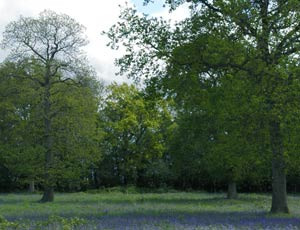
The NHM Bluebell Survey – update

The NHM Bluebell Survey – update

by Chris ~ 16 May, 2012 ~ comments welcome

Back in 2006 (and 2007), the blog posted information about the Natural History Museum Bluebell Survey.

This is an ongoing project, apart from studying the distribution of native and spanish bluebells (and the hybrids, which now may be more common than their Spanish ‘parent’) – the project is also looking at the flowering time of the bluebell (in relation to climate change / variability).  Full details of the project  (and lots of information about bluebells) can be found at the NHM website. Read more…

Climatic debt

Climatic debt

by Chris ~ 28 February, 2012 ~ Comments Off

Butterfly Conservation UK and the Centre for Ecology and Hydrology have been involved in the monitoring the status of butterflies through various citizen science schemes*.   UK butterflies (and indeed, birds) are probably the best-studied wildlife groups thanks to the dedication of an enormous workforce of highly skilled and committed volunteer recorders. Butterflies and birds have been observed and recorded in detail for many, many years and these detailed records and counts yield an invaluable resource of information for the analysis of population change(s).

A recent report indicates that some 70% or more of our butterfly species are in decline and that the geographical distribution of many has contracted. Read more…

Wildlife organisations

Wildlife organisations

by Lewis ~ 17 September, 2011 ~ 2 comments

For those wanting to follow up on the different forms of wildlife in their woodland, the following organisations / societies might be of interest / use.  
For each there is a link and a snippet from the organisation’s website.

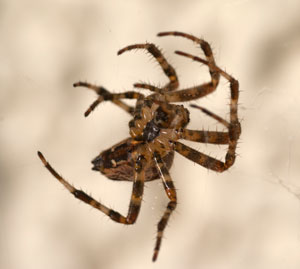
Website of the British Arachnological Society (wiki.britishspiders.org.uk). “Here you can find information on those fascinating animals, arachnids. Our emphasis is on British spiders but we don’t exclude other arachnids such as Harvestmen (opilionids)Pseudoscorpions and Scorpions”. Read more…

Nightingales

Nightingales

by Chris ~ 16 May, 2010 ~ 4 comments

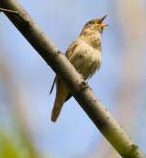
Nightingales are migratory birds and fly into the U.K. in the Spring, having spent the winter in Africa. The nightingale is particularly well known for its song; (a wma file of which can be found here).  However, not everybody in the UK is likely to hear them singing.  It is not found in Scotland or Wales, and in other places its numbers have fallen quite dramatically.  It is now mainly found in the South-East, especially Kent, Sussex, Suffolk and Norfolk. A sighting is unlikely; nightingales are shy, drab brown birds who seek the dense vegetation described below. Read more…

Woodland Birds in Decline?

Woodland Birds in Decline?

by catherine ~ 22 August, 2008 ~ 3 comments

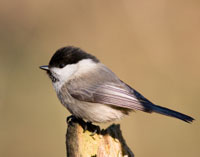
The latest Breeding Bird Survey for the British Trust for Ornithology in partnership with The Royal Society for the Protection of Birds and the Joint Nature Conservation Committee, has highlighted a significant decline in woodland bird species.  The annual survey has revealed numbers down by more than 50% in several species, the worst hit being the willow tit down by 77%.  Read more…

Can you help with more surveys?

Can you help with more surveys?

by mike ~ 13 June, 2006 ~ comments welcome

Apart from the bluebell and ladybird surveys, various other learned bodies / organisations are appealing for help in recording certain insects. For example, the British Dragonfly Society Biological Records Centre would like people to look out for a damselfly called the banded demoiselle.

The adult banded demoiselle may be found flying (between May and September) near rivers, canals and streams with abundant waterside vegetation. Read more…

Lethal ladybirds?

Lethal ladybirds?

by Chris ~ 6 June, 2006 ~ 7 comments

There are presently some 46 species of ladybirds found in the UK. For an excellent sheet on identifying the most common species, click here.

However, some of these species may now be under threat due to the arrival of the Harlequin Ladybird. This was introduced to the United States in 1988 and now is the most widespread ladybird there. A single female can lay a thousand eggs. To learn how to identify this new arrival click Read more…

© 2013 Woodland Investment Management Ltd | Disclaimer | Contact us | Blog powered by WordPress