Managing Your Woodland For Birds
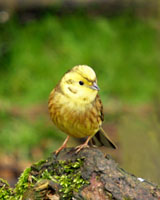
Managing your woodland to conserve its bird population and encourage species which are struggling is possible with a little planning.
Bird Conservation and Woodland Management
Basic advice on managing woodland for bird conservation is available through the RSPB’s comprehensive website. The Bird Conservation Targeting Project is a nationwide survey of the population distribution of wild birds. Maps are already available for England, with maps of Wales and Northern Ireland available in March 2008, and maps for Scotland to follow. These are accompanied by information on how to manage farm and woodland to encourage particular species. Follow the links to View targeting maps and management advice. For example, select “Lesser Spotted Woodpecker” in the “Species” drop-down box and then you can view distribution maps and an information sheet (downloadable pdf files) with details on habitat and advice on management to encourage this particular species.
Feeding Back Information On What’s In Your Area
The RSPB also encourages you to contribute to the Project by feeding back information on what birds you have seen. This information is crucial to target properly government grant schemes, such as the English Woodland Grant Scheme, and conservation initiatives. The RSPB says that, “experience has shown that species recovery is enhanced when wildlife friendly management focuses on the sites where the largest and most viable populations of most vulnerable species occur” so do check the maps of your area. 30 vulnerable species are currently being targeted, including:
- Firecrest
- Hawfinch
- Lesser redpoll
- Lesser spotted woodpecker
- Linnet
- Long-eared owl
- Nightingale
- Nightjar
- Pied flycatcher
- Redstart
- Song thrush
- Spotted flycatcher
- Tree pipit
- Tree sparrow
- Turtle dove
- Willow tit
- Wood warbler
- Woodcock
- Woodlark
- Yellowhammer
Some of these species prefer a totally woodland habitat, but many like the cover of woodland edges with open land around for feeding.
Recording your sightings is easy to do online with the BTO’s Birdtrack . Once you have registered (you only need to do this once), you can go back as often as you like to record your sightings. You can also view and manage your records.
Other useful websites and further reading:
Forestry Commission: guide to managing deadwood, “Life in the Deadwood” ,
“What’s Happening to our Woodland Birds?”, a re-survey carried out in 2003-4, “The Silviculture and Management of Coppice Woodlands” by Ralph Harmer, £12, available to order from the FC at [email protected]
DEFRA for advice on grants and funding
Find your local RSPB group at http://www.rspb.org.uk/localgroups/
Comments are closed for this post.
Discussion
[…] information about managing your woodland for birds – see Catherine’s post : http://www.woodlands.co.uk/blog/woodland-activities/managing-your-woodland-for-birds/AKPC_IDS += […]
You may be interested to know about a free, day conference on Woodland and Birds which is being organised by the RSPB, Natural England and the Forestry Commission on Friday 16 May in Taunton.
Presentations explaining the conservation status of different woodland birds and research into reasons for declines in many species.
Discussion workshops to determine the various constraints and opportunities for management of woodlands in SW England.
Places are limited so pre-booking is essential. To register for a place, please e-mail direct to [email protected] with your full contact details and a very brief description of your interest (eg, if you are an owner or advisor or contractor, brief details of type, size and location of `your’ woodland, including if in any management scheme and whether it is UKWAS certified). This information will enable the event organisers to put delegates into the most appropriate workshop.
Confirmation of allocation of places will be e-mailed in April and full details of the event in early May.
RSPB also do an Exellent guide called:
Managing Woodland for birds.
Tells you what kinds of birds you find where, and the best thing for us is the coppice guide – what age of coppice regrowth is good for who!
Good stuff
[…] gardens. It is also possible to encourage birds into our gardens, just as Catherine wrote about managing woodlands for birds. Many ‘everyday’ urban species of bird populations have declined in recent times: […]
Feed The Birds? | The Woodlands.co.uk Blog
4 October, 2011