Woodlands.co.uk

Blog - Search results

woodlands web updates : 24

woodlands web updates : 24

by The blog at woodlands.co.uk, 25 April, 2023, 0 comments

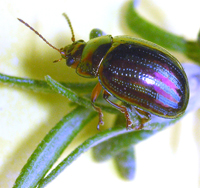
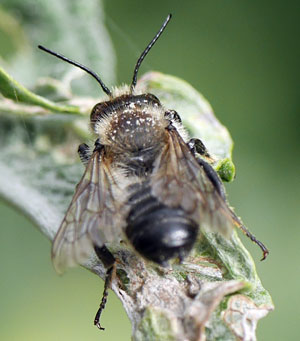
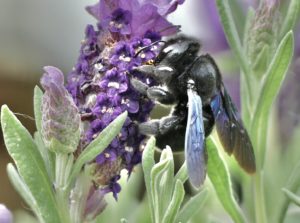
Electric bees ? Both bumblebees and flowers carry an electric charge.  Flowers have a weak negative charge, whilst the bees have a positive charge.  The attraction between these two opposing electric fields may help the bees sense flowers.  The electric charge of a bee may even stimulate a flower to release a burst of scent, aka volatile organic compounds.  This was true for petunias, but not snapdragons.  When a bee has visited a flower, the negative charge is briefly lost - maybe a signal to tell other bbees not to visit? Other work by Bristol University has indicated that synthetic fertilisers and pesticide can interfere with a flower’s electric charge for some time after spraying, and that this can modify the foraging of bumblebees. "Black bees" The black bee, Apis mellifera mellifera, faces a number of threats like the domestic honey bee.  It is also known as the European Dark Bee or the Black German Bee. It has been present since the retreat of the last Ice Age, but its distribution has become restricted as a result of habitat loss, parasitism by Varroa mites and viruses. The black bee can be distinguished from other honey bees by its stocky body and sparse abdominal hair (which is brown), and overall dark coloration - so they appear black or dark brown. Recent research (using DNA analysis) has shown that black honeybees can be found in many locations in Ireland and are not extinct, as previously suggested  Black bees are noted for their longevity and hardiness (ability to cope with winter temperatures); it is possible that if winters become shorter / milder that this change may not favour black bees. Weird weeds? It seems that our gardens may be home to ‘new’ or unusual species of plants.   The Royal Horticultural Society would like gardeners to report on interesting ‘weeds’ that might find as they could be rare plants or plants growing in unusual places / areas.  You are asked to take photographs of anything that you find interesting, and upload the images to iNaturalist. Reporting on unusual plants is not the only thing that the RHS is interested in. There are other garden projects that one can contribute to, for example, reporting sightings of garden pests such as the berberis sawfly, cellar slug, hemerocallis gall midge, lily beetle, rosemary beetle and spittlebug. Mycorrhizal networks. A common mycorrhizal network (CMN) is when fungal hyphae connect the roots of many plants (either of the same or different species) below ground.  They have attracted considerable attention in recent times (woodland wide webs), with claims, for example, that resources are transferred through CMNs to increase seedling performance and mature trees send resources / defence signals to offspring etc.  However, a recent report in Nature has suggested that there is a ‘bias’ towards citing the positive effects of CMNs and that, to date, knowledge of common mycorrhizal networks is limited.    
Woodland web updates : 23

Woodland web updates : 23

by The blog at woodlands.co.uk, 7 April, 2023, 0 comments

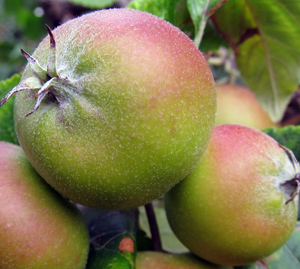
No match for nonpareil ? Many varieties of apples have been around for centuries.  For example, the nonpareil which was bred (in France) back in 1696, the Egremonet russet much admired for its flavour and appearance dates from Victorian times. The  Cox's Orange Pippin is a cultivar first grown at Colnbrook in Buckinghamshire by Richard Cox.   By end the of the C19th, the Cox’s pippin was one of the most popular apples. However, there is a concern for these heritage apples in our changing climate.  In recent years, we have experienced warmer and wetter winters.  Such winters do not offer enough chilling hours for these trees.  Many trees need a period of cold in the winter months, where the temperatures are below 6oC but above freezing.  About 1000 chilling hours are needed for apples such as the nonpareil.  However, winters are present are offering approximately 600 chilling hours. Gala apple trees (developed in New Zealand) need only 600 chilling hours but it might be that they will not respond well to the wet winters we (currently) experience.  Some feel that they do not offer the complex flavours of ‘classic apples’.   Kew Gardens has now planted a varied selection of apple trees One third are heritage apple trees One third are ‘new’ varieties needing fewer chilling hours One third are varieties from countries warmer than the UK Over the coming years, the trees will be monitored to see which ‘do best’ in terms of cropping in London’s warming temperatures. The apple-growing industry in the UK is under considerable strain, with many growers unable to afford replanting this year.  Growers ‘refresh’ their orchards regularly, replacing older trees with new ones, but now many cannot afford to do this.   The sector is struggling with  a shortage of workers - made worse since the UK's exit from the European Union  high energy costs low returns from the supermarkets that buy their produce The option to ‘buy British’ may become a much rarer option.   Further details here Recovery after forest fires. Bacteria and fungi are the first to start rebuilding from the charred remains of burnt forest and woodland.  The number and variety of microbes falls dramatically after a fire.  Then, there was a microbial succession in the burned soil, that is, the number and types of bacteria and fungi changed quite quickly, with fast growing types able to advantage of the reduced competition for resources.  The situation is not dissimilar to what happens to our gut microbiome when we have to take antibiotics.  Antibiotics ‘knock out’ many of the useful bacteria in our gut, but gradually the microbiome is re-established.   Reporting on weeds. It seems that our gardens may be home to ‘new’ or unusual species of plants.   The Royal Horticultural Society would like gardeners to report on interesting ‘weeds’ that might find as they could be rare plants or plants growing in unusual places / areas.  You are asked to take photographs of anything that you find interesting and upload the images to iNaturalist. Reporting on unusual plants is not the only thing that the RHS is interested in. There are other garden projects that one can contribute to, for example, reporting sightings of garden pests such as the berberis sawfly, cellar slug, hemerocallis gall midge, lily beetle, rosemary beetle and spittlebug.
Plant signals.

Plant signals.

by The blog at woodlands.co.uk, 8 March, 2023, 0 comments

Many plants have a distinctive scent, think of sweet peas, jasmine or honeysuckle, or stand next to a pine tree on a warm, summer’s day.  The scent is due to the release of volatile organic compounds (VOC’s, often oils), produced by specific tissues or glands.  Often it is the nectaries within flowers that produce the scent, apart from their ‘job’ of producing the sugary nectar.  The nectaries may be found on almost any structure within a flower - petals, sepals, stamens, ovary*. The location of nectaries varies from species to species.  There are other structures that can produce scent, for example, trichomes, and osmophores. Osmophores are clusters of cells specialising in scent production.  Any part of a plant can release scent, for example, the leaves of eucalyptus, lavender or myrtle. The scent of a plant may include a variety of VOC’s, indeed there may be dozens of different organic compounds contributing to a particular scent.  Many of these compounds are terpenoids (isoprenoids).  They contribute to the scent of eucalyptus oil, lavender oil and the flavours of cinnamon and ginger. Scent may have a number of functions.  It may be released to attract specific pollinators - moths, butterflies, bees, hoverflies etc. (who have learned to recognise the scent).  The production of VOCs can be modulated, for example,  scent production may be turned off when a flower is pollinated.  A scent may also unfortunately be a signal to herbivorous insects to ‘come and feed’. So, scent have positive or negative effects. A scent may be produced to deter herbivory by certain insects.  Sometimes, plants have a different approach. For example,  when pollen beetles feed on oil seed rape, the rapeseed releases VOCs which attract the attention of other insects.  Specifically, those that will lay their eggs in the larvae of the pollen beetles. These insects are usually from the same family as bees, wasps and ants - the Hymenoptera (insects with membranous wings and a ‘narrow waist’).   The pollen beetle larvae are then ‘eaten’ from the inside by the developing parasitoid larva.  The release of VOC’s is affected by a number of factors temperature, light, circadian rhythms, physical damage and drought.  As the temperature increases so the amount of VOCs released increases (usually). This may be experienced in coniferous woodland.  Conifers give off a variety of volatile oils (i.e. biogenic VOC’s) that contribute to a unique aroma and the formation of aerosols found in the air in and around such woodlands and forests; it is most noticeable in warm weather.  [An aerosol is a ‘mixture’ of very small particles (solid or liquid) in air; other examples of aerosols include mist, cigarette smoke, or car exhaust fumes]. In snapdragons, the most scent is emitted at noon which tends to coincide with pollinator activity, in contrast tobacco plants scent release is in the evening / night when hawkmoth are active.  Drought reduces the ability of plants (like rosemary and thyme) to produce / release VOC’s, this in turn, has been observed to affect which pollinators visit their flowers.  Nectaries located within the flowers of a plant are sometimes referred to as nuptial nectaries, whereas those found in other parts are termed extra-nuptial.