Fires, drought and losing trees.
by The blog at woodlands.co.uk, 16 April, 2024, 1 comments
Forests, woodlands, trees are vital to life. They absorb carbon dioxide, they release oxygen, they offer food and shelter to countless species (including us). The global forests (equatorial to boreal) play an important role in mitigating climate change due to fossil fuel emissions. However, many forests and their particular tree species are being threatened by the world’s warming climate. Recent years have seen catastrophic fires in many parts of the world, from Canada, Siberia, Sweden to Australia.
In 2019/20, intense fires caused extensive damage to the Eucalypt forests in Australia. Eucalypt rich woodland / forest is likely candidate for fire because the leaves of Eucalypts produce volatile and highly combustible oils. The litter underneath such trees is rich in organic compounds such as phenols, which slow down the microbial breakdown of the dead leaves. Consequently, a layer of dry, eminently burnable material builds up. In Eastern Australia, some 40+% of the native eucalypt forests suffered severe canopy damage.
Trees on the west coast of America have also been subject to intense fires. Their susceptibility to fire has been accentuated by drought across the region. Analysis of the growth rings of trees, such as the Red Cedar (in areas such as Oregon) show that trees suffered reduced growth in the years prior to their death. Drought stress increases the probability of attack by bark beetles and pathogens. In California, many native species such as white fir, red fir and ponderosa pine have died and provided material for the fires that were to follow. Fires in 2020/21 swept across the region, destroying vast swathes of forest. The fires were of such an intensity that even Giant Sequoias were killed.
[caption id="attachment_40596" align="aligncenter" width="675"] Forest Fire in Canada[/caption]
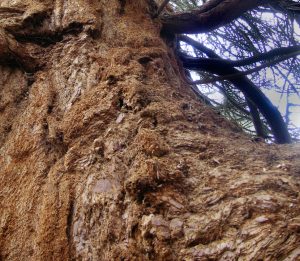
Sequoias had been thought ‘indestructible’ as they have a thick bark, which protects the inner living tissue, plus their canopy is usually well above the flames on the forest floor. In the past, the fires burned litter on the ground, removing competitors, and releasing nutrients. The heat would also open up the cones of the Sequoias releasing their seeds, so young trees could establish. Some of the Sequoias that died in these recent fires had stood for centuries and survived many wildfires.
In the past, the amount of litter / dead material was limited. Indigenous people managed these forests (reducing the fuel load) to create forage for game animals, so that wildfires were of mild to moderate intensity. Now, the fires are different - they are intense. There is more material to burn - including the trees that have already died from drought and disease. The fires can now reach into the canopies of the Sequoias. One of the Sequoias that died was the King Arthur tree - the 8th largest giant redwood in the world; it died in the Castle Fire of 2020.
The drought driven deaths of many tree species is probably the start of a longer lasting shift in the growing range of the affected trees. Temperature and water availability are two of the major determinants of the range of a given species. It is possible that trees may ‘move’ northward and upward (grow at higher elevations). Trees will begin to ‘die off’ at the edge of their range / lower elevations as drought / warming increases. Die offs may also affect commercial plantations of species such as Douglas fir.