Woodlands.co.uk

Blog - Flora & Fauna

Woodland updates

Woodland updates

by The blog at woodlands.co.uk, 26 April, 2026, 0 comments

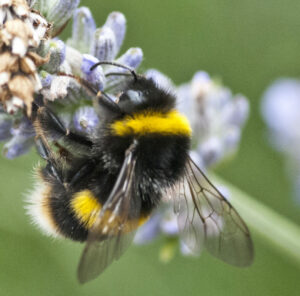
Lighting up the trees. When there is thunder and lightning, there is sometimes a phenomenon known as St Elmo’s Fire.  It appears as an eerie ‘violet / blue ’ light on the masts of ships’ or church spires and it may be accompanied a slight buzzing sound. Sometimes it can be seen on the horns or antlers of animals  and in the right conditions may light up forest canopies with a faint, flickering eerie glow.   This has now been investigated by Patrick McFarland (and colleagues) - a meteorologist at Pennysylvania University. He has produced photographs / videos of coronae (electrical discharges) on the very tips of trees during thunderstorms.  Back on campus, the phenomenon was reproduced by exposing a branch from a spruce tree to a strong electrical field created between charged metal plates.  The waxy tips of the spruce needles glowed with a purple light; an  artificial St Elmo’s Fire was produced . (Further details to be found in the New York Times or at Wikipedia : https://en.wikipedia.org/wiki/St._Elmo's_fire ). Interesting fact : In 1751, Benjamin Franklin hypothesized that a pointed iron rod would light up at the tip during a lightning storm, similar in appearance to St. Elmo's fire.   A ray of hope ? A survey of land holdings in Scotland, where nature restoration / rewilding has been encouraged, has indicated that bird and insect pollinators are flourishing.  The study involved the Northwoods rewilding network; this includes some 100 farms, crofts and woodland sites - which are quite widely dispersed but covering more than 30,000 plus acres.  The survey compared areas of the rewilded land with neighbouring areas that were managed more conservatively / traditionally.  Bird populations were assessed at five of the sites and butterflies and bumblebees at six.   The birds doing well in such areas included the spotted flycatcher, cuckoos and woodcocks.  Butterflies that were recorded were the painted lady, green veined white, red admiral, scotch argus butterfly and the peacock. Bees included the buff-tailed bumblebee, the common carder, early and tree bumblebees.   Further details in The Scotsman [Katharine Hay, Friday 6 March 2026] or Apple News : https://apple.news/ AWyx1qpa9SbeOg-2HGmMtXw [caption id="attachment_38081" align="aligncenter" width="675"] Bumblebee visiting foxglove[/caption]
The air that we breathe.

The air that we breathe.

by The blog at woodlands.co.uk, 24 April, 2026, 0 comments

When you step into your garden during the Spring or Summer months, you might be aware of the scent of honeysuckle, lavender or indeed an old fashioned rose.  Similarly, in a woodland the scent of pine or other conifers may permeate the air.  These various scents often involve a group of compounds known as the terpenes.  The resin that exudes from pine bark is rich in terpenes. Terpenes are used in the building of many complex organic molecules and contribute to the make-up of volatile, organic compounds [VOCs] - produced by many plants.  The scents released from nectaries or other parts of flowering plants are often associated with attracting pollinating insects, but they can serve other functions.  For example, some VOCs released by a plant may warn surrounding plants of attack by insects. However, as you walk down the street, the air is rarely filled with these pleasant, natural scents. Instead the fumes of traffic, factories and industry assail us.  They are the exhaust emissions from cars, lorries, buses etc, plus the various bits and pieces [particulates] that are released from the ‘rubber’ of car tyres, brake pads etc.  The damaging effects of particulates are now well documented.  The effects include lung disease such as chronic obstructive pulmonary disease (COPD) and reduced lung function.   Particulates help create the concoction of substances that we inhale; sadly our air is often polluted with many different compounds. Scientists from Oxford University and Kew recently investigated air quality in different locations around Oxford.  The locations varied from the centre of the town, where the Botanic Garden is found, out to the University’s Wytham Woods.  Wytham is one of the most intensively studied woodland areas in the world.  The wood ‘holds’ 500 plus plant species and 800 or more butterfly and moth species. Records of bird populations go back some sixty or more years (largely due to the work of David Lack and others).   The air samples that the scientists collected were subjected to detailed chemical analysis using the technique of gas chromatography-mass spectrometry. Some 245 different compounds were identified in the various air samples, with each of the six different sites haveing their own signature collection of chemicals.  Sites near to busy roads contained high levels of benzene and toluene, which are traffic-related chemicals.  The tree rich areas naturally showed a greater presence of plant chemicals (VOCs).  Unsurprisingly, when they sampled the air in the Botanic Garden (over the course of a year), they found the highest levels of these plant compounds.  Warmer weather increased the levels of these VOCs / plant derived chemicals, which have been associated with improved mood and stress reduction. Full details of the Oxford study here : https://nph.onlinelibrary.wiley.com/doi/10.1002/ppp3.70191
The importance of hedgerows.

The importance of hedgerows.

by The blog at woodlands.co.uk, 17 April, 2026, 0 comments

Woodlands and hedgerows are important features of our countryside.  Just as woodlands vary across the country, so do hedgerows.  A hedgerow usually includes a number of tree and shrub species, but may also include walls, banks, fencing and gates.  They may have been planted recently or may be ancient, dating back to the time of the enclosures. It has been estimated that there are over half a million kilometres of hedgerow across England, and the majority are actively managed.  In a managed hedgerow, the trees and shrubs have their form and shape altered.   The trees and shrubs that form the basics of a hedgerow include hawthorn, hazel, oak, holly, blackthorn, ash and yew. These may form the main body of the hedge but there are many other plants that contribute to its structure, such as bramble, honeysuckle and ivy, many wild flowers plus mosses, bryophytes, fungi and lichens.  [In urban settings, species like  privet, yew, box and holly may form the basis of the hedge / hedgerow.] [caption id="attachment_42838" align="aligncenter" width="675"] Beech hedge in garden[/caption] Consequently, hedges come in a variety of shapes and sizes and can include many different species. Rural hedges are often a mix of shrub and tree species, such as hawthorn, blackthorn, hazel, ash and oak. They were / are often planted to form boundaries around fields in managed agricultural landscapes.  Historically, many hedgerows were planted to keep livestock, such as sheep, cattle, pigs, chickens in specific areas. Other hedgerows were planted to define boundaries as in ‘who owned which bit of land’.  Hedgerows often surround fields.   The word ‘field’ comes from Old English ‘feld’, meaning 'an area of felled trees  or open country'.  Hedgerows are important as they offer habitats / niches for a variety of plants and animals. Not only do they provide ‘food and lodgings’ for many animals, they also act as biological corridors, supporting plant and animal connectivity across our landscape.  The flowers, fruits, berries and nuts are an important source of food for many invertebrates, birds and mammals. [caption id="attachment_24651" align="aligncenter" width="600"] Sloes on Blackthorn[/caption] Animals such the harvest mouse, the hedgehog and the vole may be found nesting in a hedgerow, and it offers food and / or homes for blue tits, and yellowhammers. They also support important insect pollinators, butterflies, hover flies, moths, bumblebees and bees. These insects may help with the pollination of crops in adjacent fields planted with oilseed rape, legumes or fruit trees. Other insects, such as ladybirds can help with crop yields by predating upon crop pests, such as green fly and blackfly (these aphids may spread viral diseases on crops such as sugar beet).  Sadly, hedgerows declined significantly in the last century, due mainly to intensification of agriculture. Fortunately, the destruction / loss has slowed since the 1990’s, though neglect and damage are significant threats even today.  Good management may involve planting of trees or shrubs to fill gaps, coppicing, laying a hedge or ‘considered’ cutting back.  However, there is no standardisation of the management of hedgerows and they can be harmed by excessive cutting back or flailing.   The effects of heavy pruning and cutting back during the nesting season can be disastrous. Whilst mechanical flailing of a hedgerow is fast and effective,  the regrowth is generally slower and its effects can be particularly bad for birds. [They may abandon their nests and / or  their eggs or chicks may be destroyed.] The pruning / flailing may also affect insect populations of the hedgerow (and / or other other food sources) on which the birds and other animals depend.  Another threat can be the use of agricultural chemicals [pesticides and herbicides] next to the hedgerow. [caption id="attachment_42843" align="aligncenter" width="675"] A managed hedge[/caption] For further and detailed information on hedgerows, visit : https://hedgelink.org.uk/guidance/importance-of-hedgerows/  
Time to restore ....

Time to restore ….

by The blog at woodlands.co.uk, 10 April, 2026, 0 comments

Woodlands.co.uk has said on many occasions that our country has been ‘denuded’ of its natural vegetation.  Woodlands, meadows, grasslands, and wetlands have been lost,  and the range of many species has been reduced. Efforts are being made to restore some of these ecosystems.  However, it is not an easy or simple process.  Throwing some seeds on degraded ecosystems / soils simply will not work.  Seeds have requirements if they are to germinate.  For example, some seeds to experience a period of cold before they will germinate, others need exposure to light of a particular wavelength (to activate the phytochrome system). Such needs must be set against a changing climate where warmer winters and drier summers (like last year) are expected to become more common.  Seeds collected from one area of the country may have adapted to specific local conditions, so if sown 500 miles away - they may not fare so well. To test whether some of our native species could cope with ‘new’ places and changing temperatures, researchers from the Royal Botanic Gardens (Kew and Wakehurst) made use of the seed collection at the Millennium Seed Bank.  The seed collection at Wakehurst is diverse, with many samples of various species collected from different places at different times. Different samples would be expected to have slightly different genetic backgrounds. The researchers selected six species from the Millennium collections: Yarrow Common knapweed Wild carrot Ox-eye daisy Yellow rattle Autumn hawkbit [Seeds of these species are often included in commercially available wildflower seed mixtures used to create wild flower areas in gardens etc. Some of these mixtures may include seeds imported from Europe or elsewhere.]  To test the temperature tolerance of the various seeds samples and whether the different genetic backgrounds affected their germination, the seed samples were exposed to temperatures ranging from 0oC to 40oC.   The researchers then recorded the minimum, optimum and maximum temperatures for seed germination of each species.  These figures were then compared with historical records of climate, and temperature projections in our changing world.  The results indicate that  various species would be able to germinate in a warming climate.   Of the six species, four were able to germinate across a range of temperatures, namely yarrow, knapweed, ox-eye daisy and autumn hawkbit. This suggests that they would cope with a warming climate (and would be suitable species for use in restoration projects). Yarrow and ox eye daisy showed good germination at varying temperatures independent on their local provenance, and are therefore good candidates when sowing in restoration areas. However, wild carrot and yellow rattle were not as ‘straight forward’.  Carrot seeds need to experience a cold period before they will germinate, so milder winters might be a problem.  Yellow rattle only germinated within a small range of low temperatures (like those of late winter).  Whilst this means, a young plant can have an early start and an advantage over its competitors, it suggests that if winters become too mild then its germination and life cycle will be affected. This ‘sensitivity’ was true across the different samples of yellow rattle used in this trial. Interestingly, yellow rattle is an obligate hemiparasitic annual.  It is of particular interest for restoration projects as it helps in the establishment of species-rich meadows. For further details of this study, go to https://onlinelibrary.wiley.com/doi/10.1111/rec.70239
The fall and rise of orchards.

The fall and rise of orchards.

by The blog at woodlands.co.uk, 3 April, 2026, 0 comments

The establishment and management of orchards in the UK probably started in Roman times.  The organised growing of apples, pears, plums and cherries developed during the 1st to 4th centuries of the CE.  However, with the withdrawal of the Romans, the management of many orchards declined, though it was maintained in some monasteries. These orchards offered such communities stored / preserved fruit, ‘medicines’ and cider.  Later during the medieval period, orchards were often present in manor houses, outside of villages, monasteries and other community settings.  Most of the orchards grew apples and pears, though cherries, plums / damsons were also grown.   Moving on to Tudor and Stuart times, these were good times for orchard and fruit expansion in general.  A wider range of varieties became available, pruning and grafting techniques improved, as did the layout of trees within orchards.  Books were written on fruit and orchard cultivation by people like John Gerard and John Evelyn (his contribution on fruit trees appeared in the appendix of ‘Sylva’ - entitled Pomona); so good practice spread.  Some orchards were part of a mixed use landscape, where grazing animals wandered between the trees.  Such orchards are sometimes referred to as ‘heritage orchards’, in contrast to more modern techniques of orchard management.  Further changes took place in the 18th and 19th centuries which saw the introduction of many varieties of fruit e.g. Kentish Cherries and Herefordshire Apples. At this time orchards reached their greatest coverage in our landscape. However, the 20th century saw a sharp decline in the maintenance and number of orchards.  The decline was due to a number of factors : Traditional orchards are long lived but require regular management Two world wars - these encouraged the use of land for increased food production / arable crops.   Urban expansion and increased need for housing and transport networks resulted in the loss of many city and village orchards Cheaper imports of fruits Subsidies and grants supported the removal orchards. Also, some  orchards survived but heritage / traditional orchards with tall, widely spaced trees were grubbed up and replaced with low stemmed, high density planting. These trees bear fruit after a shorter period of time and the collection of the fruit can be done mechanically.  Sadly, such trees support less wildlife. Beers and lagers replaced cider as a traditional drink, traditionally it was supplied to farmworkers / labourers. Supermarkets wanted fruit that was unblemished with a long shelf life. Plus, the demand for certain apple varieties (e.g cooking apples) fell. Now, orchards are recognised as valuable habitats and community orchards are being re-established.  A community orchard is a shared space, which support fruit and nut trees.  The trees grown include apple, pear, cherry, plum, walnut and hazelnut. Sometimes there is an understory of soft fruits, various herbs and plants which support pollinators of the trees. The community orchards are normally looked after by local people or organisations and ‘managed’ by local groups such as ‘not for profit’ organisations, the local council or a specific neighbourhood group. The orchards are usually open access / semi public, with the harvests shared with the volunteers and the local community, providing fresh local food.   The harvesting of the fruit, nuts and sometimes vegetables varies from ‘pick what you need’ to ‘an organised distribution’ to ‘local food banks’ and ‘community kitchens’.  To find out more about community orchards and if there is one near you - visit the Orchard Network at the Peoples Trust for Endangered Species.
Ownership of SSSI Woodlands

Ownership of SSSI Woodlands

by Adrian Jowitt, 6 March, 2026, 1 comments

Sites of Special Scientific Interest (SSSIs) are some of England’s most remarkable natural places. With over 4,100 sites across the country, they showcase the very best of our wildlife, habitats, and geology - collectively covering around 1.1 million hectares (about 8% of England). Owning a SSSI woodland is a special opportunity. As a custodian of one of these nationally important areas, you play a meaningful part in protecting and enhancing our natural heritage for generations to come. Many owners find this a rewarding way to connect more deeply with their land and its wildlife.  Beyond their conservation value, SSSIs can also offer quiet places for recreation, provide opportunities for scientific study, and deliver wider benefits such as clean water, flood management, carbon storage, and pollination. Because of their importance, some activities on SSSIs need to be carefully managed. The Wildlife and Countryside Act 1981 sets out a list of operations that require consent from Natural England before going ahead—such as tree work, drainage changes, or certain types of recreational activity. Most owners find the process straightforward, and it helps ensure that any work supports the special features of the site. More guidance is available at Sites of special scientific interest: managing your land - GOV.UK When purchasing land, conveyancing checks will normally confirm whether it lies within a SSSI. You can also explore this yourself via the MAGIC map system, and further information about individual sites is available at designatedsites.naturalengland.org.uk. Natural England is there to help. Through good management advice, and tailored guidance, they work alongside landowners to support positive management and help sites deliver for nature recovery. Open communication is encouraged, as is collaboration with neighbouring landowners—particularly for larger-scale matters such as deer or squirrel management. Many traditional woodland practices, including coppicing, natural regeneration, and managing invasive species, fit well with SSSI conservation and are often recommended. Some protected features may be less visible, such as fungi or particular bird communities, but the focus is on looking after the habitats that support them. Although caring for a SSSI may feel like a responsibility at first, it can be hugely rewarding. Owners frequently enjoy the sense of purpose, connection to nature, and contribution to biodiversity. Support, advice, and in many cases grant or stewardship options are available—meaning even small woodland owners can make a real and lasting positive difference. Adrian Jowitt  Principal advisor on woodland policy, Natural England.
A case of the pink squirrel ?

A case of the pink squirrel ?

by The blog at woodlands.co.uk, 27 February, 2026, 4 comments

Researchers at the Animal and Plant Health Authority (APHA) has been working of an oral contraceptive that will hopefully offer a way to reduce grey squirrel populations in a humane and effective manner.  The contraceptive targets a mammalian hormone known as GnRH [Gonadotropic Releasing Hormone].  This hormone stimulates squirrels to ovulate or produce testosterone.  The contraceptive stimulates the production of antibodies against the GnRH so that the animals are rendered sterile.  However, there are problems with the contraceptive. It affects other species, such voles, wood mice, and dormice if they feed in the ‘traps’. Ensuring its effective means of delivery to grey squirrels alone. To address these issues, APHA has be experimenting with different designs of baited ‘traps / feeders’ to deliver the contraceptive so that only grey squirrels can enter.  The bait for these ‘traps / feeders’ is hazelnut butter mixed with rhodamine B.  The rhodamine B is added as it causes the fur of grey animals that have taken the bait to fluoresce under UV light, it may also colour the fur of the squirrel to PINK. Red squirrels cannot reach the bait as they are not heavy enough to trigger the internal mechanism of the trap / feeder.  A recent test of the mechanism revealed 19,000 visits by grey squirrels but only 9 by mice, so it does effectively distinguish between different woodland species.  There is now a plan to test the traps / feeders on a much larger scale in Cumbria, Northumberland, South Scotland and Lancashire.  Perhaps technology may be used to follow the behaviour of the animals at the 'traps' - e.g. trail cameras / infra red photography. Modelling by APHA of the contraceptive and modified traps suggests that grey populations might drop by half within six years.  Other methods to reduce the grey squirrel numbers include: The introduction of Pine Martens in suitable areas, which predate more successfully on grey squirrels, as the red ones are somewhat nimbler. Incentives for landowners to create more woodland.   Further information : https://aphascience.blog.gov.uk/2018/10/09/red-squirrel/
Can bracken be defeated?

Can bracken be defeated?

by The blog at woodlands.co.uk, 20 February, 2026, 5 comments

Pteridium aquilinum otherwise known as Bracken, is a common fern in many woodlands.  It is a vigorous and resilient species found throughout the UK.  When trees are felled or spaces appear in woodlands, bracken is quick to colonise taking advantage of the increased light. It grows quickly and its fronds can limit the growth of young trees through its dense shading. Similarly at the end of a growing season, the dying fronds can literally smother germinating seedlings and young saplings. Before dying down, bracken can store many materials in its extensive underground rhizome system.  It can tolerate adverse weather and difficult soil conditions  but generally prefers not to be in waterlogged  soils. It is not subject to significant grazing pressure or attack by insect pests or pathogens.  Consequently, it is a highly competitive species, reducing biodiversity.  Some woodland plants can survive in its presence, if they grow in early spring before the emergence of the fronds. [caption id="attachment_5892" align="alignleft" width="240"] A TICK[/caption] Bracken contains metabolites, which when ingested by animals, like cattle, have been linked to cancer of the bladder. It contains a toxin Ptaquiloside and the young leaves when crushed or eaten release hydrogen cyanide. Bracken is also known to harbour ticks, which can spread Lyme Disease. So, it not surprising that bracken is regarded as a weed by managers of woodland, field and pasture; it needs to be controlled, preferably eliminated.  But how to do this is problematic.  A number of strategies have been employed with varying degrees of success.  In woodland, the main objective is to suppress its vigour so that saplings can fully establish themselves . In the past, bracken had a number of uses – for example, as animal bedding which was later composted to give a nutrient-rich mulch.  Also, used for thatching, as a source of potash (pot ash = plant ashes soaked in water in a pot giving a soluble form of potassium K+).  This harvesting of bracken in historical times probably helped limit its spread. However, it is now spreading and its dominance in some areas / habitats is a concern. [caption id="attachment_15642" align="alignleft" width="300"] Rolling bracken[/caption] Bracken can be weakened by the cutting or crushing of the fronds, particularly if this is repeated on a regular basis.  This is both time consuming and expensive. Ploughing the soil, this cuts the underground rhizomes, exposing them on the  surface where they might dry out or freeze.  Ploughing has to be done carefully, as can significantly disturb the soil which can lead to erosion. Pigs can have the same effect as ploughing if the soil is shallow.  Generally these methods are now used. Other techniques included the burning of leaf litter and woody material but this has little effect on reducing the vitality of the bracken, in fact, the release of nutrients from the resulting ash may encourage the growth of the bracken.  Wood chip mulches are similarly ineffective, as are artificial mulches / membranes (difficult to secure them). Herbicides, such as asulam and glyphosate are effective in reducing fronds emerging after its application.  Asulam did little harm to young trees and other plant species, however its use is no longer approved of.  The use of glyphosate is also problematic. It has been suggested that it may be geotoxic & carcinogenic [EFSA 2017 Risk Assessment: Glyphosate]. The UK considered a ban, but as of last year its use was still allowed. Recent work [by Forestry England et al] has revealed an alternative herbicide that may be useful in controlling bracken - namely amidosulfuron. It works by inhibiting enzymes which control amino acid and protein metabolism.  It is thought to have low toxicity to mammals, and is stabile in light. Early trials indicate that it might be suitable for the suppression of bracken in strands of norway spruce, oaks, scots pine, sitka spruce and silver birch. [caption id="attachment_42998" align="aligncenter" width="700"] During the Age of Dinosaurs,  ferns (Polypodiophyta) were among the most abundant ground level vegetation and a significant food source for many herbivorous dinosaurs.[/caption]

Next Page »