Reviving peatlands.
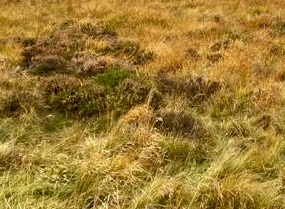
For many years, people who lived near peatlands would cut sods of peat, allow them to dry and use them for fuel. This, and other human activities such as
- Draining for agriculture,
- Deforestation
- Burning for ‘sporting’ purposes
- Testing of ordinance
- Tin streaming (in the case of Dartmoor)
have left areas of peatland in a parlous state. Often there are deep gullies and ditches, so water runs off and the peat dries out, no new material is formed It is estimated that some 80% of peatlands in the UK are in a damaged or degraded state. They now represent a carbon source rather than a store. When healthy, peatlands can store twice as much carbon as forests, playing a part in reducing global emissions of carbon dioxide and helping to reduce / control flooding, and supporting biodiversity.
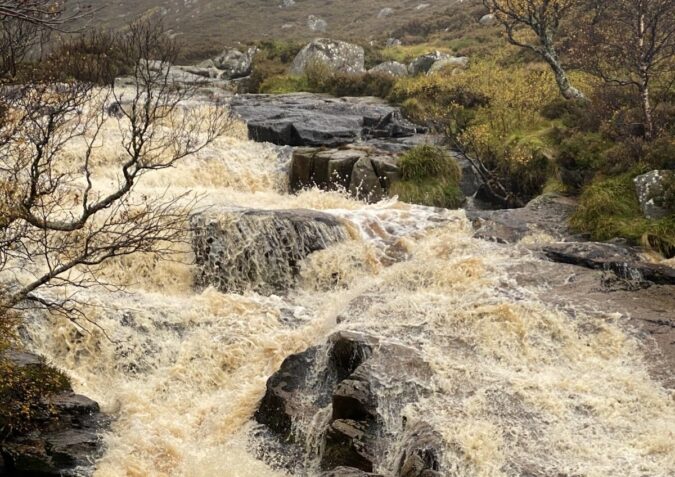 Sadly, peat forms very slowly, forming (roughly) at a rate one millimetre per year. Peat is formed by the decomposition of plant material under water logged conditions. So at its deepest point, the peat on Dartmoor in nine metres in depth and therefore represent thousands of years of history and can be an archaeological treasure trove.
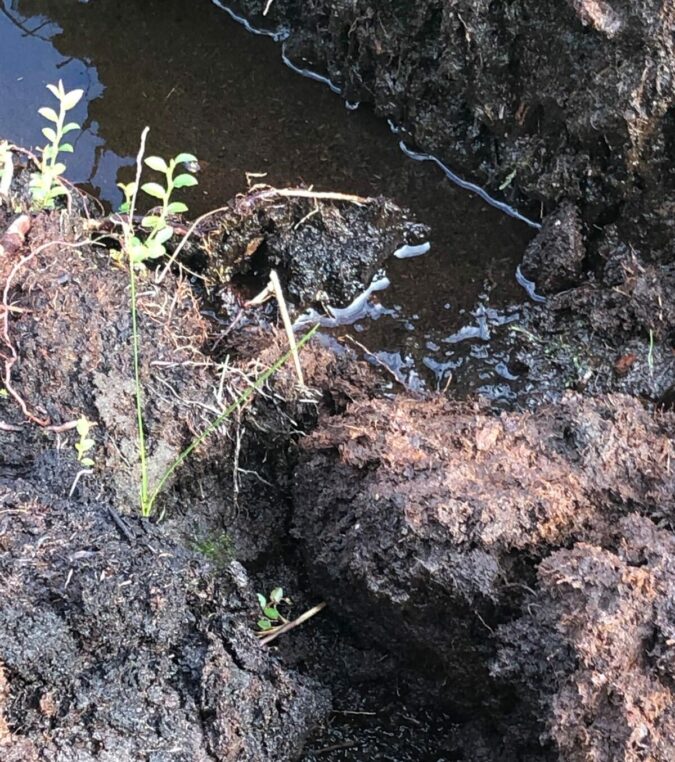
Scottish moorland
The UK’s Climate Change Committee has a target that 50% of upland peatlands and 25% of lowland peatlands should be restored to a natural condition by 2050. If nothing is done, and the climate becomes warmer and drier, then the peatlands of the south west of England could be a thing of the past.
Efforts are being made on areas such as Dartmoor to restore the landscape. The gullies and ditches are being blocked, so that rainwater is retained and the water table is raised so that the wetness of the area is restored. BY ‘reprofilling’ the landscape, pools will again form and sphagnum moss and other plants will grow and the process of peat formation will begin again. In recent years, a project [The South West Peatland Partnership] funded by
- Natural England
- South West Water &
- The National Trust
has restored some 1700 hectares of damaged peat bog in the South West. Whilst this is a long term project, some promising results have been observed such as an increases in the number and species of dragonflies. They represent food for the next trophic (feeding) level, so that perhaps in time the number of wading birds and mammals on the moor may increase.
Other areas of peatland, such as the blanket bogs of Caithness and Sutherlands and the Peak District need to be monitored as they too are at risk.
Details of current work can be found here.
Comments are closed for this post.