Woodlands.co.uk

Blog - coppicing

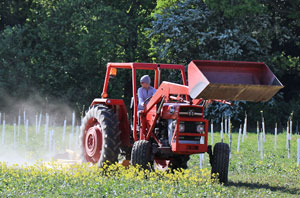
Sarah on the tractor

Woodland web updates 34.

by The blog at woodlands.co.uk, 24 March, 2026, 0 comments

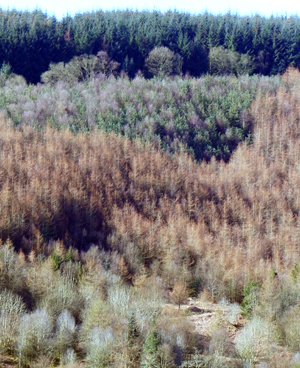
Biodiversity after the Black Death. The plague or black death swept across Europe and the UK (from 1347 - 1353, resulting in millions of deaths.  Some studies suggest that it killed between a third and half of the population.  As a result, there was a much reduced workforce, villages were deserted, farmland was abandoned, traditional land and woodland management fell by the wayside.  It was suggested that all of this lead to a significant rewilding event and an increase in biodiversity - both plant and animal. However, an analysis at York University of fossil pollen studies across Europe suggests a 'different story’.  Plant diversity did not increase after the plague, in fact it fell. Plant diversity fell for the next 150 years.  This suggests that some plant species depend on the human disturbance within the various ecosystems (farming, grazing, woodland management, all help seed dispersal etc).  However, mediaeval practices were far gentler than today’s mechanised, industrial scale farming and the clear cut felling of woodlands. Ploughs were pulled by oxen or hand, woodlands were managed by coppicing etc.  So reducing human activity does not always lead to a 'rebound of nature’. The contribution of small woodlands. Over the centuries, our woodlands and forests have been ‘decimated’.  Our woodland / forest cover has been reduced to a small percentage of what it was by farming, felling, building of transport networks and the expansion of towns and cities.  Consequently, there now exist many small patches of woodland in an an agricultural landscape. These ‘islands’ differ in size, degree of isolation, and age. It would be easy to dismiss such ‘islands’ are being of no importance.  However, recent studies suggest that they can make a significant contribution to the biodiversity of the landscape, partly through the ‘edge effect’. The edges of woodlands are exposed to the surrounding environment. Consequently, they receive more sunlight and often nutrients from the surrounding agricultural land.  They are generally richer in species like brambles, hawthorn, willow, offering food for deer, butterflies and other species.  They may also store more carbon in the topsoil than older woodlands - acting as carbon sinks.  As the edges of these woodlands tend to be drier and hotter than woodland itself, there is a lower risk of tick borne disease as fewer tick larvae survive under such conditions.  They are therefore making a significant contribution to diversity and ecosystem services in an agricultural landscape. Such small and often isolated woodlands need to be managed. so they do not become overrun by ivy and bracken if they are to contribute to the diversity of the landscape. A singular advantage of owning a woodland with an edge is that it may offer a good view of the surrounding landscape, which one might sit and enjoy. [caption id="attachment_43124" align="aligncenter" width="675"] View from a scottish woodland[/caption] For further information about the edge effect see  Julian Evans' video on woodlandTV at YouTube : [embed]https://youtu.be/D2buIXiz1sk?si=zhsUiter2pjvyZAv[/embed]
Ownership of SSSI Woodlands

Ownership of SSSI Woodlands

by Adrian Jowitt, 6 March, 2026, 1 comments

Sites of Special Scientific Interest (SSSIs) are some of England’s most remarkable natural places. With over 4,100 sites across the country, they showcase the very best of our wildlife, habitats, and geology - collectively covering around 1.1 million hectares (about 8% of England). Owning a SSSI woodland is a special opportunity. As a custodian of one of these nationally important areas, you play a meaningful part in protecting and enhancing our natural heritage for generations to come. Many owners find this a rewarding way to connect more deeply with their land and its wildlife.  Beyond their conservation value, SSSIs can also offer quiet places for recreation, provide opportunities for scientific study, and deliver wider benefits such as clean water, flood management, carbon storage, and pollination. Because of their importance, some activities on SSSIs need to be carefully managed. The Wildlife and Countryside Act 1981 sets out a list of operations that require consent from Natural England before going ahead—such as tree work, drainage changes, or certain types of recreational activity. Most owners find the process straightforward, and it helps ensure that any work supports the special features of the site. More guidance is available at Sites of special scientific interest: managing your land - GOV.UK When purchasing land, conveyancing checks will normally confirm whether it lies within a SSSI. You can also explore this yourself via the MAGIC map system, and further information about individual sites is available at designatedsites.naturalengland.org.uk. Natural England is there to help. Through good management advice, and tailored guidance, they work alongside landowners to support positive management and help sites deliver for nature recovery. Open communication is encouraged, as is collaboration with neighbouring landowners—particularly for larger-scale matters such as deer or squirrel management. Many traditional woodland practices, including coppicing, natural regeneration, and managing invasive species, fit well with SSSI conservation and are often recommended. Some protected features may be less visible, such as fungi or particular bird communities, but the focus is on looking after the habitats that support them. Although caring for a SSSI may feel like a responsibility at first, it can be hugely rewarding. Owners frequently enjoy the sense of purpose, connection to nature, and contribution to biodiversity. Support, advice, and in many cases grant or stewardship options are available—meaning even small woodland owners can make a real and lasting positive difference. Adrian Jowitt  Principal advisor on woodland policy, Natural England.
Proud owners of Coed Bwlch Coch

Proud owners of Coed Bwlch Coch

by Andrea Grealy, 9 March, 2023, 3 comments

In 2022,  we made a decision to buy Coed Bwlch Coch from woodlands.co.uk,  just over four beautiful acres of woodland near our home in mid Wales. Although we knew nothing about woodland management or forestry my partner and I love the outdoors. Just how important this is became apparent when I had breast cancer some years ago - I even camped out near the hospital during my treatment regime. It took less than six weeks to gain ownership. Woodlands.co.uk had two superb representatives on the ground, Ash and Helen. They opened our eyes to the possibilities this gorgeous strip of woods held. They answered all of our novice questions and guided us with ease through the buying process. We have been so impressed with the sensitivity and care taken by woodlands.co.uk to prepare the whole forest for sale. We’ve only owned the woods for a few months but we have already enjoyed dozens of visits. Our first task to cut back loads of brambles in one area where a bit of old stonework was peeking out has revealed a treasure: the ruin of a stone longhouse that pre exists the 1840 Welsh Tithe Maps on land once owned by the Earl of Powis. We are taking baby steps to learn- we’ve invested in some training courses, some decent outdoor clothing, some second-hand tents and handbooks. This year we’ll do some coppicing, harvest firewood for home, build a store, make some charcoal, camp, bring all our friends and family ... but mostly we will feed our souls.  
ChatGPT's answer to the question, "How to Manage a Woodland in Winter"

ChatGPT’s answer to the question, “How to Manage a Woodland in Winter”

by Angus, 4 February, 2023, 0 comments

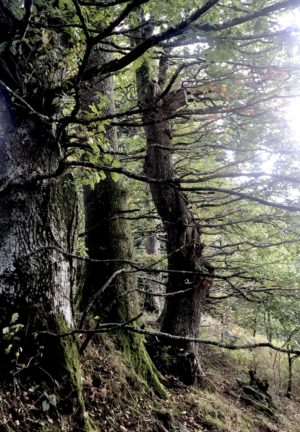
We asked the chatbot, ChatGPT to use its artificial intelligence to come up with its "thoughts" on how to best manage a woodland in winter and this is what it said using its AI algorithm. Woodland management is an ongoing process that requires careful consideration throughout the year. However, winter presents its own set of challenges, and it is essential to take a proactive approach to ensure the health and longevity of the woodland. This blog will explore four key areas of woodland management in winter: ponds, coppicing, fencing, and planting. Ponds are an important feature in any woodland, providing essential habitat for wildlife, improving water quality and helping to regulate the local water table. In winter, it is essential to check ponds for any signs of damage or erosion, and to clear out any fallen leaves or debris. This will help to prevent the pond from becoming clogged up and will also ensure that it remains accessible to wildlife. Coppicing is the process of cutting back trees to encourage new growth and to maintain the health of the woodland. In winter, coppicing can be a useful tool to manage the woodland's overall structure and composition. Coppicing will also help to reduce the risk of disease and pests, and to encourage a range of different habitats and species to flourish. This is particularly important in the winter months when many species are in a state of dormancy and will benefit from the extra light and nutrients that coppicing provides. [caption id="attachment_30295" align="aligncenter" width="650"] Chestnut coppice[/caption] Fencing is an essential aspect of woodland management, particularly in winter when the ground can become wet and boggy. It is important to ensure that all fencing is in good repair and that there are no gaps or holes. This will protect the woodland from outside threats, such as livestock. Fencing also provides a visual boundary for the woodland, helping to define its limits and to create a sense of enclosure. Planting is an important aspect of woodland management and is best carried out in the winter months. Winter provides ideal conditions for planting, with the soil being moist and easier to dig, and the dormant period allowing the trees to focus their energy on establishing roots. It is essential to choose the right species for the location, taking into account factors such as soil type, aspect, and the surrounding vegetation. Planting a mixture of native species will help to promote biodiversity and to create a woodland that is both diverse and resilient. In conclusion, winter provides its own set of challenges for woodland management, but by taking a proactive approach to ponds, coppicing, fencing, and planting, it is possible to ensure the health and longevity of the woodland. Whether you are a seasoned woodland manager or just starting out, taking the time to consider these four key areas will help to ensure that your woodland thrives for many years to come. We asked ChatGPT if it had ideas on the best way for woodland owners to use artificial intelligence to help with woodland and forestry management and this is what it said: Artificial intelligence has the potential to revolutionize woodland and forestry management by providing insights and predictions based on vast amounts of data. Here are some ways AI can help: Forest inventory: AI algorithms can be trained on high-resolution imagery to automatically identify, map, and quantify different tree species, sizes, and densities in a forest. Predictive harvesting: AI models can analyze data on weather patterns, soil moisture, and other environmental factors to predict the optimal time for harvesting trees, reducing waste and maximizing profits. Disease and pest detection: AI algorithms can be trained to detect signs of disease and pest outbreaks in forests, allowing for early intervention and reducing the risk of widespread damage. Sustainable management: AI can be used to optimize forest management practices such as planting, thinning, and pruning, to balance environmental, economic, and social objectives. In general, the use of AI in woodland and forestry management can help to make operations more efficient, sustainable, and profitable.
Next Page »