Woodlands.co.uk

Blog - Climate Change

Oaks playing clever

Oaks playing clever

by The blog at woodlands.co.uk, 11 September, 2026, 0 comments

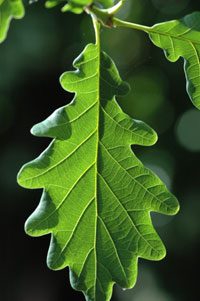
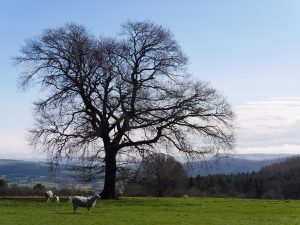
Once upon a time, the gypsy moth lived only in the Fenlands of eastern England, where its caterpillars fed upon bog myrtle and creeping willow.   As the Fens continued to be drained and agriculture expanded, this native population died out in the early part of the C20th.  However, many years later, a colony of the European form of the moth was found in Epping Forest. This form of the moth is polyphagous, that is, its caterpillars can feed on a variety of plant leaves. They have a particular penchant for the leaves of oak and poplar.  Since its ‘introduction’, this form of the moth has spread to many parts of south-east England. The caterpillars of this moth can denude a tree of its leaves if the infestation is heavy.  Repeated attacks combined with drought can result in the death of trees. The trees do have a defence mechanism which is to increase tannin production, which makes the leaves much more bitter.  But this comes at a cost to a tree, namely an increase in metabolism and energy expenditure to make these materials. [caption id="attachment_43799" align="aligncenter" width="675"] Gypsy moth caterpillar. [Thanks to Bernell MacDonald & Pixabay][/caption] Research has indicated that oak trees have ‘solved’ the problem in a different way.  If a tree has been subject to a significant attack by these caterpillars/moths, then in the succeeding year it delays the opening of its leaves by a few days.  The effect of this is that when the caterpillars emerge, the leaves that they depend upon are still ‘sealed away’ in their buds. So, the caterpillars have little or nothing to eat.  The effect of this is to reduce the damage to the tree by over 50%! The research work was carried out over a large area in Northern Bavaria and made extensive use of radar satellites.  The satellites were able to identify which trees had been stripped bare and how they reacted in the following year.  Further details of this work can be accessed here: https://www.nature.com/articles/s41559-026-03071-9
Climate change and bird survival

Climate change and bird survival

by The blog at woodlands.co.uk, 4 September, 2026, 1 comments

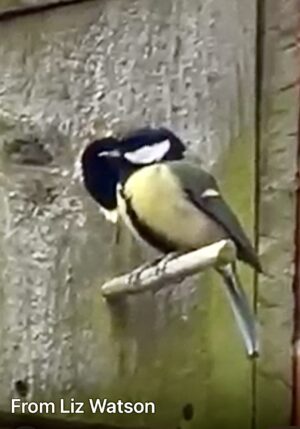
One of the most intensely studied areas in the country is Wytham Wood, which lies just outside Oxford.  Wytham Wood belongs to Oxford University. The site includes ancient semi-natural woodland, secondary woodland, grassland and ponds. Wytham is a designated SSSI, where some 500+ plant species and 800+ butterfly and moth species have been recorded.  The records of bird populations (like that of the Great Tit) go back some sixty or more years,  initiated by the work of David Lack and others.  Recently this data has been examined in conjunction with detailed weather records over the same period. The Oxford scientists looked to see how the weather affected the growth and development of the chicks of the Great Tit.  Not only did the data cover several decades but also the records of some 80,000 great tits.  The study revealed that Great tits have adjusted to warmer Springs by breeding earlier.  Severe cold weather immediately after hatching was particularly harmful. Older chicks were significantly affected by heavy rainfall. If exposed to very hot weather and heavy rain, the young chicks can lose more than a quarter of their body mass.  This is particularly true for broods raised later in the year. Warm periods were linked to higher fledging weights. The earlier breeding enables the adult birds to take advantage of the earlier appearance of their prey -  caterpillars.  However, this earlier activity can also expose them to cold snaps that can occur in early Spring.  Newly hatched chicks struggle to maintain their body temperature in cold periods as they lack feathers.  They will also need to 'burn' more of their food energy to generate heat, rather than it being used for growth.   Bad weather not only affects their food supply (caterpillars, etc), but also whether the adults can leave the nest to search for and gather food.  The higher fledgling weights during periods of warm weather are probably associated increased insect activity (and visibly), enabling the adults to satisfy the appetites of their young.  As caterpillars have quite a high water content, this helps stave off dehydration in the young chicks. Climate change seems to be throwing more extreme weather events at us, and the seasons are becoming increasingly unpredictable. These weather events (heat, cold, intense rainfall) may well have even greater effects on our bird populations, both woodland and urban. Further details of this study can be found here.
Plants and pollinators face problems.

Plants and pollinators face problems.

by The blog at woodlands.co.uk, 10 August, 2026, 0 comments

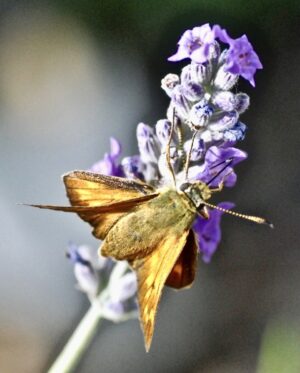
The last few months have been exceptional in terms of daily temperatures, and rainfall or rather the lack of it.  The effects are clear to see across the countryside - dry and parched lawns, crops stunted or failing and wild fires in many areas.  These are some of the obvious effects of the recent heatwaves, and indeed climate change.  However, there are also some more subtle effects of these high temperatures. The rising temperatures have a direct impact on the interactions between pollinators and flowers. The production of scents by flowers depends on the plant’s  metabolism.  Warming can have two effects : it can alter the amount of the scent / volatile oils produced  it can change the type of volatile oils / scent produced by the flower.   As a result, flowers may no longer emit the same chemical signals to which their pollinators are accustomed.  Bees and other pollinators may become ‘confused’ and unable to forage for nectar and pollen effectively. [caption id="attachment_43681" align="aligncenter" width="675"] Hover fly[/caption] However,  the effects of these high temperatures are not confined to the plants. Bees, bumblebees, hoverflies, butterflies and moths are also affected by increased temperatures.  They are ectothermic organisms, which means that their body temperature is largely determined by the environmental temperature that they experience. Whilst cold temperatures will result in relative inactivity, during heat waves the temperatures may well exceed their thermal limits (what they can tolerate).  Not only will the external temperature warm their bodies, but the use of their flight muscles will also generate heat.  Consequently, their ability to forage may be reduced.  The higher temperatures may also impact on their nervous system so that their sense organs may not be able to detect the scents and signals that flowers are producing.  Consequently, both plant and pollinator can no longer ‘communicate’. [caption id="attachment_43682" align="aligncenter" width="675"] marmalade hover fly[/caption] Further information : https://academic.oup.com/aob/article/137/7/2055/8541414  
Time to restore ....

Time to restore ….

by The blog at woodlands.co.uk, 10 April, 2026, 0 comments

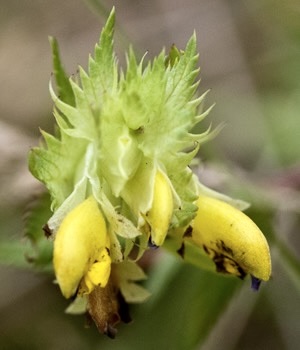
Woodlands.co.uk has said on many occasions that our country has been ‘denuded’ of its natural vegetation.  Woodlands, meadows, grasslands, and wetlands have been lost,  and the range of many species has been reduced. Efforts are being made to restore some of these ecosystems.  However, it is not an easy or simple process.  Throwing some seeds on degraded ecosystems / soils simply will not work.  Seeds have requirements if they are to germinate.  For example, some seeds to experience a period of cold before they will germinate, others need exposure to light of a particular wavelength (to activate the phytochrome system). Such needs must be set against a changing climate where warmer winters and drier summers (like last year) are expected to become more common.  Seeds collected from one area of the country may have adapted to specific local conditions, so if sown 500 miles away - they may not fare so well. To test whether some of our native species could cope with ‘new’ places and changing temperatures, researchers from the Royal Botanic Gardens (Kew and Wakehurst) made use of the seed collection at the Millennium Seed Bank.  The seed collection at Wakehurst is diverse, with many samples of various species collected from different places at different times. Different samples would be expected to have slightly different genetic backgrounds. The researchers selected six species from the Millennium collections: Yarrow Common knapweed Wild carrot Ox-eye daisy Yellow rattle Autumn hawkbit [Seeds of these species are often included in commercially available wildflower seed mixtures used to create wild flower areas in gardens etc. Some of these mixtures may include seeds imported from Europe or elsewhere.]  To test the temperature tolerance of the various seeds samples and whether the different genetic backgrounds affected their germination, the seed samples were exposed to temperatures ranging from 0oC to 40oC.   The researchers then recorded the minimum, optimum and maximum temperatures for seed germination of each species.  These figures were then compared with historical records of climate, and temperature projections in our changing world.  The results indicate that  various species would be able to germinate in a warming climate.   Of the six species, four were able to germinate across a range of temperatures, namely yarrow, knapweed, ox-eye daisy and autumn hawkbit. This suggests that they would cope with a warming climate (and would be suitable species for use in restoration projects). Yarrow and ox eye daisy showed good germination at varying temperatures independent on their local provenance, and are therefore good candidates when sowing in restoration areas. However, wild carrot and yellow rattle were not as ‘straight forward’.  Carrot seeds need to experience a cold period before they will germinate, so milder winters might be a problem.  Yellow rattle only germinated within a small range of low temperatures (like those of late winter).  Whilst this means, a young plant can have an early start and an advantage over its competitors, it suggests that if winters become too mild then its germination and life cycle will be affected. This ‘sensitivity’ was true across the different samples of yellow rattle used in this trial. Interestingly, yellow rattle is an obligate hemiparasitic annual.  It is of particular interest for restoration projects as it helps in the establishment of species-rich meadows. For further details of this study, go to https://onlinelibrary.wiley.com/doi/10.1111/rec.70239
A case of the pink squirrel ?

A case of the pink squirrel ?

by The blog at woodlands.co.uk, 27 February, 2026, 4 comments

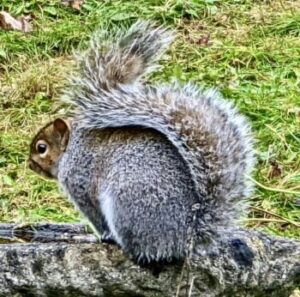
Researchers at the Animal and Plant Health Authority (APHA) has been working of an oral contraceptive that will hopefully offer a way to reduce grey squirrel populations in a humane and effective manner.  The contraceptive targets a mammalian hormone known as GnRH [Gonadotropic Releasing Hormone].  This hormone stimulates squirrels to ovulate or produce testosterone.  The contraceptive stimulates the production of antibodies against the GnRH so that the animals are rendered sterile.  However, there are problems with the contraceptive. It affects other species, such voles, wood mice, and dormice if they feed in the ‘traps’. Ensuring its effective means of delivery to grey squirrels alone. To address these issues, APHA has be experimenting with different designs of baited ‘traps / feeders’ to deliver the contraceptive so that only grey squirrels can enter.  The bait for these ‘traps / feeders’ is hazelnut butter mixed with rhodamine B.  The rhodamine B is added as it causes the fur of grey animals that have taken the bait to fluoresce under UV light, it may also colour the fur of the squirrel to PINK. Red squirrels cannot reach the bait as they are not heavy enough to trigger the internal mechanism of the trap / feeder.  A recent test of the mechanism revealed 19,000 visits by grey squirrels but only 9 by mice, so it does effectively distinguish between different woodland species.  There is now a plan to test the traps / feeders on a much larger scale in Cumbria, Northumberland, South Scotland and Lancashire.  Perhaps technology may be used to follow the behaviour of the animals at the 'traps' - e.g. trail cameras / infra red photography. Modelling by APHA of the contraceptive and modified traps suggests that grey populations might drop by half within six years.  Other methods to reduce the grey squirrel numbers include: The introduction of Pine Martens in suitable areas, which predate more successfully on grey squirrels, as the red ones are somewhat nimbler. Incentives for landowners to create more woodland.   Further information : https://aphascience.blog.gov.uk/2018/10/09/red-squirrel/
Changing times?

Changing times?

by The blog at woodlands.co.uk, 9 November, 2025, 0 comments

The Earth has experienced many glacial and interglacial periods over hundreds of thousands of years.  Since the last ice age, the Earth has warmed (the average global temperature has rising by some 4 to 5oC) but the temperature rise was about 0.1oC per century.  Today's warmer climate took 5,000–8,000 years to ‘evolve’, during which time the average global temperature rose at a rate of around 0.1oC every century.   This gradual change allowed trees to adapt to the changing climate.  In the last century, ‘we’ have driven a 1.3oC rise just in the last century - this is some ten times faster than the change post ice age.  [caption id="attachment_35526" align="alignleft" width="300"] drought[/caption] Not only has the climate warmed, it has become increasingly unpredictable with heat waves, drought and torrential rain.  These can have dramatic effects on our trees and heathlands.  For example, the heatwave in 2022 resulted in Kew Gardens losing some 460 of its trees.  This last summer saw 4 periods of heatwave conditions.   So, it is not surprising that some of our most familiar trees are struggling with these changed conditions.  They are stressed, and it would seem that the climate is not likely to moderate in the immediate future.  In recognition of the changing climate, Forestry England has produced a 'species for the future' list.  The trees in the list are those which might thrive in a warmer climate. Whilst it includes familiar species like oak, birch, and alder, other species such as the coast redwood and Corsican pine are included,  which hopefully will create more resilient woodlands.  The trees are listed below Aspen (Populus tremula) Beech (Fagus sylvatica) Coast redwood (Sequoia sempervirens) Common alder (Alnus glutinosa) Corsican pine (Pinus nigra subsp. laricio) Douglas fir (Pseudotsuga menziesii) Downy birch (Betula pubescens) European silver fir (Abies alba) Field maple (Acer campestre) Grand fir (Abies grandis) Grey alder (Alnus incana) Hornbeam (Carpinus betulus) Japanese red cedar (Cryptomeria japonica) Lodgepole pine (Pinus contorta var. latifolia) Macedonian pine (Pinus peuce) Maritime pine (Pinus pinaster) Norway spruce (Picea abies) Pedunculate oak (Quercus robur) Red oak (Quercus rubra) Rowan (Sorbus aucuparia) Scots pine (Pinus sylvestris) Sessile oak (Quercus petraea) Silver birch (Betula pendula) Sitka spruce (Picea sitchensis) Sweet chestnut (Castanea sativa) Sycamore (Acer pseudoplatanus) Western hemlock (Tsuga heterophylla) Western red cedar (Thuja plicata) Wild cherry (Prunus avium) Wild service tree (Sorbus torminalis) The list contains both native and non-native species, the aim is to create through planting stronger and more biodiverse woodlands that can tolerate our changing climate over the coming decades.  The rate of climate change is the main issue. Whilst some of the trees already grow here, others come come from warmer / drier areas, such as the Mediterranean or  North America.  There are already many redwoods in the UK.  They were introduced in victorian times, when they were planted on the estates of the wealthy and landed gentry. There are now probably more redwoods in the UK than in their native Pacific Coast range,  there intense heat and dry weather has exposed them to intense forest fires. Another possibility to promote resilience is to use seed produced by trees such as Oak that has been ‘produced’ by trees growing in warmer regions. The inclusion of trees that might be suited to our changing climate is often referred to as assisted migration.  However, the introduction of non-native species is not without its problems, for example the introduced species could become of invasive or add to the burden of pathogens that our trees are exposed too.
The times they are achanging

The times they are achanging

by The blog at woodlands.co.uk, 1 September, 2025, 4 comments

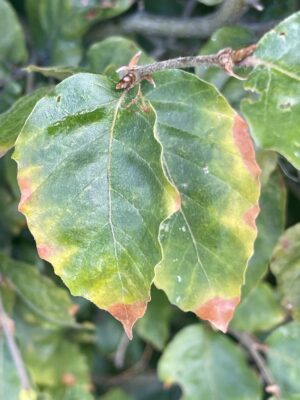
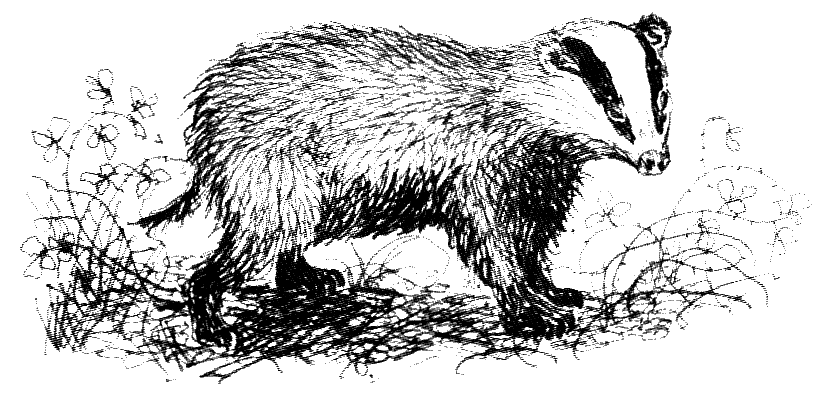
This morning,  the Today programme (Radio 4) featured an interview with Kevin Martin ( Head of Tree Collections at Kew) and Chris Packham (environmental compaigner).  They were explaining the ongoing effects of this summer’s hot and dry weather.  Mr Martin said that the trees at Kew were “ tired, they have had a stressful summer”.  The result is that many trees are entering their dormant stage, moving materials from aerial regions to the roots - much earlier than usual.  The colour changes in leaves and leaf drop do not usually occur until well into October but this year such changes are already  proceeding apace.  Kew has been able to put some mitigations in place, for example, the watering of young trees which have yet to establish extensive roots systems. This is not true for trees across the UK, where young saplings in particular may have been affected by the dry weather and successive heat waves, [plus increased browsing by the extensive deer population]. Chris Packham spoke of “climate breakdown” and “environmental chaos”, noting that an oak tree near him was ‘festooned with acorns’, but they were only the size of peas.  Normally acorns would fall later in the year as food for wood pigeons,jays, squirrels and badgers.  Jays help ‘plant’ oak trees by distributing acorns.  He said that whilst local hawthorns were red with berries, which would normally be food for winter thrushes later in the year, the berries would now be dried up / shrivelled when the birds arrived to search for them.  Though lots of hedgerow fruit [e.g. sloes, rose hips, blackberries] is being produced, it is being produced at the wrong time.  He also commented on the scarcity of mole hills as moles are forced to burrow deeper in the soil in search of earthworms etc. As the seasons change, some plants and animals adapt. For example,  blackcaps from Northern Germany fly to the UK rather than Spain to overwinter.  During a relatively short period, their wing length has changed, actually shortened - a case of evolution in action.  However, many species are struggling.   The  wet summer of 2024 was particularly difficult for butterflies, as evidenced by the data collected by the Big Butterfly Count. Nature's timings are now ‘out of sync’, plants and animals are further impacted by extreme weather events, flooding, high winds and extreme temperatures. [caption id="attachment_24651" align="aligncenter" width="600"] Sloes on Blackthorn.[/caption] https://www.metoffice.gov.uk/about-us/news-and-media/media-centre/weather-and-climate-news/2025/double-record-breaker-spring-2025-is-warmest-and-sunniest-on-uk-record  

Blackbirds, climate change and disease.

Blackbirds, climate change and disease.

by The blog at woodlands.co.uk, 9 April, 2025, 0 comments

Climate change is introducing disease to new areas as it favours the spread of disease vectors, such as mosquitoes.  Usutu is a virus disease that originated in South Africa, it is spread by mosquitos and affects birds, particularly blackbirds and owls.  Whilst birds are the primary hosts to the virus, it can infect ‘incidental hosts’ such as bats and humans, through insect bites. The virus has been found in a number of mosquito species in Africa and Europe.  In the U.K,  and Europe the main vector is Culex pipiens - the common house mosquito or northern house mosquito.  The virus has probably spread through the movement of migratory birds between Africa and Europe, and is now present in many European countries. The virus was first detected in the London area in summer 2020 and was associated with a decline in Blackbird numbers. Blackbird numbers have declined by approximately 40% since 2018. The virus was then detected in Cambridgeshire in 2023.  It seems that most Usutu infections in humans do not cause disease and so the risk to human health is considered ‘low’.  There is no evidence to date that the consuming poultry poses a risk to our health.  However, the detection of Usutu in the UK marks the first time that a mosquito-borne virus capable of passing  from animal hosts to humans has emerged in this country.  Its speed and spread are being monitored as it may model how other mosquito borne disease arrive here. A virus that may be a particular cause for concern is the West Nile virus.  This virus spreads in a similar way to Usutu and needs similar climatic conditions.  West Nile virus, also transmitted through mosquito bite, can cause fever, vomiting and diarrhoea.  At present, there is no vaccine available.  West Nile virus was detected in the Netherlands in 2020, and there is concern that the changing climate could facilitate its spread in Europe.

Next Page »