Plants and pollinators face problems.
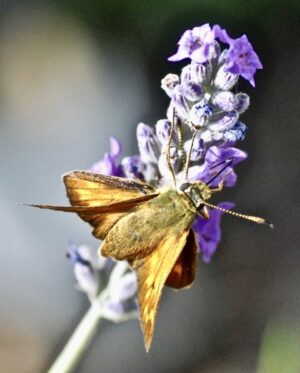
The last few months have been exceptional in terms of daily temperatures, and rainfall or rather the lack of it. The effects are clear to see across the countryside - dry and parched lawns, crops stunted or failing and wild fires in many areas. These are some of the obvious effects of the recent heatwaves, and indeed climate change. However, there are also some more subtle effects of these high temperatures. The rising temperatures have a direct impact on the interactions between pollinators and flowers. The production of scents by flowers depends on the plant’s metabolism. Warming can have two effects :
- it can alter the amount of the scent / volatile oils produced
- it can change the type of volatile oils / scent produced by the flower.
As a result, flowers may no longer emit the same chemical signals to which their pollinators are accustomed. Bees and other pollinators may become ‘confused’ and unable to forage for nectar and pollen effectively.
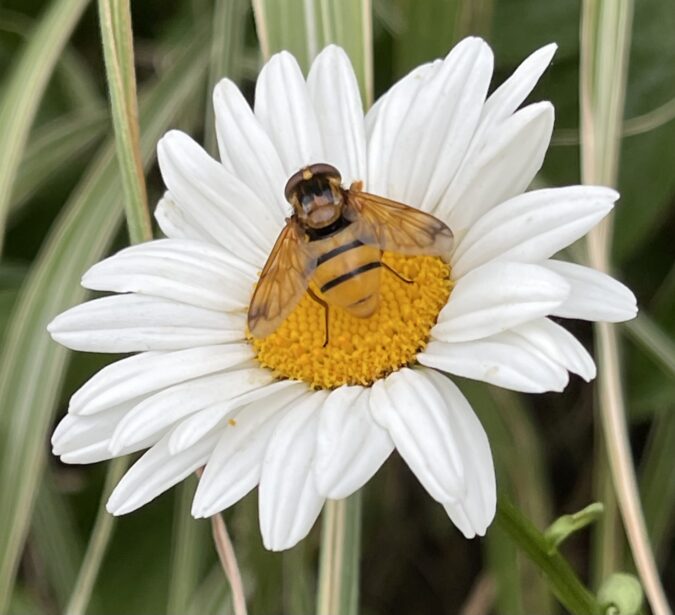
Hover fly
However, the effects of these high temperatures are not confined to the plants. Bees, bumblebees, hoverflies, butterflies and moths are also affected by increased temperatures. They are ectothermic organisms, which means that their body temperature is largely determined by the environmental temperature that they experience. Whilst cold temperatures will result in relative inactivity, during heat waves the temperatures may well exceed their thermal limits (what they can tolerate).
Not only will the external temperature warm their bodies, but the use of their flight muscles will also generate heat. Consequently, their ability to forage may be reduced. The higher temperatures may also impact on their nervous system so that their sense organs may not be able to detect the scents and signals that flowers are producing. Consequently, both plant and pollinator can no longer ‘communicate’.
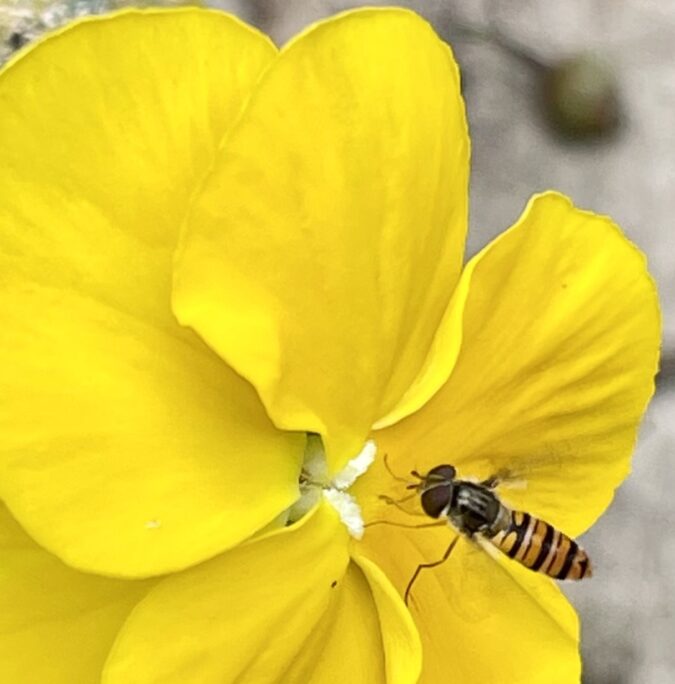
marmalade hover fly
Further information : https://academic.oup.com/aob/article/137/7/2055/8541414

Leave a comment