Woodlands.co.uk

Blog - pollinators

The air that we breathe.

The air that we breathe.

by The blog at woodlands.co.uk, 24 April, 2026, 0 comments

When you step into your garden during the Spring or Summer months, you might be aware of the scent of honeysuckle, lavender or indeed an old fashioned rose.  Similarly, in a woodland the scent of pine or other conifers may permeate the air.  These various scents often involve a group of compounds known as the terpenes.  The resin that exudes from pine bark is rich in terpenes. Terpenes are used in the building of many complex organic molecules and contribute to the make-up of volatile, organic compounds [VOCs] - produced by many plants.  The scents released from nectaries or other parts of flowering plants are often associated with attracting pollinating insects, but they can serve other functions.  For example, some VOCs released by a plant may warn surrounding plants of attack by insects. However, as you walk down the street, the air is rarely filled with these pleasant, natural scents. Instead the fumes of traffic, factories and industry assail us.  They are the exhaust emissions from cars, lorries, buses etc, plus the various bits and pieces [particulates] that are released from the ‘rubber’ of car tyres, brake pads etc.  The damaging effects of particulates are now well documented.  The effects include lung disease such as chronic obstructive pulmonary disease (COPD) and reduced lung function.   Particulates help create the concoction of substances that we inhale; sadly our air is often polluted with many different compounds. Scientists from Oxford University and Kew recently investigated air quality in different locations around Oxford.  The locations varied from the centre of the town, where the Botanic Garden is found, out to the University’s Wytham Woods.  Wytham is one of the most intensively studied woodland areas in the world.  The wood ‘holds’ 500 plus plant species and 800 or more butterfly and moth species. Records of bird populations go back some sixty or more years (largely due to the work of David Lack and others).   The air samples that the scientists collected were subjected to detailed chemical analysis using the technique of gas chromatography-mass spectrometry. Some 245 different compounds were identified in the various air samples, with each of the six different sites haveing their own signature collection of chemicals.  Sites near to busy roads contained high levels of benzene and toluene, which are traffic-related chemicals.  The tree rich areas naturally showed a greater presence of plant chemicals (VOCs).  Unsurprisingly, when they sampled the air in the Botanic Garden (over the course of a year), they found the highest levels of these plant compounds.  Warmer weather increased the levels of these VOCs / plant derived chemicals, which have been associated with improved mood and stress reduction. Full details of the Oxford study here : https://nph.onlinelibrary.wiley.com/doi/10.1002/ppp3.70191
Moths - secret pollinators?

Moths – secret pollinators?

by The blog at woodlands.co.uk, 24 November, 2025, 0 comments

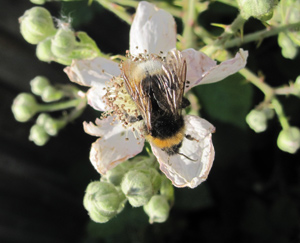
Honeybees, bumblebees and butterflies are always cited as being important for flower pollination. Indeed, without them many of our food crops would ‘fail’.  But what about moths?  Well, recent research has found that they too are efficient pollinators.  A recent study compared the role of nocturnal and day time pollinators.  Much scientific research has focused on daytime pollinators, like honey bees and bumblebees, but little is known about the night time pollinators.  So a study was devised, which focused on the day and night visitors to bramble flowers. Bramble may be a bit prickly to us but for bees and other insects it is important source of nectar and pollen, from early spring through to autumn.  The study was carried out out in the summer moths (when night is only one third of the daily cycle).  Trail cameras were used to record visitors to the bramble flowers over three days, also special bags were used to cover the flowers for different times in order to determine the effectiveness of the different pollinators on pollination and fruit formation.  One group of the bramble flowers was covered up for the three days.  A second group was bagged up for the day time.   The final set was covered only at night.  The number of pollinator visits was recorded as was the resulting pollination and fruit formation.   At night, moths were the only insect visitors of the pale pink / white flowers of the bramble, and they also proved to be very effective pollinators. It is not clear why moths were more effective, perhaps the time they spend visiting a flower is a critical factor.  They do spend more time rummaging in a flower than day time insects [hoverflies, butterflies, bees etc].     There are only some sixty species of butterfly in the UK but over two thousand species of moth.  But like butterflies, moths are vulnerable with many of our larger moths in decline.  The challenges that they face as the same as those that threaten many insects namely: Pesticides Habitat loss Climate change But moths face an additional challenge - artificial light at night. This interferes with the feeding behaviour of their larvae / caterpillars, it also affects the feeding and breeding of the adults.   Thus, moths are not only important pollinators but a vital component to the biodiversity of an ecosystem.  They also are a food source bats and birds. Moths can be helped by: By allowing a patch of brambles and / or wild flowers in your garden Persuading the council to allow wild flowers to grow and flourish on roadside verges, ‘spare’ plots of land etc. Asking the local council to reduce night time lighting where it safe to do so.   At home, limiting the use of outdoor lights at night, draw curtains and blinds to limit light spill to the exterior. As insects are in decline generally, (see the  woodlands.co.uk splatometer blog) it is important to help our pollinators - ensuring that they still ‘have a home’ at the end of the day.  
In praise of dandelions

In praise of dandelions

by The blog at woodlands.co.uk, 12 September, 2025, 0 comments

To many people, the dandelion is a pernicious weed.   First one makes its way into your garden, but then due to its reproductive capacity - there are dozens.  Each flower stalk may produce up to 200 seeds with their characteristic parachute for dispersal.  A plant may produce 10 or so flower stalks, so that it is a lot of seeds from a single plant.  Once the seeds  disperse and germinate, they produce a significant tap root which grows down into the soil seeking water and minerals.  The seedlings can survive in inhospitable places, like the cracks between street paving stones or on your drive. As the seeds are wind blown, they may travel considerable distances with the aid of their ‘parachutes'.  However, changes in agriculture, increasing use of herbicides etc have meant that countryside populations of dandelions have diminished.  This has affected the insects that feed upon the dandelions' nectar and pollen.  As the number of these insects falls, it affects the seed production of other plants that these insects visit. Interestingly, urban dandelions seem to benefit from the heat island effect in cities.  A city may be some 2oC warmer than its surrounding countryside, more so in the summer.   Dandelions seem to thrive in the heat, growing more rapidly than their 'rural cousins'.  Urban warmth also means that the plants can begin to flower soon after a milder and shorter winter, whereas other plants struggle to adapt to changing environmental signals.   The urban  dandelions provide a 'feast' for insects in early Spring when resources are limited.  Urban meadows can provide 90% of the nectar for pollinators, and 80% of the pollen. These provide sugars and proteins / amino acids for some 200 species of pollinators [ solitary bees, mining bees, bumble bees, hover flies and pollen beetles].  The gifts of the dandelions are helping many struggling insect populations. Interesting fact : Dandelions often reproduce by a sort of sub-sexual system (termed apomixis) that has resulted in some 200+ microspecies in the U.K.  These have been studied by Professor John Richards for some 40 years.  The species name Taraxacum officinale has a gg. (for aggregate) added to it - in recognition of all the variations of the plant that can be found.  Thanks to Angus for images. https://en.wikipedia.org/wiki/Taraxacum officinale  
Woodlands web updates 33

Woodlands web updates 33

by The blog at woodlands.co.uk, 1 February, 2025, 0 comments

Insect pollinators are currently in decline.  This is, in part, due to the loss of habitats and foraging resources for pollen and nectar.  Pesticides, like the neonicotinoids, don’t help. Lawns and pollinators. “No mow May” has been promoted by Plantlife to  provide a feast for pollinators,  tackle pollution,  reduce urban heat extremes, and  lock away atmospheric carbon Lawns in gardens, parks, recreation grounds etc. represent a significant proportion of green space in cities, towns and villages. If these spaces and suburban lawns are managed with pollinators in mind, then they could become an important source of foraging resources.  Now, there is evidence accumulating that this is the case.  A  recent study used the lawns at Ministry of Justice prison and court sites.   Each site contained four patches,  A patch mown as normal every two weeks - the control  A patch mown every 4 weeks A patch mown every 6 weeks A patch mown every 12 weeks Weekly surveys of pollinators and flowering plants were made throughout June to late August. Butterflies, bees, bumblebees, hoverflies and beetles were recorded as pollinators.   The patches that were mowed less frequently (6 and 12 weeks) had many more pollinators [in fact 170% higher than the 2 week patch], and more flowers.  The most common plants recorded included selfheal, daisy, dandelion, creeping buttercup, and white clover.  Apart from the increase in biodiversity, the patches were ‘visually pleasant’, contributing to the wellbeing of staff / prisoners and saved on lawnmower fuel (cost). Details of the study : https://conservationevidencejournal.com/reference/pdf/12801 Farms and Pollinators. Farms and their crops, such as clover and oil seed rape, can offer a rich supply of pollen and nectar to pollinators.    The ‘richness’ of this supply can draw pollinators away from more natural areas.  However, the pollinators can go from ‘feast to famine’, when the crop has finished flowering.   A Swedish study has followed the behaviour of farmland pollinators after clover flowering.  They found that if natural areas were available after the flowering of the clover, then pollinators [like different bumble bee species] became more selective in their foraging.  This reduces the intensity of competition between the various pollinator species.  Areas of natural vegetation on farmland are therefore important in helping pollinators adapt after crops (such as clover) have finished flowering. [caption id="attachment_33904" align="aligncenter" width="650"] Oilseed rape[/caption] https://www.sciencedirect.com/science/article/pii/S0167880924005735?via=ihub Gardens and pollinators. A study In the Boston area of the US has revealed that small gardens with a diverse range of plants are important to pollinators.  The researchers first used Google Street View to identify and categorise some 86,000 front gardens (or yards, in their terminology) across the area - ranging from lawns to diverse flower gardens. They then visited 500+ of these gardens when the plants were flowering [in 2021], identifying and documenting the plants in each.   The found that : Whilst the higher income areas tended to have more cultivated flower gardens, these gardens were home fewer wild flower (weed) species. Small gardens often had the richest diversity of plants in flower as compared to those with lawns. The authors of the study conclude “Dense urban areas are a promising target for pollinator conservation.” Detail of this study can be found here : https://www.sciencedirect.com/science/article/abs/pii/S0169204624002706?via=ihub  
The common ragwort

The common ragwort

by The blog at woodlands.co.uk, 7 July, 2024, 4 comments

Ragworts are a group of daisy-like flowers.  The flowers are actually composites, that is, they are made up of many smaller flowers held together in a structure called a capitulum.  The family of daisy-like flowers is known as the Asteraceae (previously called the Compositae).  There are several different species of ragworts, for example : Common Ragwort (Jacobaea vulgaris, previously Senecio jacobaea) Oxford Ragwort (Senecio squalidus)  Hoary Ragwort (Senecio erucifolis) Marsh Ragwort (Senecio aquaticus) Silver Ragwort (Senecio cineraria) Perhaps, the Common Ragwort and the Oxford Ragwort have attracted the most attention in recent times.  The story of the Oxford Ragwort is interesting. The plant is actually native to Sicily, growing on volcanic ash and scree.  It was grown in the Oxford Botanic garden around 1690.   After some years, it ‘escaped’ and could be seen growing around Oxford.  Later, with the advent of the railways, it was able to spread along the railway tracks and then across the country. The genetics of this plant and related species have been the subject of various research projects in recent years, and has resulted in the ‘reclassification’ of some ragwort species. However, it is the Common Ragwort (Jacobaea vulgaris, previously Senecio jacobaea) that has been the focus of much attention.  This is a native, biennial plant, but can be perennial. Its seeds are spread by wind and a single plant can produce thousands. Consequently, it can become a problem on waste land or other uncultivated areas. Ragwort may be seen in coppiced woodland,  particularly in the years immediately after cutting the coppice when there is lots of light and the ground flora 'comes alive'. The plant is a good food source for a wide range of insects and it is much 'loved' by pollinators.  Over a hundred insect species feed on its nectar  (bees, flies, moths and butterflies).  Not only is it a good source of nectar, it also provides a home and / or a food source for many invertebrate species.  Some insects feed on the ragwort exclusively.  [caption id="attachment_40185" align="alignleft" width="300"] Cinnabar moth caterpillar[/caption] One species that is particularly associated with this plant is the cinnabar moth, whose status is described as ‘common and widespread, but rapidly declining”.  The caterpillars are distinctive with yellow and black stripes. They feed on the ragwort absorbing its alkaloids, which make the caterpillars distasteful to predators.   Alkaloids are organic compounds produced by plants and many of them have potent medical uses - such as quinine (for malaria) or morphine (pain relief).  Most alkaloids have a bitter taste.  Many alkaloids are toxic (for example, atropine from the nightshade family of plants).  The alkaloids present in ragwort can make it a problem when present in fields / areas grazed by horses or cattle, though it is not usually a problem in gardens.  Horses do not normally eat ragwort due to its bitter tasting alkaloids but if consumed in any quantity then the alkaloids can cause liver damage (a form of cirrhosis). [caption id="attachment_40489" align="alignleft" width="300"] Tweet from Prof Goulson[/caption] Ragwort poisoning is relatively uncommon and may arise through feeding with hay that contains dried ragwort.  In U.K., the common ragwort is classed as an injurious weed under the provisions of the Weeds Act 1959, and there is the Ragwort Control Act 2003.  The latter provides for a code of practice relating to ragwort.  Removing common ragwort from an area is not without its problems.  Sometimes, other species are ‘identified’ as ragwort and sprayed with weedkiller.       Friends of the Earth have produced a ‘briefing’, which notes that Ragwort has been blamed for animal deaths which are unproven Scare stories have been based on poor or irrelevant statistics, and biased surveys Ragwort has been falsely labelled as a threat to human health / the countryside As a result, unnecessary measures have been used to control ragwort (in nature reserves or areas like the New Forest, and indeed roadside verges). The briefing, entitled  “Ragwort: problem plant or scapegoat?” which can be accessed here offers a number of solutions to the ‘ragwort problem’ Further information about controlling ragwort is available on WoodlandsTV - see below: [embed]https://youtu.be/esfLW0nIvNo?si=DQ2Uokq7U1pAJYMZ[/embed]
In praise of insects.

In praise of insects.

by The blog at woodlands.co.uk, 19 May, 2024, 0 comments

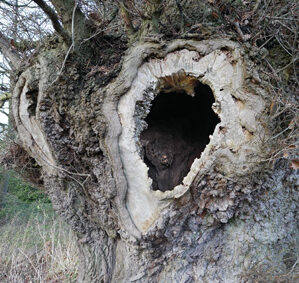
Last week's woodlands’ blog talked about the fall in insect numbers across the UK.  This is not just a UK problem, it is far more widespread.  Insects,  bees and bumblebees as pollinators aside,  are important in ecosystems;  there are armies of other insects that are providing ‘services’ for us. When a tree dies in a woodland, bacteria and fungi are important agents in the decay of the tree and the recycling of elements, but they are assisted by beetles. If the dead tree was a veteran, during its lifetime it will have provided  a variety of micro-habitats.  Holes and crevices would have been used by bats,  birds,  insects etc.  Now, the the decaying wood will be support different organisms, from microbes to larger fungi, such as bracket fungi that can erupt from surface of the dead tree.   As the wood decays,  the material may become a ‘home’ for saproxylic beetles. For example, Stag beetle larvae feed on decaying wood (building up fat reserves, which the adults later rely on. it adds humus and fertility to the soil as its nutrients are released. Though bees and bumblebees (members of the order Hymenoptera) are important as pollinators (of many fruit and crop plants, so are the hoverflies key to  the pollination of many wild flowers.  Hoverflies belong to a different group of insects - the Diptera. There are several thousand hoverfly species spread across the world. They are found on every continent with the exception of Antarctica.  Work by Dr. Wotton and his team at Exeter University suggests they are situations where hoverflies may be more effective pollinators than bees and bumblebees, and the role of hoverflies in crop pollination may have been under-estimated.  Hoverflies can carry pollen over considerable distances, and may  visit isolated plants.  The common drone fly (Eristalis tenax) has been known to travel some 100km and carry the pollen of eight plant species.  Hoverflies (or Syrphidae) are also known to migrate over considerable distances.  The female marmalade hoverfly can migrate from Scandinavia to Spain and North Africa, migrating in the autumn to lay their eggs.  In the following Spring, succeeding generations migrate north again.  Some American hoverflies are known to migrate from Canada to the southern states. Insects are not just important in terms of facilitating decay or aiding pollination, some are involved in seed dispersal.  Scientists at Kobe University studied the dispersal of seeds from the fruit of the silver dragon plant.  Using  time lapse photography techniques, they watched to see which animals feed on the plant’s fruit at night. Whilst crickets (order : Orthoptera) ate much of the fruit, earwigs (order : Dermaptera) and woodlice (not insects, but terrestrial crustaceans) also consumed significant amounts of the tiny seeds of the fruit.  Further work demonstrated that many of the seeds survived the passage through the gut of these animals.  So apart from being seed predators, small invertebrates may also help their dispersal, depositing them away from the parent plant. Woodlice are interesting land based crustaceans that generally feed on dead and decaying plant material, helping in the recycling of nutrients. Further examples of the importance of insects in nature can be seen in fig production.  The fig wasp 'gives its life' in the process of pollinating the fig, in return the fig provides a safe ‘nursery’ for the young on the wasp, seed the woodland blog on the fig.  There are many types of fig and each has its own wasp, to ensure successful pollination.  Full details of the life cycle of fig wasps can be followed here.  The association between the wasps and figs is an example of mutualism. This co-dependence probably had its origin some seventy million years ago, and the wasps and figs have co-evolved since then. .
dandelion

Wild flower pollen and bees

by The blog at woodlands.co.uk, 20 April, 2024, 1 comments

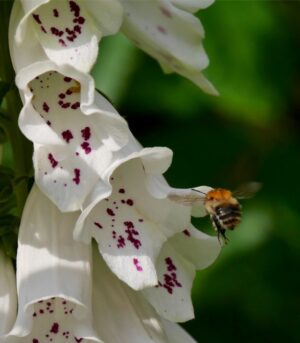
The period since WW2 has seen urban areas and, indeed farms, expand across the UK. The number of places where wildlife can thrive has been eroded.  Gardens and lawns have been changed to provide parking for cars, lawns are mowed and ‘weed-killered’, or worst still replaced with artificial grass so there is not a weed in sight.  Fortunately there are now initiatives like No Mow May that promote the growing of wild flowers in lawns and public spaces, like roadsides and verges.  Many common weeds are simply wildflowers by another name. Wild flowers / weeds (like dandelions, ragworts, clovers) are a lifeline for bees and bumblebees - who are facing so many threats [pesticides, habitat loss, invasive species] so adequate food is important. The flowers of these wild flowers / weeds offer food for a wide range of endangered bees, and at times when other resources are limited.  Dandelions, for example, offer an abundant source of nectar and pollen for bees & bumblebees when other options are limited - especially in urban settings. They produce their flowers (and therefore nectar and pollen) from early Spring right through to the onset of Winter. Recent studies have shown that the diet of bees has changed over the years.   In the past, the bees were able to forage and collect pollen and nectar from a wide variety of plants but with the loss of ‘natural’ wild areas their diet is now often dominated by brambles, clover and dandelions.  In the case of dandelions, their simple, open flowers makes for ease of collection.  They are visited by honey bees, bumblebees and carder bees.   Some studies have indicated that dandelion pollen, whilst it is rich in the amino acid proline,  has low levels or lacks certain amino acids (such as valine and isoleucine).  Bees need the same ten essential amino acids as us.  Without a supply of these particular amino acids, the development and growth of bees is impaired, as is their disease resistance and ability to raise the brood.  So, it is important to find ways to offer our pollinators a range of plants / pollen to provide all their essential nutrients. interesting related papers Food for Pollinators: Quantifying the Nectar and Pollen Resources of Urban Flower Meadows: https://journals.plos.org/plosone/article?id=10.1371/journal.pone.0158117 Shifts in honeybee foraging reveal historical changes in floral resources: https://www.nature.com/articles/s42003-020-01562-4
Woodlands web updates : 27

Woodlands web updates : 27

by The blog at woodlands.co.uk, 16 November, 2023, 0 comments

Tree survival and drought. Researchers at the University of California have been working on a method that helps predict whether forests / woodlands can survive periods of drought.  As climate change is altering patterns of snow and rainfall, so periods of drought are likely to become more common. Forests are important in terms of carbon sequestration, that is, they take up carbon dioxide from the air and convert it into sugars, starches etc that are stored in the leaves, branches, stems and roots.  However, in order to assimilate and convert carbon dioxide (in photosynthesis), trees (indeed all plants) need a supply of water.  When water is limited, trees need to make use of their reserve materials.  Just as we make use of body reserves of fat and glycogen when food / diet in inadequate. However, reserves can only sustain a tree for a finite period of time.  If drought persists, the tree reaches a ’tipping point’ and it will die.  The researchers studied a forest in the Sierra Nevada that experienced a period of drought between 2012 and 2015.   During this period, millions of trees died.  The team recorded rainfall, soil moisture and temperature in the forest AND the amount of carbon dioxide that the trees absorbed, and their reserve materials.  They found that the trees were able to maintain function / health after the onset of the drought but with the passing of time, the trees exhausted their reserves and were unable to use / convert carbon dioxide into food.  They had reached the tipping point and died.   The methodology of this study was called CARDAMON (carbon data assimilation with a model of carbon assimilation); it is hoped that it can be used to evolve strategies to enhance forest and woodland resilience in the face of climate change. Pollinators. [caption id="attachment_35902" align="aligncenter" width="675"] hoverfly[/caption] University researchers from the UK and Finland have been trying to determine the most effective pollinators of crop plants, like strawberries (and other fruits).  Plentiful and effective pollinators are needed to ensure a good harvest of the fruits. The researchers studied the pollinators at three strawberry farms through the (long) growing season for the fruit.  They adopted two approaches : They caught the insects that visited the strawberry flowers and analysed the pollen they carried in detail (pollen load and type). They also counted the number of flower visits by the different insects, (a quick way to identify key local pollinators). Many insects were identified, including :-  European drone fly :           Eristalis arbustorum Honeybee :                               Apis mellifera Levels drone fly :                   Eristalis abusivus Buff tailed bumblebee :     Bombus terrestris White tailed bumblebee :  Bombus lucorum Common drone fly :             Eristalis tenax Red tailed bumblebee :      Bombus lapidarius Early bumblebee :                Bombus pratorum Bent-shinned Morellia :   Morellia aenescens Hoverflies are true flies, that is, they belong to the order Diptera or true flies, as they have a pair of wings and a pair of halteres (balancing  / orienteering organs used when in flight). Several of the flies in the genus Eristalsis are known as Drone Flies (due to their resemblance to honey bee drones).  The larvae of Eristalis  species are commonly found in putrid / stagnant water and sometimes referred to as “rat-tailed maggots”. It was noted that pollinators also made use of the wild plants to supplement their diets, as strawberries alone cannot meet the nutritional needs of pollinators.  ‘Elsanta’ strawberries have a relatively low sucrose and protein content in both their nectar and pollen. The precise  order of importance of pollinators varied between farms.  Bee (Apis and Bombus) species  and hoverfly (Eristalis) emerged as key pollinators. The European drone fly was the most important pollinator at two of the three farms studied, evidence that hoverflies can be effective pollinators.  One farm had commercial hives of the honey bee but they were less significant than the activities of of the hoverflies and bumblebees. The abundance of a particular insect, coupled with its active period were /  are important determinants of pollinator importance.  Sawdust and plastics - a possible use?. Plastics represent a relatively new, but persistent and major form of pollution (on land, in the sea, indeed everywhere).  Whilst many plastic objects are instantly visible in the form of discarded bottles, fast food containers, many plastic pollutants are in the form of very small particles of plastics  - nano and microplastics.  The concern is that we and other organisms are taking these microscopic particles into our bodies from our food / drinking water. However, it is possible that plant materials may offer some ‘solutions’.  Water that contains micro and nano plastics can be filtered through sawdust that has been treated with tannic acid.   Tannic acid is large molecule, its molecular formula is C72H52O46 .  Tannic Acid is found in certain plant galls (swelling of trees caused by parasitic wasps) and in the twigs of certain trees, such as Chestnut and Oak.  The wood sawdust contains fibres of cellulose, combined with hemicelluloses and lignin.  Water can flow through this material by capillary action.  This plant-based filtration (known as bioCap) of plastic-laden water is capable of dealing with a wide range of nanoplastics (PVC, PET, polyethylene etc), and tests with mice suggest that the filtered water may be sufficiently free of plastic to pose little risk.  

Next Page »