Oaks playing clever
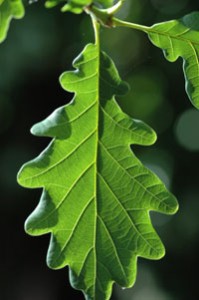
Once upon a time, the gypsy moth lived only in the Fenlands of eastern England, where its caterpillars fed upon bog myrtle and creeping willow. As the Fens continued to be drained and agriculture expanded, this native population died out in the early part of the C20th. However, many years later, a colony of the European form of the moth was found in Epping Forest. This form of the moth is polyphagous, that is, its caterpillars can feed on a variety of plant leaves. They have a particular penchant for the leaves of oak and poplar. Since its ‘introduction’, this form of the moth has spread to many parts of south-east England.
The caterpillars of this moth can denude a tree of its leaves if the infestation is heavy. Repeated attacks combined with drought can result in the death of trees. The trees do have a defence mechanism which is to increase tannin production, which makes the leaves much more bitter. But this comes at a cost to a tree, namely an increase in metabolism and energy expenditure to make these materials.
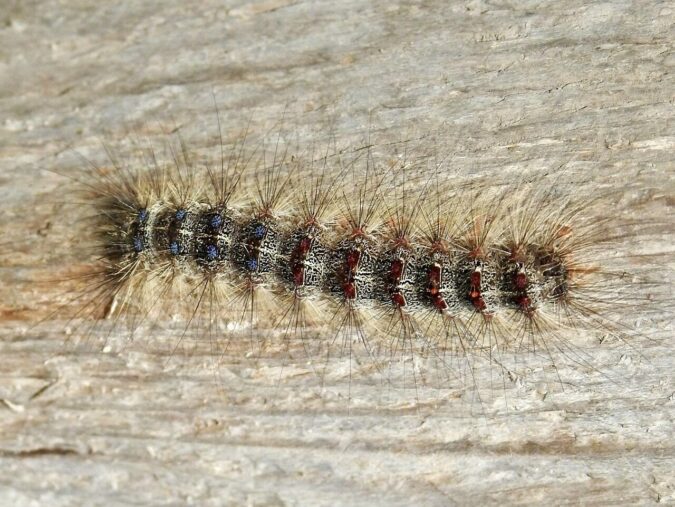
Gypsy moth caterpillar. [Thanks to Bernell MacDonald & Pixabay]
Research has indicated that oak trees have ‘solved’ the problem in a different way. If a tree has been subject to a significant attack by these caterpillars/moths, then in the succeeding year it delays the opening of its leaves by a few days. The effect of this is that when the caterpillars emerge, the leaves that they depend upon are still ‘sealed away’ in their buds. So, the caterpillars have little or nothing to eat. The effect of this is to reduce the damage to the tree by over 50%!
The research work was carried out over a large area in Northern Bavaria and made extensive use of radar satellites. The satellites were able to identify which trees had been stripped bare and how they reacted in the following year.
Further details of this work can be accessed here: https://www.nature.com/articles/s41559-026-03071-9
Leave a comment