Woodland Oaks.
by The blog at woodlands.co.uk, 10 July, 2026, 1 comments
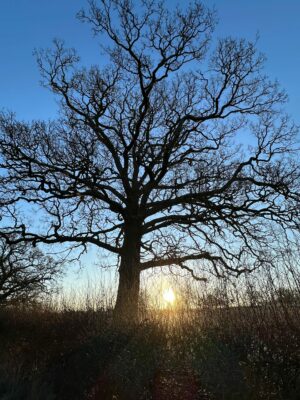
The oak is a keystone species. Just as building an arch, the stability of the arch is gained from the positioning of the central stone - the keystone, so in many woodlands oak trees are what holds the woodland together; offering both stability and diversity. There are two types of oak :
The pedunculate oak, which ‘likes’ richer and somewhat heavier soils. It can be distinguished from the sessile oak as Its acorns grow on long stalks [called peduncles].
The sessile oak, which can grow and survive on poorer and somewhat acidic soils, so can be found in upland areas. Its acorns sit more or less directly on a twig.
Both these oak trees contribute to many woodlands across the UK, and have done so for thousands of years. Some have great age and are veteran trees. Their life can be between 300 and 800 years. An oak woodland often represents the climax community in lowland Britain, which has considerable stability. Because of their long lifespan and great biomass, they also represent significant stores of carbon. Their extensive canopy also moderates the temperature and humidity of the woodland beneath, allowing for the growth of shade tolerate species such as hazel and holly.
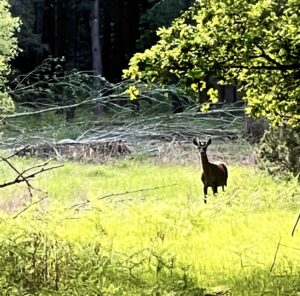
The trees also support an amazing diversity of life, some two thousand species are known to find a ‘home’ in oak trees. Feeding on the leaves or flowers are hundreds of species of insects - notably moths and butterflies. The leaves provide food for many species of caterpillars, which in turn are a food source for birds, like the tits and warblers. The branches of the trees provide nesting and roosting sites for many bird species. The acorns of the oaks are a rich source of nutrients and energy not only for squirrels, but also mice, deer and other mammals. Birds, like the jay, also take them. Jays and squirrels create ‘caches of acorns’, that is they bury them as a store for later. However, many are forgotten so they effectively distribute the acorns over a wider area and ‘plant’ future oak trees. The bark of the oak is rough and corrugated offering specialised niches for lichens and mosses. When an oak dies , it is then home to a variety of fungi and beetles, which feed upon the rotting wood (saproxylic beetles).
The roots of an oak penetrate deep into the soil, which helps improve drainage, and the roots establish mycorrhizal connections with soil fungi. These connections are symbiotic in nature, in that both partners benefit from the association. The tree gets mineral nutrients from the fungi, and, in return, diverts some of its carbohydrate material to the fungi. The breakdown of the oak leaves in autumn returns vital nutrients to the soil and provides food to a variety of decomposer organisms, from bacteria to earthworms. Thus, oaks are a vital part of many woodland food chains.
Sadly, our oaks face a number of threats. In elizabethan times, the main threat was that of being cut down and used in ship building. At the height of Nelson’s navy in the late eighteenth century / early nineteenth century it took some 4,000 oak trees, to build a single 100-gun ship, and the navy had some 300 ships! More recently, there have been problems with acute oak decline and infestation by the oak processionary moth. The caterpillars of this moth feed on oak trees and large populations can strip an oak tree bare. This leaves the tree vulnerable to other pests, and stresses such as drought. Incidentally, contact with the hairs of the older caterpillars of this moth can cause itching, skin rashes and eye irritations, plus sore throats and breathing difficulties in us and other animals.