Revisiting hedgerows.
by The blog at woodlands.co.uk, 12 April, 2023, 0 comments
Some years back, the Woodlands blog posted various articles about hedgerows, noting the loss of many - due to the increased mechanisation of farming in the mid C20th. Now, there is greater recognition of the importance of hedgerows, and there are initiatives to promote the maintenance and expansion of hedgerows.
But what is a hedgerow? Natural England offers a definition as follows : A hedgerow is defined as any boundary line of trees or shrubs over 20m long and less than 5m wide, and where any gaps between the trees or shrub species are less that 20m wide (Bickmore, 2002). Any bank, wall, ditch or tree within 2m of the centre of the hedgerow is considered to be part of the hedgerow habitat, as is the herbaceous vegetation within 2m of the centre of the hedgerow.
This differs from the definition in the Biodiversity Action Plan, which included references to ancient hedges / species-rich hedges. The definition now includes all hedgerows consisting of at least one native woody species of tree or shrub (mainly), but it does exclude bramble and honeysuckle as ‘woody species’.
According to one source, there are some 550,000km of hedgerow in England, with over 400,000 km being actively managed. Hedgerows are an important semi-natural habitat in what is otherwise a managed agricultural landscape. They are found across the country but there are more in lowland regions. Hedgerows in the south east are associated with large fields and fewer trees, the proportion of trees in hedgerows increases as one goes north and west.
The nature of hedgerows varies across the country but all are important as :
They provide a habitat, shelter (micro-climate provision) and resources for many different species (from plants to insects, birds and mammals). Hedgerows are particularly important as nesting sites for birds.
They support animals that have key roles within the broader ecosystem, for example pollinators and predators of pests.
They offer an important source of nectar that helps support wild bees - adjacent farmland can be a poor source of nectar
Hedgerows are known to support threatened (red listed) species
Hedgerows capture and store carbon (above and below ground)
Hedgerows offer ecosystem services eg. mitigation of water flux and availability, landscape connectivity, soil conservation / stabilisation.
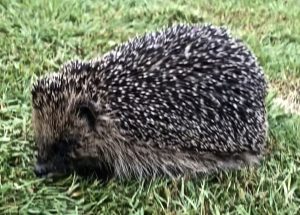
A number of studies indicate that increasing the number of hedgerows would help with landscape connectivity (for example, for hedgehogs) and that planting of blackthorn and hawthorn in association with later flowering species would help support a number of wild bee species. Expanding the number of hedgerows could have some negative effects as they might offer a home to invasive species and / or pathogens; but one study has indicated that ash trees in hedgerows suffer less impact from ash dieback than trees in forests. To date there does not appear to be any detailed research on whether increasing hedgerow coverage would have any impact on tree disease / pathogen spread.
Hedgerows, like woodlands themselves, face a number of challenges due to climate change. Warmer winters may mean that the ‘winter chill’ requirements of some shrubs / trees will not be met; this may mean flowers and fruits fail to form properly which in turn means less food for birds, small mammals etc. Drier summers may stress some species, trees like Beech are susceptible to drought. Extreme weather events (like Storm Arwen) can inflict damage on hedgerow trees. If a hedgerow is next to farmland, then it may experience
drift from pesticide and / or herbicide spraying
nutrient enrichment (eutrophication) due to the use of fertilisers.
Hedgerows with a diverse structure, with plants, shrubs and trees of varying ages and heights provide the widest range of niches / microhabitats for wildlife. The inclusion of dead / decaying wood offers opportunities for various fungi, saproxylic beetles, woodlice etc.
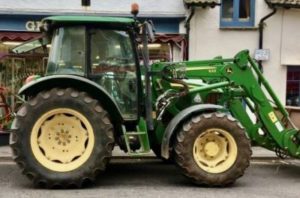
Some hedgerows are managed / reduced with a mechanical flail (see above !!!). If this is done annually, it can result in a loss of biodiversity. Trimming should be done on a 2 or 3 year cycle; and some sections of the hedge might be left for longer " see
(https://www.hedgelink.org.uk/cms/cms_content/files/76_ne_hedgecutting.pdf).
Thousands of tree and hedgerow plants are being planted to create a flood defence project at Castlehill, East Hull. The plan is to create some seven hectares of woodland and over five kilometres of new hedgerow, as part of a flood defence project (to store floodwater east of the city). Trees such as field maple, downy birch, English oak, and black alder are being planted along with species of willow, dog rose, guelder rose and blackthorn and hawthorn to create hedgerows and scrubland. Other species will be allowed to naturally develop in the area and the habitat is expected to reach ‘maturity in some fifteen to twenty years.
There is a citizen science project that involves surveying hedgerows. It is organised by the People’s Trust for Endangered Species [PTES]. The Great British Hedgerow Survey guidelines can be found here : https://hedgerowsurvey.ptes.org/survey-guidelines
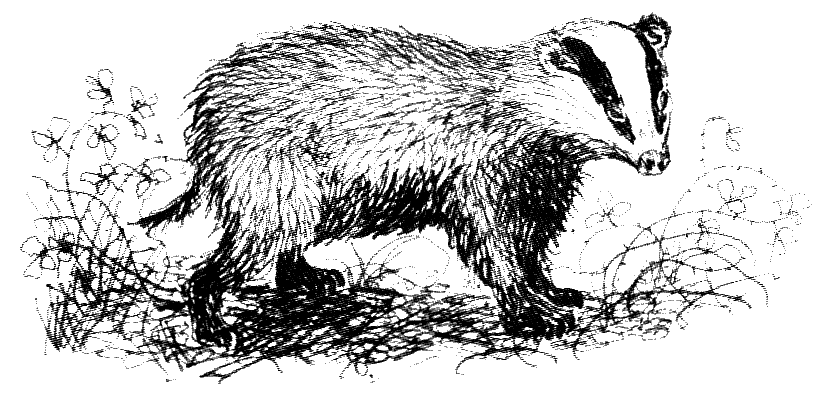
Some times hedges offer a home to other things