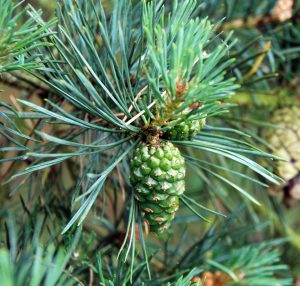
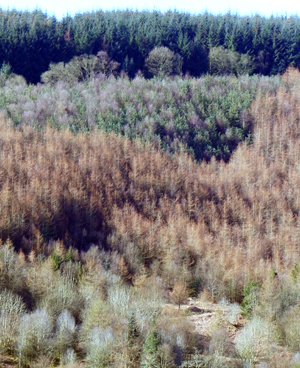
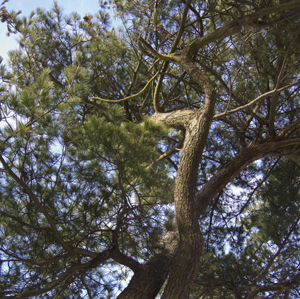
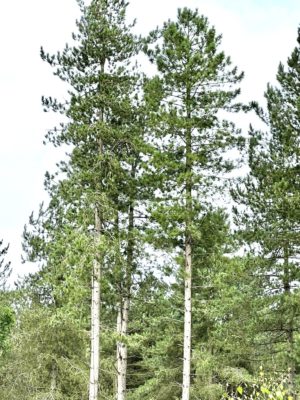
A variety of conifers (at Bedgebury Pinetum).
by The blog at woodlands.co.uk, 31 July, 2025, 0 comments
When thinking of conifers, one might feel a bit ‘schizophrenic’. Perhaps picturing a Leylandii encroaching on your garden, whilst also remembering your Christmas tree. Maybe the typical image of conifers is that of a tree with dark green foliage all year round. However, this would be something of a disservice to the Conifer family - the Pinophyta, which contains an amazing variety of trees, many of which are at risk of extinction. This group includes cedars, firs, cypresses, junipers, larches, pines, hemlocks, redwoods, spruces, and yews.
[caption id="attachment_32107" align="aligncenter" width="650"] Leaves on the branchlets of Dawn Redwood[/caption]
Conifers are important because
They dominate vast areas of land, particularly in the Northern Hemisphere, forming the boreal forests or taiga.
Softwood from conifers accounts for approximately 45% of global timber production. Pine, spruce and larch are often grown specifically for softwood production. The wood is also used in the paper production[.and, to a lesser extent, in making plastic from chemically treated wood pulp].
Some species produce edible seeds , such as pine nuts provide foods such as pine nuts for humans and wildlife and juniper berries, which are used to flavour gin. The Monkey Puzzle tree, (also known as the Pehuen Pine, native to Chile and Argentina) produces seeds known as piñones; traditionally harvested by indigenous communities.
[caption id="attachment_27592" align="aligncenter" width="600"] Monkey puzzle tree[/caption]
To see the diversity of the Conifer family one could visit the Bedgebury Pinetum. This is home to one of the world’s most important conifer collections. Bedgebury was established in 1925 by Kew Gardens and the Forestry Commission. The curator at Kew had observed that the conifers there were ‘being choked by London Smogs’. The site at Bedgebury, situated on the Southern Kentish weald, was ideal. It offered an escape from the pollution of London and it had wet and free draining areas, plus varied soils so it a range of conifer could be grown.
The land already had some conifers that had been planted by Viscount Beresford - an evergreen enthusiast. In 1925, some 315 trees were planted. This year, to celebrate reaching a century, some 89 of the original trees are marked with special yellow labels. For its first twenty years, the pinetum was managed by William Dallimore. His diaries record in some detail the trees he planted, and the challenges faced in establishing the pinetumIf you visit, then you might walk through through Dallimore Valley, and view his legacy. Bedgebury soon became a centre for the scientific interest in conifers, their conservation, and landscape planning. The current curator is Dan Luscombe.
Apart from seeing a range of conifers, the pinetum offers a variety of activities, e.g. family cycling, mountain biking and walking, There is also the play trail or you can explore the canopy on a Go Ape tree-top adventure or challenge. It is rumoured that the Gruffalow lurks within the grounds of the Pinetum. There is also a cafe, serving a range of drinks, plus breakfast and lunch options.
The pinetum is open from from 8 AM to 8 PM (March 2025 to 26 October 2025), and there are charges for car parking.