How to plant a hedge
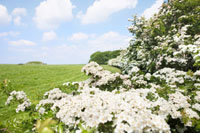
Hedges are important for our landscape and wildlife but how do you go about planting one? We’ve written some general guidelines on the tree planting blog . However, a hedge is a bit different in that it is usually planted for quite different purposes – as a windbreak, to keep animals in, to provide a “corridor” along which wildlife can move, and for diversity of plant life. It is also maintained differently - you will not be thinning it.
What to plant in your hedge
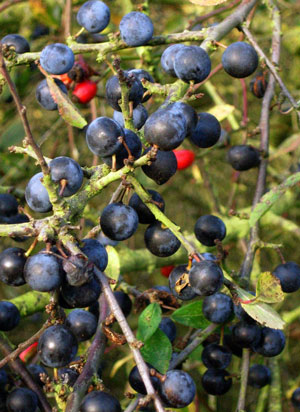
The first decision then is what to plant. Many people prefer to use native species that have been sourced locally (“local provenance”). The principle species may well be hawthorn, a good hedging plant, cheap to buy and quick growing. Other species can be added to this such as field maple, blackthorn, hazel, geulder rose (which is not really a rose but a viburnum), wayfaring tree, spindle, common dog wood and the dog rose. You should buy good stock and, in relation to the costs of such an exercise, the plants are not expensive - there are several nurseries in the Woodlands.co.uk suppliers directory . Ideally you should order well in advance.
When to plant your hedge
You will need to plan well ahead in order to plant at the best time of year – the planting season is from dormancy when the plants are lifted at the nurseries ready for sale, sometime in October, until early March before the plants start shooting. A general rule with this planting season is that on light sandy soils you should plant before Christmas and on heavy clay soils, which may be waterlogged all winter, you should plant after Christmas.
Ground preparation for hedge planting
If the ground is compacted you will have to plough or cultivate it. If the ground is weed-infested then you can kill weeds with herbicide (such as Roundup or Kerb) or plough to bury the weeds. Another approach is to cover the planting area with a deep layer of organic mulch (eg wood chippings, pulverised bark or farm yard manure or lay a strip of black plastic mulch over the planting area). Mulch at least 1/2 metre wide. Get the mulch on early in the season so it can kill off any weeds during the summer. Where organic mulch is used the worms will incorporate some of it during the summer so improving the soil. The better the preparation, the quicker the hedge will be formed.
Protecting the young plants
Your newly planted hedge will be a very attractive source of food in the winter months especially to rabbits and hares. Deer may also browse on them. Protection can be either with rabbit netting fence on both sides or the plants can be individually protected with tree shelters, most commonly with spiral guards. Ventilated guards are best but if there is a possibility of spraying with herbicide in subsequent years then go for unventilated spiral guards. Again there are several suppliers of tree shelters in our suppliers directory. Most nurseries will also supply tree guards and canes. Canes are used for support, pushed into the ground inside the spiral shelters.
 Actually planting the hedge
The nursery will have grown the plants in good conditions but transplanting is a shock to the plants, so you need to treat them well to minimise the shock. Do not let the roots dry out and do not let them heat up in enclosed bags. If you are planting a lot then it's a good idea to heel the plants into the ground and take them out as they are used. To heel plants in you need to make a trench the same depth as the roots, cut open the bundles (usually they come in bundles of 25) and spread the plants out along the trench and then back fill. Alternatively the roots can be covered with well-rotted mulch.
Do not plant in frosty conditions as the plants won't like it. If there is organic mulch then scrape this back to leave a small area for planting. Don't let organic matter come in contact with the stem of the plants. If black plastic has been laid down then make a small slit to plant through. Planting is simple with a planting spade, (like a standard spade but narrower) push the spade in deep, pull back towards you then push forward. This leaves a small slit into which the roots are dropped, using a sideways swipe motion. With the roots in the slit take out the spade and compress either side with your heel. In heavy clay soils during dry summers the slit may open up as the soil cracks, allowing the roots to dry out. The plant should be at the same level in the ground as it was in the nursery - no deeper or no shallower. Fit the spiral guard over the plant and then slide the cane inside the guard and hammer in.
There is a good video on YouTube:
[youtube=http://uk.youtube.com/watch?v=KUc3Zm7u9CE]
Have you tried planting a hedge and what has been your experience? Please let us know here.
Comments are closed for this post.
Discussion
I use a different and more commercial method than that on the video, I spray off the planting line about a month before planting, then brushcut or strim (according to density of weeds) about a week before planting.
Hi – could you advise an approximate budget for planting hedges – Hawthorn for example? Thanks for all the info.
Very helpful video – thank you! Ive just moved in and am planting a new hedge in front of where row of huge Leylandii stood (just cut down).
We’ve done all the site clearance, dug over and put in organic material to supplement the soil. Didn’t know about e mulch mat so will definitely use that.
Advice above re using smaller bare root hedging plants is also useful. Extra information I would have found useful is advice on the proportions and mix of plant types for a mixed native hedge.
The smallest whips best. Plant a lot close together for a thick hedge.
Thank you for sharing. It will be really usefull for all newbies. Last year I decided to create a hedge. I had zero experience in that field and when I started I looked at the small bare rooted seedlings or transplants and imagined it will takes years before they will achieve anything which looks like a ‘hedge’. A friend, professional landscape gardener told me that actually the larger plants are expensive and are more likely to fail than small ones.
What types of plants do you recommend as most appropriate for hedges? What if someone wants a hazel tree hedge? How long would it take to grow trees and to craft them afterwards?
Regards, Allison from Gardening Services London.
How deep do the roots grow? I’d love to grow a mixed hedge of Hawthorn, and Blackthorn in the front garden. I thought it would provide privacy for me, and a home/food for wildlife. The problem is the front has gravel down. I thought that if I dug the gravel layer away, and cut the membrane that I could plant into the soil. Unfortunately under the membrane is larger pieces of gravel. I’ve dug a lot and don’t seem to be able to get to the bottom of it. If I was to put raised beds in that were 2-3 ft deep, would that be ok, or am I just going to have to get a fence?
Very helpful article for a novice like me!
Clear and easy to follow advice.
Also youtube link helpful.
Much appreciated – many, many thanks.
Great video. Just planted a small hawthorn/blackthorn hedge then checked vid and realised we have to prune back and plant a few more. V excited! I don’t know why more people don’t use hawthorn – it is soooooo pretty!
we planted a small hawthorn hedge last year and the whips are now about 18 in high if we top them out will the hedge get thicker and if so at what time do we top them out.
Also when can we prune a young medlar?
Can anyone advise if a hawthorn hedge is practical to contain a medium sized dog? I’m a keen wildlife gardener and would prefer to use hawthorn hedging instead of an ugly mesh fence if at all possible. I know hawthorn was traditionally used to contain livestock.
I’m a volunteer worker at Warley Place, Brentwood, Essex – formerly the home and garden of Ellen Willmott. Between November 2012 and March 2013 we planted a new hedge of over 1,500 whips consisting mainly of hawthorn but also dogwood, dog rose, hazel, field maple and spindle.
1. When can we remove the rabbit guards?
2. How old do the whips need to be before we can start pruning them to ensure a “bushy hedge?
3. When is the best time of year to prune a mixed hedgerow?
Annabel
[…] blackthorn (Prunus spinosa) is a small shrub native to Britain. It’s often found in mixed, semi-natural hedges with other species. Blackthorn makes a good livestock barrier (keeping the animals where you want them) because […]
[…] We have hawthorn hedges around our lotties …….I don't know the answers to your questions but what I do know is they are vicious and have the scars to prove it . This may help…. How to plant a hedge | The Woodlands.co.uk Blog […]
I use a different and more commercial method than that on the video, I spray off the planting line about a month before planting, then brushcut or strim (according to density of weeds) about a week before planting. I slot plant hedging whips of around 45-60cm height, guarding with cane and spiral (no holes – as we maintain with spray for 3 to 5 years after planting), I plant on average 125-140m a day @ 4 plants per metre – my best day was 170m !. Quality hedging whips are very very hardy and the main thing that will do for them is roots drying out – so don’t let them.
Hi there.
Great video but I was just wondering when do you remove the plastic protectors? We’re hoping to palnt a hawthorn hedge in our garden and have three rabbits who will be running aorund in that part of the garden. At what stage would you say it’s safe to remove the plastic protectors and if you leave it too long will they inhibit side growth?
Many thanks.
Hi Gemeos
sorry you had problems with the video. Seems to be working now. If still not working for you try http://www.youtube.com/watch?v=KUc3Zm7u9CE on You Tube.
Hmm, shame the video is no longer available :(
We need to dig out the remains of what was a builders yard from our front garden before we can even contemplate a good hedge along the border. It will be done though, wildlife needs homes!
Brilliant video! Really helped – enjoyed the music too! Will use the same format for my new hedge.Made it look easy – hope it will be. Must go and plant as we are now into April!

Although i use different and more commercial method than that on the video, I spray off the planting line about a month before planting, then brushcut or strim (according to density of weeds) about a week before planting.
Gardeners in London
7 February, 2022