Changing times?
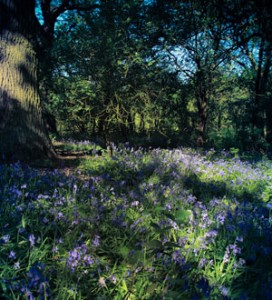
Researchers from the Open University have studied how ancient woodland habitats have changed in recent times. Of the 43 woodlands studied; some were near to urban areas, whereas others were sited in rural locations. The change in the nature of these woodlands was ‘measured’ by comparing historical records, herbarium specimens and surveys of the woodlands with present day surveys and analysis.
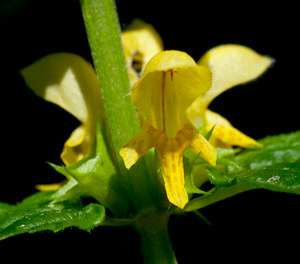
The study was particularly interested in ‘indicator species’ (eg bluebells, yellow archangel) associated with ancient woodland. Ancient woodland indicators are generally slow to colonise, but may be ‘stress tolerant’ and can persist after woodland disturbance or indeed, tree removal.
 The study looked at how they fared with
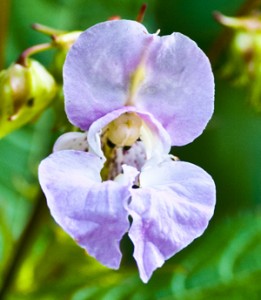
- the spread of non-native species, such as the Spanish Bluebell, Rhododendron ponticum, swamp stonecrop (Crassula helmsii), Buddleja davidii, and Japanese knotweed (Fallopia japonica). These can outcompete native species, leading to local extinctions. Woodlands near urban areas might be expected to be affected by the spread of such plants from gardens, parks etc.
- Pollution, which degrades air quality and also affects nutrient availability. This may be due to fertiliser run-off from agricultural land or particulates and heavy metals from roads / industry. Rural woodlands are perhaps more likely to experience fertiliser run-off than urban ones, this can increase nitrate and phosphate levels in the soil. However, the drainage of particulates and various pollutants from roads and motorways has recently been recognised as problematic.
 The research indicated that the presence of native species in both urban and rural areas was relatively unaffected over the last thirty years. However, the number of non-native or alien species in urban woodlands has risen significantly, affecting their species make-up. Thus, the study identified a large number of alien species recorded in ancient woodlands near to urban settings but these are largely absent from rural sites.
Biotic homogenisation can occur as non-woodland and alien species start to move into our ancient woodlands, leading to changes in the native plant communities. A significant proportion of ancient woodland in England is near to urban sites. Clearly, there is a need for improved and careful monitoring of ancient woodlands near urban areas.
Comments are closed for this post.