Woodlands.co.uk

Blog - Search results

Unwelcome 'guests'.

Unwelcome ‘guests’.

by The blog at woodlands.co.uk, 3 April, 2025, 0 comments

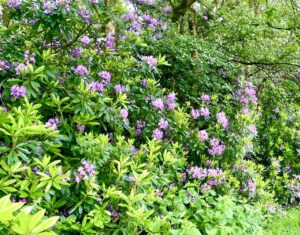
A plant growing in the wrong place is sometimes described as a weed, but it can be more than just an inconvenience.  Plants in the wrong place can have a devastating effect on ecosystems, dramatically reducing biodiversity.  The same is true for certain animals - those that have 'traveled' from their natural habitats to 'foreign areas’ where they have no natural predators to keep their numbers in check.  Foreign or alien species are sometimes introduced to an area in the belief that they will solve local problems with pests or over-population of a native species.   A classic example of this is the cane toad.  Native to  parts of central and South America, the cane toad is preyed upon by a variety of animals such as caimans, snakes, eels and some fish species.  It was introduced into sugar plantations in various parts of the world to control beetles that were damaging sugar cane crops. Since this was a successful strategy in Puerto Rico, the toad was introduced elsewhere, notably Australia.  Just over a hundred toads were released in Queensland in 1935, with more released in 1937.  Unfortunately the toad did not effectively control the grey-backed cane beetles (the intended target), and they found other things to eat.  Their numbers grew exponentially and they spread into other areas, such as the Northern Territory and New South Wales.  These poisonous toads have significantly reduced biodiversity particularly affecting native amphibians and reptiles. Sometimes foreign species are introduced as ornamental plants or 'exotics'. During the Victorian period many plant species were brought to the UK for country estates.  Rhododendrons that were collected across Asia and the Himalayas became popular in parks and gardens.  However, Rhododendron ponticum, a species native to the southwestern Iberian Peninsula (parts of Portugal and Spain) and the southern Black Sea Basin (parts of Bulgaria & Turkey)  has been less well received.   It was introduced in the eighteenth century by Conrad Loddiges.  Loddiges grew seed and sold on young plants as an ornamental flowering shrubs for gardens, parks and estates. On country estates and heathland areas, it was planted as cover for game birds as its dense growth offered shelter and protection. It has since spread aggressively and is now considered to be an invasive species. An invasive species is a non-native species that spreads and damages its new environment. R. ponticum poses a threat to key woodland ecosystems, such as Atlantic Oak Woodland.  When this shrub ‘invades’, it comes to dominate the area.  It creates deep shade so the woodland floor becomes a dark and ‘barren’ place. Many ground flora species are lost so that only shade tolerant mosses and liverworts remain.  These plants form a ‘dense mat’ of vegetation that is a barrier to seed germination.  Additionally, there is evidence that as R. ponticum grows, it produces chemicals which inhibit the growth of other species.  This phenomenon is known as allelopathy.  Even when the Rhododendron is removed, it is difficult to reestablish the original flora.  Clearing an area of this plant is difficult and expensive. One effective method involves drilling the stems and injecting herbicide directly into the plant, a targeted approach that uses a lot less herbicide than spraying.  Mabberley’s Plant-book notes that the cost of eradicating the plant from Snowdonia was £30M and that was in 1988. Another Victorian introduction was the grey squirrel. Native to North America, grey squirrels were first released in the UK in the latter part of the 19th century.   One person associated with their spread was the 11th Duke of Bedford  (Herbrand Russell).   He was involved in various animal conservation projects, but he released and 'gifted' many grey squirrels from the estate at Woburn.  The populations of grey squirrels in Regent's Park, London are thought to have come from there. Humans may still be helping the spread of the grey squirrel, albeit unintentionally.  One squirrel was captured on the Isle of Skye (in 2010), it had traveled from Glasgow, as revealed by its genetic profile.  It had probably made the journey as stowaway under a car bonnet. It is important that we are aware of how 'easy' it is for these animals to travel with us.  Their introduction has been disastrous for the native red squirrel populations, due to competition and the spread of the squirrel pox virus.  It is vital that grey squirrels do not colonise areas where the red squirrel still survives. . More recent introductions have arrived due to increased global trade.  Parasites and pests can ‘hitch a ride’ with people, materials or goods as they move across the world.   Climate change is also altering the range and distribution of many plant and animal species.  There is an alert for the Asian or Yellow Legged hornet (Vespa velutina nigrithorax), an invasive, non-native species from Asia.  This hornet preys upon honeybees and other beneficial insects such as hover flies and bumblebees. It hovers outside bee hives, waiting to catch and then kill returning honeybees. The effect on bee colonies can be devastating. The Asian Hornet arrived in France in 2004 (through an import of Chinese pottery) and has spread rapidly. Now it is found in Italy, Spain, Portugal, Switzerland, Belgium and Germany.  Preventing its establishment in the UK is critical.  Any sighting needs to be reported, this can be done through the Asian Hornet Watch. This link downloads a PDF, which gives more information about the Asian Hornet, and contains images comparing the  appearance of the asian hornet, the european hornet, the wasp and honey bee. Other invasive species that are a cause for concern include : Himalayan Balsam Harlequin ladybirds, Signal Crayfish, Eight-toothed bark beetle Citrus long horned beetle Giant Hogweed Thanks to Anton for images.
Woodlands web updates 33

Woodlands web updates 33

by The blog at woodlands.co.uk, 1 February, 2025, 0 comments

Insect pollinators are currently in decline.  This is, in part, due to the loss of habitats and foraging resources for pollen and nectar.  Pesticides, like the neonicotinoids, don’t help. Lawns and pollinators. “No mow May” has been promoted by Plantlife to  provide a feast for pollinators,  tackle pollution,  reduce urban heat extremes, and  lock away atmospheric carbon Lawns in gardens, parks, recreation grounds etc. represent a significant proportion of green space in cities, towns and villages. If these spaces and suburban lawns are managed with pollinators in mind, then they could become an important source of foraging resources.  Now, there is evidence accumulating that this is the case.  A  recent study used the lawns at Ministry of Justice prison and court sites.   Each site contained four patches,  A patch mown as normal every two weeks - the control  A patch mown every 4 weeks A patch mown every 6 weeks A patch mown every 12 weeks Weekly surveys of pollinators and flowering plants were made throughout June to late August. Butterflies, bees, bumblebees, hoverflies and beetles were recorded as pollinators.   The patches that were mowed less frequently (6 and 12 weeks) had many more pollinators [in fact 170% higher than the 2 week patch], and more flowers.  The most common plants recorded included selfheal, daisy, dandelion, creeping buttercup, and white clover.  Apart from the increase in biodiversity, the patches were ‘visually pleasant’, contributing to the wellbeing of staff / prisoners and saved on lawnmower fuel (cost). Details of the study : https://conservationevidencejournal.com/reference/pdf/12801 Farms and Pollinators. Farms and their crops, such as clover and oil seed rape, can offer a rich supply of pollen and nectar to pollinators.    The ‘richness’ of this supply can draw pollinators away from more natural areas.  However, the pollinators can go from ‘feast to famine’, when the crop has finished flowering.   A Swedish study has followed the behaviour of farmland pollinators after clover flowering.  They found that if natural areas were available after the flowering of the clover, then pollinators [like different bumble bee species] became more selective in their foraging.  This reduces the intensity of competition between the various pollinator species.  Areas of natural vegetation on farmland are therefore important in helping pollinators adapt after crops (such as clover) have finished flowering. [caption id="attachment_33904" align="aligncenter" width="650"] Oilseed rape[/caption] https://www.sciencedirect.com/science/article/pii/S0167880924005735?via=ihub Gardens and pollinators. A study In the Boston area of the US has revealed that small gardens with a diverse range of plants are important to pollinators.  The researchers first used Google Street View to identify and categorise some 86,000 front gardens (or yards, in their terminology) across the area - ranging from lawns to diverse flower gardens. They then visited 500+ of these gardens when the plants were flowering [in 2021], identifying and documenting the plants in each.   The found that : Whilst the higher income areas tended to have more cultivated flower gardens, these gardens were home fewer wild flower (weed) species. Small gardens often had the richest diversity of plants in flower as compared to those with lawns. The authors of the study conclude “Dense urban areas are a promising target for pollinator conservation.” Detail of this study can be found here : https://www.sciencedirect.com/science/article/abs/pii/S0169204624002706?via=ihub  
Woodlands web notes : 31

Woodlands web notes : 31

by The blog at woodlands.co.uk, 27 October, 2024, 0 comments

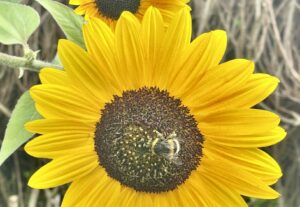
Gardens help out The blog has reported on several occasions on the problems bees, bumblebees and other insect pollinators face.  Now research by the Univeristy of Bristol has demonstrated the importance of gardens and urban areas to many farmland pollinators.  At certain times of years, such as early Spring and late Summer,, rural pollinators experience limited supply of nectar.   Somewhat surprisingly, a large percentage of UK farmland is within a mile of a garden, and at times of scarcity gardens can make good the lack of nectar [and pollen].  Indeed, the Bristol research (by Dr T Timberlake and colleagues) indicates that gardens can provide between 50 and 95% of the nectar during these 'lean times'.  Whilst gardens provide a relatively small amount of nectar in rural areas, nevertheless the continuity of the supply makes its contribution  particularly valuable. Full details of this investigation are reported here : https://royalsocietypublishing.org/doi/10.1098/rspb.2024.1523 Sunflowers to help bumblebees ? One of the issues that bumblebees face is infection by the parasite Crithidia bombi.  It lives in the gut of the bee. The parasite passes from host to host as cysts in faeces.  The parasites develop in the digestive tract, interacting with the intestinal lining using a flagellum.  Infection with this parasite seems to affect the bee's ability to learn and they struggle to recognise nectar-rich flowers, and consequently are at risk of starvation. Recent research has shown that if bumblebees are offered sunflower pollen to feed upon, then the Crithidia infection is significantly reduced. As bumblebees are often used in commercial glassshouses, it could be that if sunflower pollen was offered within this 'closed' environment then the incidence of Crithidia infection could be controlled.  The sunflower pollen does not have to be 'fresh', indeed stored, frozen pollen is effective.  A 1:1 mixture of sunflower and wildflower pollen also gives the desired 'medicinal effect', and ensures the bees are receiving enough protein and sodium from this supplement. Full details of this investigation are reported here : https://academic.oup.com/jee/article/116/5/1939/7234927        
In praise of insects.

In praise of insects.

by The blog at woodlands.co.uk, 19 May, 2024, 0 comments

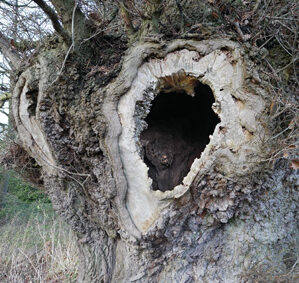
Last week's woodlands’ blog talked about the fall in insect numbers across the UK.  This is not just a UK problem, it is far more widespread.  Insects,  bees and bumblebees as pollinators aside,  are important in ecosystems;  there are armies of other insects that are providing ‘services’ for us. When a tree dies in a woodland, bacteria and fungi are important agents in the decay of the tree and the recycling of elements, but they are assisted by beetles. If the dead tree was a veteran, during its lifetime it will have provided  a variety of micro-habitats.  Holes and crevices would have been used by bats,  birds,  insects etc.  Now, the the decaying wood will be support different organisms, from microbes to larger fungi, such as bracket fungi that can erupt from surface of the dead tree.   As the wood decays,  the material may become a ‘home’ for saproxylic beetles. For example, Stag beetle larvae feed on decaying wood (building up fat reserves, which the adults later rely on. it adds humus and fertility to the soil as its nutrients are released. Though bees and bumblebees (members of the order Hymenoptera) are important as pollinators (of many fruit and crop plants, so are the hoverflies key to  the pollination of many wild flowers.  Hoverflies belong to a different group of insects - the Diptera. There are several thousand hoverfly species spread across the world. They are found on every continent with the exception of Antarctica.  Work by Dr. Wotton and his team at Exeter University suggests they are situations where hoverflies may be more effective pollinators than bees and bumblebees, and the role of hoverflies in crop pollination may have been under-estimated.  Hoverflies can carry pollen over considerable distances, and may  visit isolated plants.  The common drone fly (Eristalis tenax) has been known to travel some 100km and carry the pollen of eight plant species.  Hoverflies (or Syrphidae) are also known to migrate over considerable distances.  The female marmalade hoverfly can migrate from Scandinavia to Spain and North Africa, migrating in the autumn to lay their eggs.  In the following Spring, succeeding generations migrate north again.  Some American hoverflies are known to migrate from Canada to the southern states. Insects are not just important in terms of facilitating decay or aiding pollination, some are involved in seed dispersal.  Scientists at Kobe University studied the dispersal of seeds from the fruit of the silver dragon plant.  Using  time lapse photography techniques, they watched to see which animals feed on the plant’s fruit at night. Whilst crickets (order : Orthoptera) ate much of the fruit, earwigs (order : Dermaptera) and woodlice (not insects, but terrestrial crustaceans) also consumed significant amounts of the tiny seeds of the fruit.  Further work demonstrated that many of the seeds survived the passage through the gut of these animals.  So apart from being seed predators, small invertebrates may also help their dispersal, depositing them away from the parent plant. Woodlice are interesting land based crustaceans that generally feed on dead and decaying plant material, helping in the recycling of nutrients. Further examples of the importance of insects in nature can be seen in fig production.  The fig wasp 'gives its life' in the process of pollinating the fig, in return the fig provides a safe ‘nursery’ for the young on the wasp, seed the woodland blog on the fig.  There are many types of fig and each has its own wasp, to ensure successful pollination.  Full details of the life cycle of fig wasps can be followed here.  The association between the wasps and figs is an example of mutualism. This co-dependence probably had its origin some seventy million years ago, and the wasps and figs have co-evolved since then. .
A worrying decline in insect numbers.

A worrying decline in insect numbers.

by The blog at woodlands.co.uk, 13 May, 2024, 0 comments

Though some insects are problematic in that they are carriers of disease (for example, mosquitos and malaria, ticks and Lyme disease); it is nevertheless true that without insects food chains and ecological systems would collapse.  Insects act as  pollinators not just of garden flowers, but of crops,  natural pest control agents (ladybirds eat aphids), Decomposers, breaking down waste products of other animals, remains of dead plants and animals (dung beetles). Their activity ensures the recycling of nutrients in complex biogeochemical cycles. However, as the woodlands’ blog has reported previously, insects (like so many wildlife species) are under threat.  They are in decline due to loss and damage of habitats,  climate change,  pollution and  pesticide use. The decline in insect numbers (in the UK) is ‘monitored’ through BUGLIFE and Kent Wildlife Trust.  Each year a survey is undertaken using the ‘splatometer technique’, in which motorists are asked to record the number of flying insects (e.g. moths, flies, aphids, bees and flying beetles) that are squashed on their front number plate (after a journey).  The length of the journey is recorded, a photo taken and count details uploaded via the BUGLIFE APP, the app includes a tutorial and some safety advice.  Comparing this year’s results of over 6000 journeys with those gathered in 2004 (by the RSPB, who used the same method) reveals a dramatic fall in flying insect numbers.   London, for example, showed a dramatic fall in numbers of 91%.  The fall across England was 83%, Wales saw a 79% drop and Scotland a 76% fall.   Whilst figures for Northern Ireland were limited they suggest a 54% decline. [caption id="attachment_21589" align="alignleft" width="300"] bumblebees favour teasels[/caption] Insects [and other wildlife species] can be helped by: Creating larger areas of natural habitats (many have been lost to roads, agriculture, urban expansion) Creating wildlife corridors to join up similiar habitats/ecosystems throughout the landscape Creating wild flower ‘meadows’ by road sides, verges etc Reducing the use of pesticides and other chemicals which have significant effects on wildlife.  The effect of neonicotinoids on bees and bumblebees is well documented.       
dandelion

Wild flower pollen and bees

by The blog at woodlands.co.uk, 20 April, 2024, 1 comments

The period since WW2 has seen urban areas and, indeed farms, expand across the UK. The number of places where wildlife can thrive has been eroded.  Gardens and lawns have been changed to provide parking for cars, lawns are mowed and ‘weed-killered’, or worst still replaced with artificial grass so there is not a weed in sight.  Fortunately there are now initiatives like No Mow May that promote the growing of wild flowers in lawns and public spaces, like roadsides and verges.  Many common weeds are simply wildflowers by another name. Wild flowers / weeds (like dandelions, ragworts, clovers) are a lifeline for bees and bumblebees - who are facing so many threats [pesticides, habitat loss, invasive species] so adequate food is important. The flowers of these wild flowers / weeds offer food for a wide range of endangered bees, and at times when other resources are limited.  Dandelions, for example, offer an abundant source of nectar and pollen for bees & bumblebees when other options are limited - especially in urban settings. They produce their flowers (and therefore nectar and pollen) from early Spring right through to the onset of Winter. Recent studies have shown that the diet of bees has changed over the years.   In the past, the bees were able to forage and collect pollen and nectar from a wide variety of plants but with the loss of ‘natural’ wild areas their diet is now often dominated by brambles, clover and dandelions.  In the case of dandelions, their simple, open flowers makes for ease of collection.  They are visited by honey bees, bumblebees and carder bees.   Some studies have indicated that dandelion pollen, whilst it is rich in the amino acid proline,  has low levels or lacks certain amino acids (such as valine and isoleucine).  Bees need the same ten essential amino acids as us.  Without a supply of these particular amino acids, the development and growth of bees is impaired, as is their disease resistance and ability to raise the brood.  So, it is important to find ways to offer our pollinators a range of plants / pollen to provide all their essential nutrients. interesting related papers Food for Pollinators: Quantifying the Nectar and Pollen Resources of Urban Flower Meadows: https://journals.plos.org/plosone/article?id=10.1371/journal.pone.0158117 Shifts in honeybee foraging reveal historical changes in floral resources: https://www.nature.com/articles/s42003-020-01562-4
orange tail bee 1

The importance of woodlands to bees.

by The blog at woodlands.co.uk, 16 February, 2024, 0 comments

The diet of bees has changed over the years.   In the past, bees were able to forage and collect pollen and nectar from a variety of plants.  With the spread of highly mechanised agriculture, increasing urbanisation and road network - now their options are somewhat limited.  Large fields of monocultures, for example, of oil seed rape are now common. Whilst oil seed rape is a good source for foraging bees and bumblebees, they need to collect nectar and pollen from a variety of sources so that they get a range of nutrients, such as the essential amino acids.  Without these particular amino acids, the growth and development of bees is affected, as is their resistance to disease and their ability to raise the brood.  It is important that our pollinators are able to find a range of plants / pollen to provide all their nutrients. Whilst wild flowers [aka weeds], like dandelions, ragworts, and clovers are a lifeline for bees and bumblebees, recent research at the University of East Anglia has shown that woodlands can offer important habitats for bees, isuch as the leaf canopy.  The research team studied 15 woodland sites in agricultural areas across Norfolk (in Spring).  Within the woodlands, they looked at the bee activity in  the understorey  the woodland edge  and at different levels in the tree canopy.   They found that bees were active high up in the sunlit tree canopy, and their activity was particularly high near flowering sycamore trees.  Red tailed bumblebees (Bombus lapidarius) were busier in the canopies than elsewhere.  The understorey and woodland edges were also significant contributors to bee activity.  This study emphasises the importance of woodland habitats for the wild bee community.  
capercaillie

woodlands web updates : 28

by The blog at woodlands.co.uk, 30 November, 2023, 0 comments

On the Red List! The capercaillie is threatened.  Its numbers in Scotland have roughly halved (between 2010 and 2020).  It was once widespread, but now it is found in the pine forests of the Highlands - notably the Cairngorms National Park.  It is a red listed species. The decline in numbers is associated with poor breeding success, poor weather in early summer when the chicks are developing, another problem is predation by species such as the pine marten, foxes and crows.  The Game and Wildlife Conservation Centre (GWCT) has identified another issue that these birds face - namely collisions with deer fences.     These fences are created to keep deer out of particular areas.  However, when the capercaillie (and black grouse) impact on these fences, they are injured or killed.  Marking these fences, reduces the number of collisions but does not stop them.  Unmarked fences are still killing adult birds.  Marking of these fences or their removal would help with the survival of the capercaillie, though removal would  mean trees and shrubs would be unprotected from deer. Mosquitoes! There are some 36 different species of mosquitoes to be found in the UK, which  are generally harmless (though they bite).  But that may change.  With longer and warmer summers, the UK may become a venue for other species such as the tiger mosquito.   This insect has been found in ‘traps’ (monitored by the UK Health Security Agency) at ports and rail terminals.  This insect is known to transmit various diseases, such as dengue fever.  The mosquito was found in Italy in 1990 and it is spreading on the continent. A species of Culex has also been found in some areas of the Thames estuary - which can spread the West Nile Virus. This virus can result in flu-like symptoms.  Outbreaks have been been mainly in the warmer areas of the Mediterranean, but with climate change and the potential for very hot summers here - vigilance will be needed. Floral defences. Many flowers release a distinctive scent.  The scent serves to attract pollinators like bees and butterflies, or  it may ward off pests that would feed upon the plant.. Many of the chemicals that contribute to scents are terpenes.  Recent research has investigated how these chemicals can affect the growth and development of butterflies - using painted lady butterflies.  These butterflies feed on a wide range of plants and hence are exposed to a variety of scents / terpenes. For these experiments, the researcher (at the University of Centra Florida) used four common floral terpenes  Limonene :  which has a fresh, citrus like smell Linalool. : has a floral scent, reminiscent of lavender Cineole : has a camphor-like smell, slightly medicinal contributes to eucalyptus oil. β caryophyllene : this has a spicy / woody fragrance. Different amounts of these terpenes were fed to caterpillars of the painted lady butterfly, and the subsequent development of the caterpillars was monitored and the size of the adults recorded.  The experiment was also conducted at different temperatures.  Temperature affects scent release by flowers. Higher levels of terpenes has significant affects on the survival of the caterpillars, especially when combined with the higher temperatures.  The caterpillars took longer to enter into pupation when given high levels of terpenes, though the size of the adults that emerged from pupation was unaffected.  If longer and warmer summers become more common, the combined effects of terpenes and heat could become important determinants of development. `

« Previous PageNext Page »