ChatGPT’s answer to the question, “How to Manage a Woodland in Winter”
by Angus, 4 February, 2023, 0 comments
We asked the chatbot, ChatGPT to use its artificial intelligence to come up with its "thoughts" on how to best manage a woodland in winter and this is what it said using its AI algorithm.
Woodland management is an ongoing process that requires careful consideration throughout the year. However, winter presents its own set of challenges, and it is essential to take a proactive approach to ensure the health and longevity of the woodland. This blog will explore four key areas of woodland management in winter: ponds, coppicing, fencing, and planting.
Ponds are an important feature in any woodland, providing essential habitat for wildlife, improving water quality and helping to regulate the local water table. In winter, it is essential to check ponds for any signs of damage or erosion, and to clear out any fallen leaves or debris. This will help to prevent the pond from becoming clogged up and will also ensure that it remains accessible to wildlife.
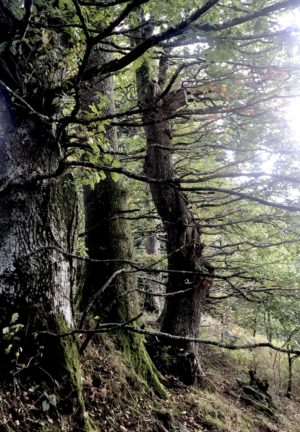
Coppicing is the process of cutting back trees to encourage new growth and to maintain the health of the woodland. In winter, coppicing can be a useful tool to manage the woodland's overall structure and composition. Coppicing will also help to reduce the risk of disease and pests, and to encourage a range of different habitats and species to flourish. This is particularly important in the winter months when many species are in a state of dormancy and will benefit from the extra light and nutrients that coppicing provides.
[caption id="attachment_30295" align="aligncenter" width="650"] Chestnut coppice[/caption]
Fencing is an essential aspect of woodland management, particularly in winter when the ground can become wet and boggy. It is important to ensure that all fencing is in good repair and that there are no gaps or holes. This will protect the woodland from outside threats, such as livestock. Fencing also provides a visual boundary for the woodland, helping to define its limits and to create a sense of enclosure.
Planting is an important aspect of woodland management and is best carried out in the winter months. Winter provides ideal conditions for planting, with the soil being moist and easier to dig, and the dormant period allowing the trees to focus their energy on establishing roots. It is essential to choose the right species for the location, taking into account factors such as soil type, aspect, and the surrounding vegetation. Planting a mixture of native species will help to promote biodiversity and to create a woodland that is both diverse and resilient.
In conclusion, winter provides its own set of challenges for woodland management, but by taking a proactive approach to ponds, coppicing, fencing, and planting, it is possible to ensure the health and longevity of the woodland. Whether you are a seasoned woodland manager or just starting out, taking the time to consider these four key areas will help to ensure that your woodland thrives for many years to come.
We asked ChatGPT if it had ideas on the best way for woodland owners to use artificial intelligence to help with woodland and forestry management and this is what it said:
Artificial intelligence has the potential to revolutionize woodland and forestry management by providing insights and predictions based on vast amounts of data. Here are some ways AI can help:
Forest inventory: AI algorithms can be trained on high-resolution imagery to automatically identify, map, and quantify different tree species, sizes, and densities in a forest.
Predictive harvesting: AI models can analyze data on weather patterns, soil moisture, and other environmental factors to predict the optimal time for harvesting trees, reducing waste and maximizing profits.
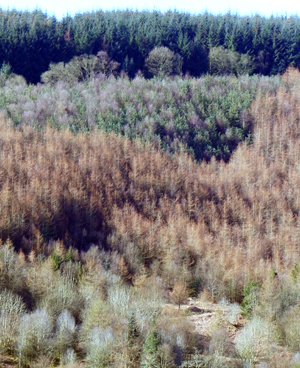
Disease and pest detection: AI algorithms can be trained to detect signs of disease and pest outbreaks in forests, allowing for early intervention and reducing the risk of widespread damage.
Sustainable management: AI can be used to optimize forest management practices such as planting, thinning, and pruning, to balance environmental, economic, and social objectives.
In general, the use of AI in woodland and forestry management can help to make operations more efficient, sustainable, and profitable.