Woodlands.co.uk
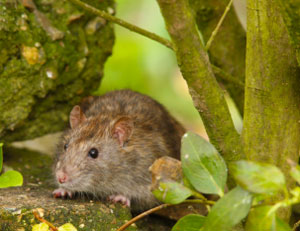
Invasive species – Rats.
Rats (brown and black) have been ‘camp followers’ of humans ever since we adopted a ‘settled’ existence. In modern cities, it is often said that one is never more than 20 yards from a rat. Whether this is true or not, rats have been a pest throughout the millennia, most notably associated with the spread of disease such a bubonic plague but also Weils Disease (Leptospirosis). Read more…
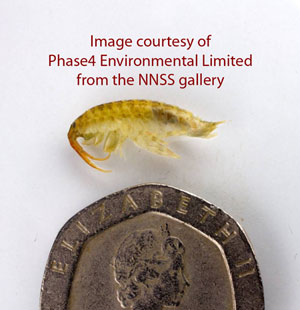
Invasion of the killer shrimps
No, it is not the title of a new Stephen King novel but the arrival in the UK of Dikerogammarus villosus. This large freshwater shrimp has its home waters in the region of the Caspian and Black Sea. However, the opening of the Rhone-Main-Danube canal has allowed it to progress through the Netherlands, Belgium, Germany and France. Read more…
Invasions and introductions…
The native community of the U.K. is limited when compared to continental Europe. The last Ice Age saw vast, thick glaciers covering much of Scotland and the Lake District, and all parts of the U.K. experienced a deep and long lasting arctic climate. Plants and animals could only repopulate the land as and when the glaciers retreated and the climate improved.
Such movement was possible whilst the U.K. was still connected to Europe (Doggerland see the blog on “Our Changing Flora” ). However, about 9500 BC, a giant flood broke through the ‘rock dam’ in the region of the Straits of Dover. The flood washed away billions of tons of material creating the English Channel and separating the U.K. from Europe. Read more…
Ancient woodland part 2
The wholesale destruction of ancient woodland through farming and forestry has diminished but new roads, bypasses and the installation of infra-structure & services (such as utilities & power lines) can still be a problem. In recent times, new or different threats to ancient woodlands have emerged to upset the balance of woodland ecosystems.
In the 1960’s and early 70’s concern focussed on the effects of air and acid rain pollution . Such pollution was characterised by the deposition of sulphur dioxide and its derivatives (sulphuric & sulphurous acid), plus various nitrogen oxides. Read more…
Dog’s mercury
Dog’s Mercury (Mecurialis perennis) is sometimes referred to as ‘dog’s cole’. It is a perennial and is found in woodlands (particularly beech and oak); and in shady places (like dense hedgerows); it is found widely throughout Britain (except Northern Scotland). Its distribution in Ireland is much more limited.
It can spread by means of its underground rhizomes (stem-like structures that penetrate through the soil) and when it finds suitable conditions, it may form a carpet of plants. There is some evidence that high light intensities inhibit the growth of the rhizomes. It can be quite invasive – especially in shady places. Read more…
Working for biodiversity
Gatwick Greenspace Partnership, now part of the Sussex Wildlife Trust, has leased Lower Orlton’s Copse*, near Rusper, on an initial three year agreement with the aim of improving the biodiversity in the wood, through a process of selective thinning and pollarding, and using the site for our Forest Schools project. Read more…
Laurel removal
We inherited a lot of Cherry Laurel in our 3 acre wood. It occupied about 2/3rd acre, growing under tall ash and beech trees. It was probably planted there by the Victorians to act as cover for pheasants. Judging by the number of pheasants around the wood, it certainly did just that! Read more…
Plants, past and present – Part 1
Recording climate and phenology.
The last decade has included some of the warmest years on record.Last year, 2007, was the eighth warmest on record – being exceeded by 1998, 2005, 2003, 2002, 2004, 2006 and 2001.The signs of climate change are not only apparent in these physical measurements of temperature but also through observations of bud burst, first leaves and the arrival of migrant birds (the science of phenology). Such weather change, if it continues, will no doubt impact on the distribution of plants through the UK (and indeed Northern Europe); some species will be winners and other losers. But, how can we recognize / monitor these changes ? Read more…