a bad day for sparrows.
In recent decades, extreme climate events such as tropical storms, droughts, floods, wildfires, heat waves, and cold snaps have increased in both frequency and intensity. These events have the potential to reshape human populations and ecosystems across nearly all regions of the world. According to the Intergovernmental Panel on Climate Change (IPCC), such events are projected to intensify further in the coming decades. Very strong hurricanes are expected to become more common, wildfires to burn hotter and spread farther, and heat waves to last longer.
Extreme events pose severe risks not only to human populations but also to biodiversity and the structural integrity of ecosystems. They can reek changes in species in a number of ways.
One of the earliest studies of the biological consequences of an extreme climate event was carried out by Hermon Bumpus at Brown University.
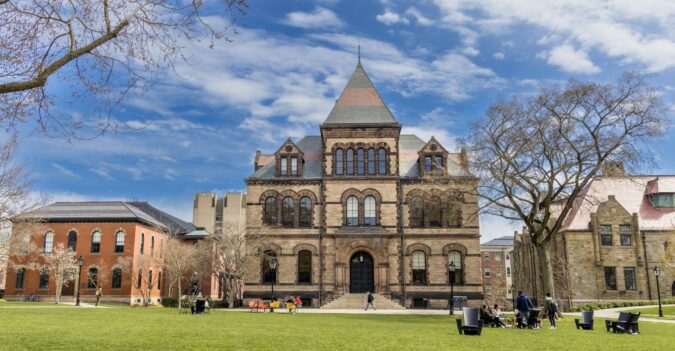
Brown University campus
In February 1898, an unusually severe and prolonged storm brought snow, sleet, and rain to Providence, Rhode Island. After the storm, Bumpus collected a large number of incapacitated sparrows (Passer domesticus), of which 72 survived and 64 perished. He measured a range of body characteristics in both groups. The birds varied in length from 152 mm to 167 mm, with an average of 159.5 mm. Individuals whose body length was close to this average were more likely to survive, whereas those at the extremes were more likely to die. Very long-bodied birds were particularly vulnerable. In addition to body length,
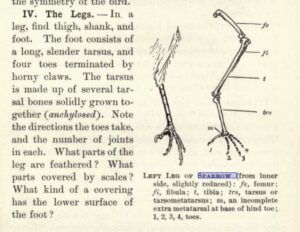
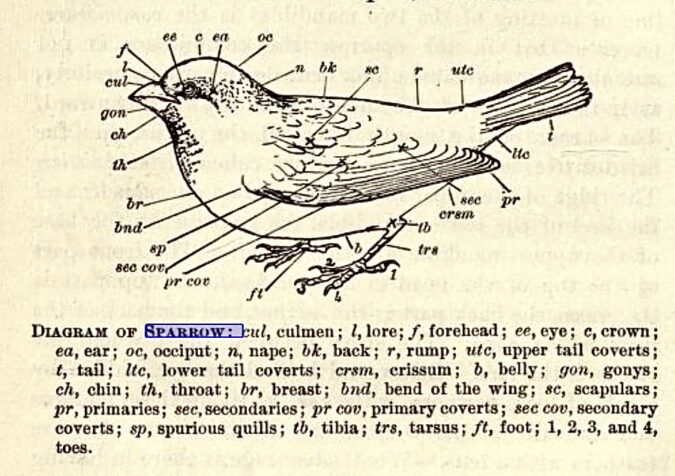
Elementary lessons in zoölogy, by Needham, James G. 1896
Bumpus measured traits such as weight, femur length, humerus length, sternum length, and skull width. Interestingly, he also noted that males were more likely to survive the storm than females.
Bumpus’s work represents one of the earliest investigations of natural selection in the context of an extreme climate event. Since his study, relatively few investigations have directly examined the selective pressures imposed by such events. However, certain lizards on the Turks and Caicos Islands have been found to have larger sticky toe pads after experiencing Hurricanes Irma and Maria, when compared to ‘pre-hurricane’ lizards. The next generation of lizards also had larger toe pads, which suggests a heritable feature and hurricane driven selection. Nevertheless, such research suggests that extreme climate events [such as high winds, extreme temperatures, flooding] can generate 'short lived' but strong episodes of natural selection, and may drive rapid evolutionary change.
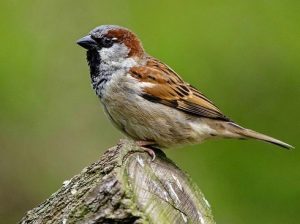
a sparrow
Further reading : https://www.cell.com/current-biology/fulltext/S0960-9822(25)00955-8
Sparrow leg anatomy from 'Elementary lessons in zoölogy, a guide in studying animal life and structure in field and laboratory' by Needham, James G, 1898. Accessed from Archive.org
Comments are closed for this post.