Woodlands.co.uk

Blog - September 2026

Searching for Woodland Soundscapes 

Searching for Woodland Soundscapes 

by Sam Corbett, 26 September, 2026, 0 comments

Pink Floyd’s Grantchester Meadows features some unusual instrumentation: the rolling whistles of a skylark, a honking goose, a buzzing insect. Recordings of blackbirds feature prominently in Kate Bush’s Aerial Tal, not to mention, of course, in the Beatles’ Blackbird, and field recordings of farmyard animals, rushing rivers and harsh winds have been used by other musicians over the years. Now, however, soundscape artists are blurring the division between music and the natural world further, with many taking to Britain's woodlands in search of their natural notes and melodies. For some, it’s not only a meditative experience, but a way of enhancing their perception of the natural world. “Listening, if you give it time, can be transformative to one’s sense of place,” sound artist Jez Riley French told Sound UK. “You have to give up control in a way. At least give up the idea that you know what a forest sounds like.” The quantity and variety of different sounds to be discovered in even a small patch of British woodland can be almost endless for the committed listener. Here are some you might not have noticed before: Caterpillar Business You may, on a June day, notice the sound of raindrops pattering on the forest floor, then look up to discover there’s not a cloud in the sky. When large numbers of caterpillars feed on the canopies of oak trees during early summer, a sound not unlike rainfall can be heard. This is actually the sound of frass (caterpillar droppings) landing on the forest floor. The Inner Workings of Trees This one requires a bit of specialist kit, but is worth the effort. By attaching a contact microphone to the trunk of a tree, you can record the whispering movement of water through the tree’s xylem and the crackling sound of the sap rising up the trunk during spring, as well as the tiny pops and cracks of the growing and shifting wood fibres. Wasps Taking a Bite Did you know wasps have a penchant for wood? Carefully approach a dry log or a bit of old fencepost on a summer’s day and you may hear a social or paper wasp hard at work. These wasps scrape away wood fibres, chew them into a pulp, and take them back to their nests to build new walls. The sound is a faint scrabbling, like fingernails on a tabletop. Gorse Bombshells  Some compare it to gunshots, though the more temperate say the sound is closer to popcorn. As the sun heats the seed pods of a gorse plant during summer, the pressure inside them gradually builds and eventually, they burst, launching their seeds into the air, and letting off a loud pop. When dozens are going off at once on a hot day, the sounds combine into a satisfying crackle. How to Have a Go Though a clutch of soundscape artists have made their passion into a profession by creating albums of natural sound or providing accompaniment to exhibitions, most use field recording as a relaxing weekend hobby, and an excuse to spend time in the woods. The price and complexity of recording setups can range depending on the user’s commitment.  Hobbyists might want to invest in an omnidirectional microphone, such as a Lom mikroUsi, a Clippy EM272, or a Sennheiser MKH 8020, in order to capture the entire forest atmosphere at once. Contact microphones that capture those gurgling tree sounds, or hydrophones for recording activity below the surface of ponds and brooks, can also be worthy investments for the truly dedicated.  But for those just starting out, a basic plug-in microphone or even a phone recording can provide a fine place to start. Often it is the act of paying acute attention to the woodland around you, rather than the recording itself, which is most valuable. “The key is to be aware of your individual role in the collective quietness,” French explained. “Allow time for the sounds to take us beyond our usual, short attention spans.”
A place to live - leaves.

A place to live – leaves.

by The blog at woodlands.co.uk, 24 September, 2026, 0 comments

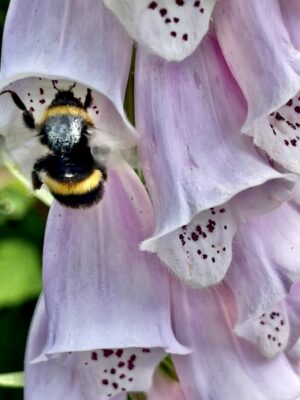
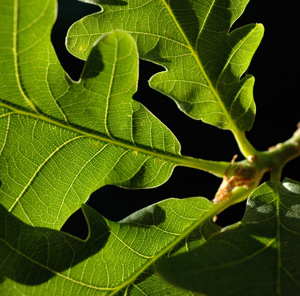
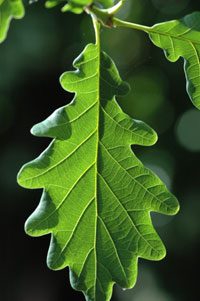
Generally speaking, leaves are quite small, but collectively they present a massive surface area to the environment.  The total surface of leaves is significantly greater than the surface area of the Earth.  Leaves are the organs of photosynthesis, not only do they make the basic chemicals for the plant, but they replenish the oxygen in the atmosphere. Generally speaking, a leaf has two surfaces.  One surface (the adaxial) is presented to the sun, the other (the abaxial surface) is shielded from the light to some extent.  Both surfaces are covered with a waxy layer (the cuticle), which helps restrict water loss. The underside of the leaf has many tiny pores, the stomates, which can open and close to allow the exchange of gases and water vapour.  The lower surface may be covered in minute 'hairs'.  These create an unstirred layer, so that air next to leaf has a high water content and thus water loss through the stomates is reduced.  The veins of a leaf contain xylem tissue which delivers water and mineral salts, and phloem which transports sugars and other organic compounds from the leaf. [caption id="attachment_43706" align="alignleft" width="300"] adaxial surface[/caption] [caption id="attachment_43705" align="alignright" width="300"] abaxial surface[/caption]   The upper  surface and lower surface  of a foxglove leaf.  Whilst the veins can be seen on the top surface, they are ridged and covered in hairs on the lower surface. [caption id="attachment_13486" align="alignleft" width="240"] galls on sycamore[/caption]   Once a leaf has grown then its size, shape and the veins remain constant, but during the course of the year other things can and will change.  For example, in autumn the coloured pigments in the leaf break down and many compounds are transported out of the leaf as it undergoes senescence. The leaf may be subjected to attack, caterpillars and leaf miners may eat its tissues.  Certain wasps may lay eggs within the leaf so that a gall develops.  Greenfly use their piercing mouthparts to access sugars and other compounds from the phloem.  Bacteria may infect the leaf either through wounds inflicted on the leaf, or by penetrating the stomates. To some micro-organisms, a leaf is ‘home’; it is a habitat.  Rather like it is now common to talk about our gut microbiome or  the microbiome of the skin, so each leaf has a microbiome. Recently, microbiologists from China and Germany have studied the microbiome of oak leaves.  Specifically, they examined the microbiome of the leaves of the pedunculate oak.  They examined how the organisms present changed during the course of a growing season.  They found that the upper and lower sides of the leaves had different communities of micro-organisms.  Both surfaces  shared the same sorts of bacteria, but they varied in the amounts / proportions of the bacteria on the two surfaces.  Furthermore the differences between the upper and lower surfaces changed as the seasons changed.  The diversity of organisms on the lower surface of the leaf fell as the year progressed.  Some of the bacterial DNA on the lower surface was that of bacteria which could be found on / in aphids and whitefly.  Some of the bacteria found were associated with fermentation of sugars.   The study did not investigate fungal species on the leaves, but it does indicate that there are complex microbial communities present on leaves, and that the two surfaces offer different ‘opportunities’ for micro-organisms.  Similarly, it has been established that there is a root microbiome. The root microbiome is a complex community of bacteria, fungi, archaea, and viruses living in and around plant roots. This microbiome helps the plant take in nutrients, fight diseases, and cope with environmental stress. [caption id="attachment_43724" align="alignright" width="350"] Hornbeam - abaxial surface[/caption]   [caption id="attachment_43723" align="alignleft" width="350"] Hornbeam - adaxial surface[/caption]
Himalayan Balsam - the invasion.

Himalayan Balsam – the invasion.

by The blog at woodlands.co.uk, 18 September, 2026, 0 comments

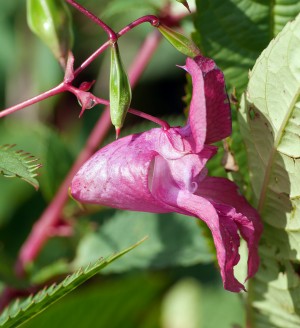
Non-native species can be a concern if they become invasive.  They can affect or even take over ecosystems.  The effect of Rhododendron ponticum in some woodlands has been disastrous.  Invasive plants can:  lead to the extinction / loss of native species  alter the species diversity of an area change the community structure alter the way in which species interact change the microbiome of the soil The loss of native plants may occur through competition for light, nutrients, water, or space.  Some invasive species have the potential to alter the physical or chemical environment.  They may do this by exuding chemicals that inhibit the growth of other species; such exudates are said to be allelopathic.  The Tree of Heaven (Ailanthus altissima), which was introduced to the U.K. in the eighteenth century from the Western Himalayas, releases a substance [ailanthone] into the soil.  This kills off many native plants and helps the tree take over entire areas.  Another introduced plant is the Himalayan Balsam (Impatiens glandulifera).  As an introduced species, it arrived here without any of its natural ‘enemies', no organisms that either feed on it (insects, caterpillars, etc.) or parasitize it (fungi, bacteria). Also, a single plant can produce between 800 and 2500 seeds. For an annual plant, it is surprisingly tall, sometimes growing to a height of six  feet. It has been able to spread; it did not stay in Victorian gardens. It is now found on waste land, roadsides, railway lines, in damp woodlands, and on river banks and it poses significant problems.  For example, when riverside stands die back in the autumn, it leaves the soil relatively bare and unprotected, which increases the risk of erosion.  Studies have shown that the balsam produces naphthoquinones.  These chemicals leach from the leaves and exude from the roots and are thought to affect : soil fungi associated with mycorrhizal formation  the germination of native plants.   Recently, researchers found that the balsam produces greater amounts of naphthoquinones at the start of the growing season, which would give the plants an advantage over native species by interfering with their germination and early development.  The balsam would then be able to outcompete native plants for light and mineral sources.  When the plants die in the autumn, their decomposition releases significant quantities of nutrients into the soil, which could benefit native plants. If the balsam plants have been growing in riparian environments, then these nutrients may leach into the rivers/streams, increasing the risk of eutrophication. There is an interesting article on the Himalayan Balsam and its possible allelopathic effects here: https://pubmed.ncbi.nlm.nih.gov/41297495/  Thanks to Anton for images.
Oaks playing clever

Oaks playing clever

by The blog at woodlands.co.uk, 11 September, 2026, 0 comments

Once upon a time, the gypsy moth lived only in the Fenlands of eastern England, where its caterpillars fed upon bog myrtle and creeping willow.   As the Fens continued to be drained and agriculture expanded, this native population died out in the early part of the C20th.  However, many years later, a colony of the European form of the moth was found in Epping Forest. This form of the moth is polyphagous, that is, its caterpillars can feed on a variety of plant leaves. They have a particular penchant for the leaves of oak and poplar.  Since its ‘introduction’, this form of the moth has spread to many parts of south-east England. The caterpillars of this moth can denude a tree of its leaves if the infestation is heavy.  Repeated attacks combined with drought can result in the death of trees. The trees do have a defence mechanism which is to increase tannin production, which makes the leaves much more bitter.  But this comes at a cost to a tree, namely an increase in metabolism and energy expenditure to make these materials. [caption id="attachment_43799" align="aligncenter" width="675"] Gypsy moth caterpillar. [Thanks to Bernell MacDonald & Pixabay][/caption] Research has indicated that oak trees have ‘solved’ the problem in a different way.  If a tree has been subject to a significant attack by these caterpillars/moths, then in the succeeding year it delays the opening of its leaves by a few days.  The effect of this is that when the caterpillars emerge, the leaves that they depend upon are still ‘sealed away’ in their buds. So, the caterpillars have little or nothing to eat.  The effect of this is to reduce the damage to the tree by over 50%! The research work was carried out over a large area in Northern Bavaria and made extensive use of radar satellites.  The satellites were able to identify which trees had been stripped bare and how they reacted in the following year.  Further details of this work can be accessed here: https://www.nature.com/articles/s41559-026-03071-9
Climate change and bird survival

Climate change and bird survival

by The blog at woodlands.co.uk, 4 September, 2026, 1 comments

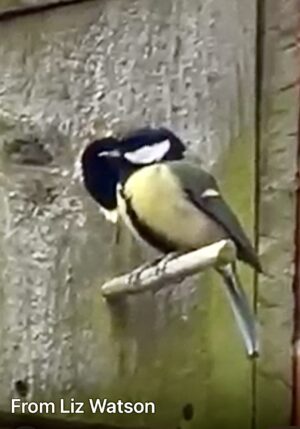
One of the most intensely studied areas in the country is Wytham Wood, which lies just outside Oxford.  Wytham Wood belongs to Oxford University. The site includes ancient semi-natural woodland, secondary woodland, grassland and ponds. Wytham is a designated SSSI, where some 500+ plant species and 800+ butterfly and moth species have been recorded.  The records of bird populations (like that of the Great Tit) go back some sixty or more years,  initiated by the work of David Lack and others.  Recently this data has been examined in conjunction with detailed weather records over the same period. The Oxford scientists looked to see how the weather affected the growth and development of the chicks of the Great Tit.  Not only did the data cover several decades but also the records of some 80,000 great tits.  The study revealed that Great tits have adjusted to warmer Springs by breeding earlier.  Severe cold weather immediately after hatching was particularly harmful. Older chicks were significantly affected by heavy rainfall. If exposed to very hot weather and heavy rain, the young chicks can lose more than a quarter of their body mass.  This is particularly true for broods raised later in the year. Warm periods were linked to higher fledging weights. The earlier breeding enables the adult birds to take advantage of the earlier appearance of their prey -  caterpillars.  However, this earlier activity can also expose them to cold snaps that can occur in early Spring.  Newly hatched chicks struggle to maintain their body temperature in cold periods as they lack feathers.  They will also need to 'burn' more of their food energy to generate heat, rather than it being used for growth.   Bad weather not only affects their food supply (caterpillars, etc), but also whether the adults can leave the nest to search for and gather food.  The higher fledgling weights during periods of warm weather are probably associated increased insect activity (and visibly), enabling the adults to satisfy the appetites of their young.  As caterpillars have quite a high water content, this helps stave off dehydration in the young chicks. Climate change seems to be throwing more extreme weather events at us, and the seasons are becoming increasingly unpredictable. These weather events (heat, cold, intense rainfall) may well have even greater effects on our bird populations, both woodland and urban. Further details of this study can be found here.