Orchid germination
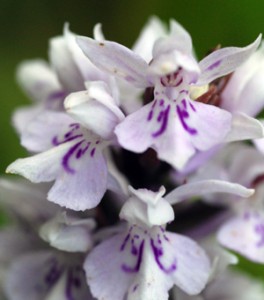
Orchids are unusual, indeed exotic plants. After they have produced their flowers and they have been pollinated, the flower wilts and the ovary begins to swell to form a seed pod. The time it takes for a seedpod to mature varies from species to species, it may take eighteen months for a type of slipper orchid [Paphiopedilum]. When the capsule is mature, it splits open and its numerous, minute seeds are dispersed by the wind. A single seed pod may contain millions of the dust-like seeds; a single seed may compared to a ‘speck of dust’.
Unlike the seeds of ‘normal’ plants, the seeds have no food reserve within them and in order to grow, they have to establish a symbiotic relationship with a specific mycorrhizal fungus. This symbiosis is essential for the seed to germinate and grow. The fungus enters the seed and provides the necessary nutrients for its development into a seedling. Propagating orchids from seeds is a complex process. sometimes done under sterile laboratory conditions using special culture media. In the wild, although an orchid may produce millions of seeds, only a minute fraction will successfully establish a symbiotic relationship with the correct fungal partner to grow and survive.
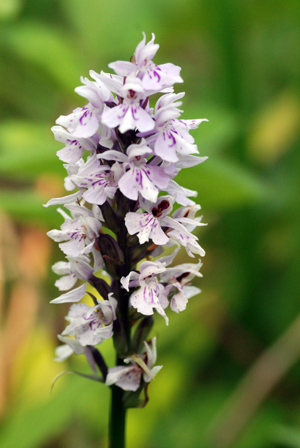 Recent research with the orchid Cremasta variabilis has revealed some interesting facts about the germination of the seeds. The orchid is found on the Korean Peninsula and is an insect pollinated, terrestrial orchid. As with other orchids, its seeds are minute and are known to depend on a certain fungus to grow and develop. In the past, most studies have focused on the fungi present in mature orchids but the team from Kobe University studied very young seedlings. They noted that seedlings were often to be found near decaying logs, and this led them to test whether deadwood fungi are involved in early orchid development.
They buried seeds of four species of orchid in various forest locations, but they only observed germination and seedlings near to decaying logs. The seedlings were found to be exclusively associated with wood decaying fungi. It may be that the orchids use other fungi to maintain the symbiosis as the deadwood dries out or is exhausted of nutrients.
Some species of orchids have abandoned photosynthesis completely, and feed via fungi through their lives - a phenomenon known as mycoheterotrophy. As woody (and rotting) debris represents a major carbon source in forests, it is a resource waiting to be exploited.
Comments are closed for this post.
.jpg)