Surviving winter
In many ways, both plants and animals slow down in winter. Many trees drop their leaves throughout Autumn, diverting any useful materials to storage in the roots or stem. Herbaceous plants may wither and die, passing the coldest months as seeds, whilst others overwinter as bulbs, corms or rhizomes.
Simliar strategies are seen animals. Some species enter in to a state of torpor, for example some butterfly adults. Whilst insects, interrupt their life cycle spending the winter in an immature or arrested state of development [or diapause], such as an egg or pupa. Others animals pass the cold, winter months in a state of brumation. This is seen mainly in amphibians and reptiles; it is not dissimilar to hibernation, which is seen in some species of mammals. During brumation, the heart and respiratory rate fall, and the animal becomes relatively inactive and ‘hidden away’. However they are still relatively aware of their surroundings and environment and periodically wake up to drink or eat, or indeed bask in the sun if there is a warm interlude.
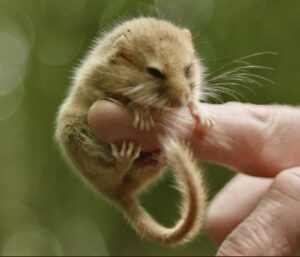
Hibernation on the other hand is seen in some bats, rodents and bears. Hibernation is not as simple as the animal ‘going to sleep’, it involves profound changes in their physiology. A number of hormones are involved, for example melatonin, insulin and thyroxin - their combined effect is to lower the metabolic rate. One animal that goes into hibernation is the hazel dormouse.
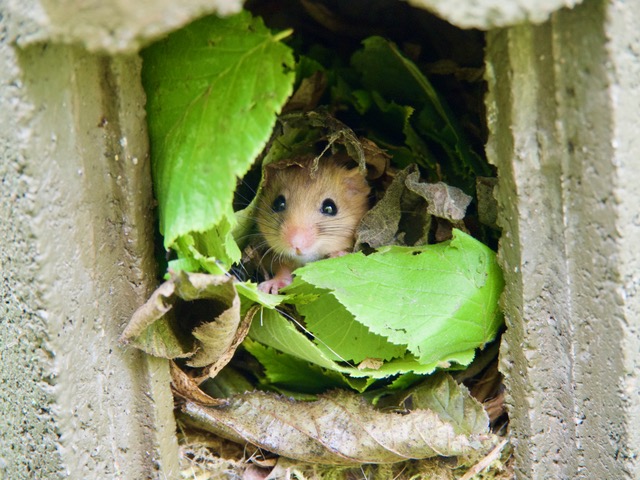
A Hazel Dormouse that has made a nest in a bird box
It forms a ‘nest’, made out of leaves, bits of bramble etc or it may find a hidden, sheltered place in the roots of trees. Whilst hibernating they are at risk of predation by foxes, wild boars, owls and domestic cats, if the nest is discovered. If a dormouse has not accumulated enough fat reserves then it will simply run out of energy during the cold weather. It has been estimated that a dormouse loses about 0.5% of its body weight every day during hibernation. 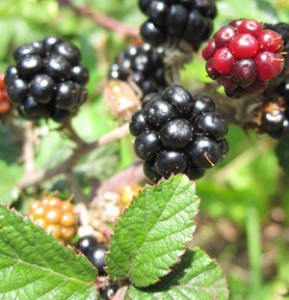 They enter into full hibernation when the weather is particularly harsh. The recent milder winters have ‘done them no favours’.
Come the Spring, they awaken and forage for food in trees and hazel thickets, feeding on flowers, fruits (e.g. blackberries), insects (aphids, caterpillars) and mature nuts. Their diet changes with the seasons, they are successional feeders. Their habitat of deciduous woodland and hedgerows must offer a variety of woody shrub and tree species to ensure a constant supply of food. Honeysuckle, oak, bramble and hazel are important sources of food to them. Recent DNA analysis of their droppings identified some 40 species of plants and four species of insect (Lepidoptera and Diptera).
Woodlands TV has produced a film about the hazel dormouse - which can be viewed below.
This film was made in collaboration with the People’s Trust for Endangered Species (PTES). More information on the PTES’ monitoring and conservation of hazel dormice can be accessed by clicking here, Note that a licence is required for handling these special animals, details in this link :-
https://www.gov.uk/government/publications/hazel-dormice-survey-or-research-licence-level-1.
WoodlandsTV
86.6k subscribers
Conservation and Monitoring of Hazel Dormice (part 1)
Interesting fact : Though Ireland has no native dormouse, the hazel dormouse was found in County Kildare in 2010.
Leave a comment