Promising conifers
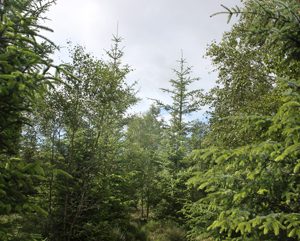
The UK generally experiences a temperate oceanic climate, which is characterised by mild temperatures, moderate rainfall, and relatively small temperature changes between the seasons. It is not surprising that there have been some 500 species successfully introduced to gardens and arboreta since 1500.
This compares to the thirty something native tree species. It is perhaps not surprising that introduced species of conifer are used to make up the bulk of plantations / forests for timber production.
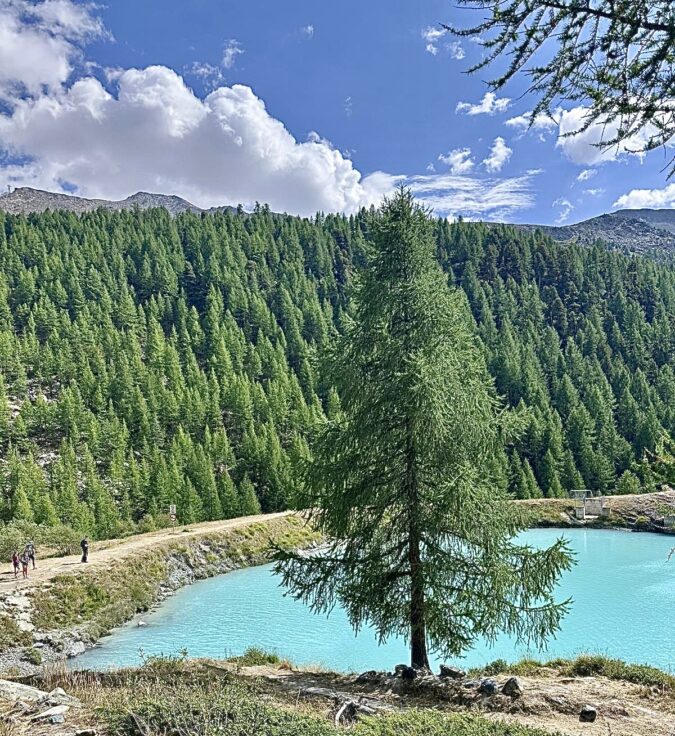 Of these, Sitka Spruce is the most common; the others are
- Scots pine (a native species)
- Corsican pine,
- Norway spruce
- European larch
- Hybrid larch
- Japanese larch
- Douglas fir and
- Lodgepole pine
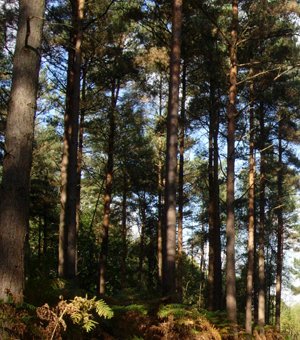 With the exception of Scot’s pine, all are introduced species. Sitka Spruce accounts for one fifth of forest cover in the UK and half of the timber produced. The 'value' of Sitka is that it :-
- grows in a wide range of sites / soils
- tolerates wind exposure
- has a high initial growth rate
- is not a favourite of deer, especially if alternatives are available.
- gives high yields of timber
However, there are problems with being over reliant on a limited number of species. Three significant challenges could be
- Climate change
- Extreme weather events
- Introduced pests and pathogens.
Our climate is changing to hotter, drier summers coupled with milder, wetter winters. Extreme weather events, like the storm of 1987 can reek devastation of large areas of forest. Pests and diseases can rapidly spread through plantations / forests that are essentially monocultures. The globalisation of world trade has made it 'easier' for pathogens and pests to move around. Recent years has seen a significant increase in disease, for example, needle blight and phytophthora; also the pest - the appearance of the eight toothed spruce bark beetle. There is a finite risk that something could arrive and devastate Sitka Spruce populations, and have dramatic effects on the timber industry. Worse still would be the arrival of multiple pests or pathogens which could initiate a collapse of a forest ecosystem.
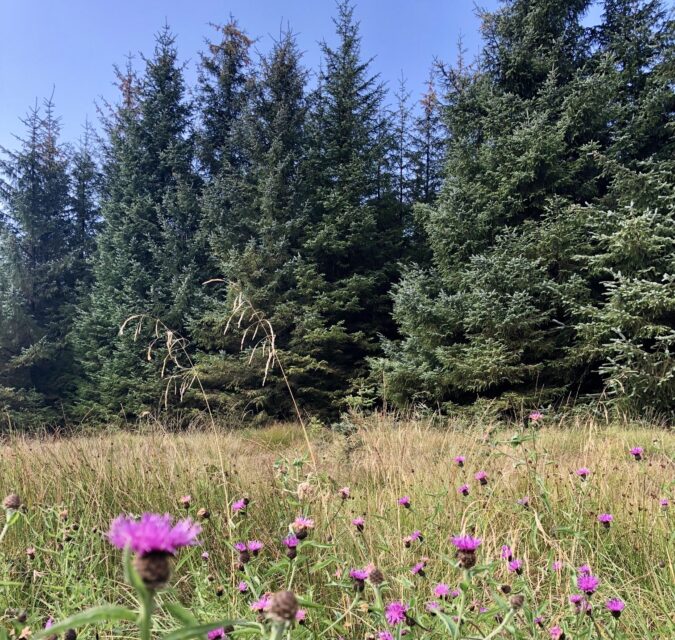
If the range of tree species planted was increased then the impact of such introductions would hopefully be reduced. There is also some evidence that a variety of species helps improve resistance to natural disturbances and offers a degree of resilience (though mixed species stands are not always more resistant to drought). Consequently, work is underway to determine which, if any, other conifer species might be planted to
- Reduce the reliance on traditional timber-producing species
- Increase resilience and diversify commercial forests.
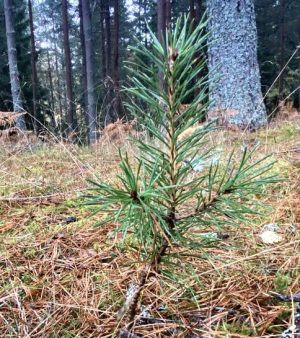 Between 2015 & 2018, Forestry Research Et al. set up across the country a number of clear fell sites, these ranged from Breckland in the east to northern Scotland. The sites offered a range of soil types and different weather conditions. The experimental plots measured some 32 x 32 meters, and the trees were spaced 1.9m apart. The 25 trees ar the centre of each plot were measured throughout the experiment. Each site studied the establishment and growth of some 19 species. Scots Pine was planted at each site as a 'control' as it was anticipated that it would establish and grow at all trial sites. Douglas Fir was also included in these trials as it was thought to be 'under used' in national planting schemes [it only represents 4% of the UK total coniferous growing area], and might be used in a wider range of sites than at present. The trees at each site had their height and root collar diameter measured, survival was also recorded.
Trees included in these trials trials included
- Norway spruce
- Noble fir
- Grand fir
- Pacific silver fir
- Maritime pine
- Western red cedar
- Leyland cypress, amongst others.
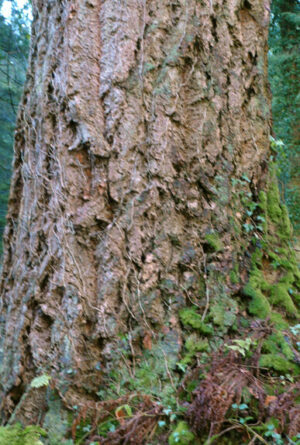 The trials have yielded some interesting observations. There were significant differences in the performance of the various species at the different locations. For example, growth and establishment of most trees tested was poorest at Thetford on the Breckland.
Interestingly, the inclusion of Douglas Fir proved worthwhile as it performed well, establishing and growing well even on poor / infertile soils, such as that at Thetford. Data from Europe suggests that it can even maintain growth when experiencing draught, so it would appear to be more versatile than previously thought. It could also prove to be a viable alternative to Sitka spruce, especially in the south or eastern parts of the UK where it may become hotter and drier in the future.
Another species that did quite well was Maritime Pine, which is thought to be relatively resistant to needle blight (as compared to Corsican pine) and it dealt well with the dryness at Thetford. Unfortunately, it was not included in the trial Scottish sites. It would seem to have potential as a fast growing and robust species on sheltered, free draining sites.
Other species did not fare well, for example, Macedonian Pine did not establish well on any of the Scottish sites. European silver fir performed poorly at all sites, and largely failed at Thetford. It, together with pacific silver fir, grand fir, western red cedar, and coast redwood may not be suited for establishment on clear fell sites, though they might be ok in more shaded conditions beneath other trees. The Oriental and Serbian Spruce did not establish on any of the sites.
Further details of these trials can be found here: https://academic.oup.com/forestry/advance-article/doi/10.1093/forestry/cpaf048/8229725?login=false
or as a PDF here:
https://academic.oup.com/forestry/advance-article/doi/10.1093/forestry/cpaf048/8229725
,

Leave a comment