Hedges and Hedgerows
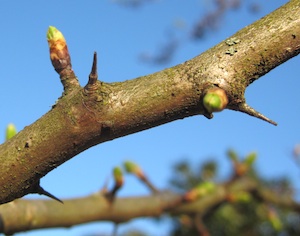
A hedge becomes a hedgerow when it includes other features within it; such as trees or a wall, fence or gate. At some point (after the last Ice Age), most of the UK was covered with woodland of one form or another. Hedgerows can represent a link with woodlands that have been lost. Hedges often mark out woodland edges even when the woodlands have long since gone. In some parts of the country, hedges and hedgerows are the only natural or non-crop habitat available to mammals, birds, insects and other animals.
The most common shrubby species found in hedges are hawthorn and blackthorn though hedges / hedgerows may have tree species. This can be the result of frequent trimming or the extensive/intensive use of herbicides.
The number of herbaceous or non-woody plants found in hedgerows next to agricultural land is often low - its biodiversity (the number of species and number of plants present) is low.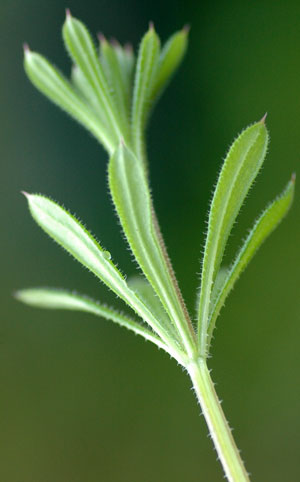
Hedgerows next to arable land often contain species such as:
- Nettle;
- Oat grass;
- Creeping thistle;
- Giant Hogweed;
- Meadow grass;
- Bindweed;
- Cleavers or Goosegrass.
Farmers tend to regard such hedgerows as a source of weeds, which may invade their crops. Sadly, the use of herbicides and the application of fertilisers near to the hedge tends to further encourage the growth of these aggressive species. A different approach is the practice adopted by some of having wider field margins; which if kept mown prevent the germination and growth of unwanted species.
Hedgerow plants offer habitats for many species of insects – from butterflies to bumble bees & hoverflies. Depending on the management of the hedgerow or hedge or rather the lack of it, the hedge can offer a home to various bird species, though they tend to like trees and tall hedgerows. Generally speaking, a hedge that is 4m high will offer a home to twice as many birds as one that is 2m high.
 Hedges diminish in value to wildlife if there is:
- Regular annual trimming or flailing of the hedge;
- Herbicide treatment at the base of the hedge.
- Birds tend to prefer old, somewhat overgrown hedges that have not been intensively managed. Small mammals like shrews and voles use hedges as a habitat, exploiting the adjacent fields (for food) when the crop has grown enough to provide them with cover. Similarly, amphibians may find places for hibernation in the damp ditches often associated with hedges; whilst banks may provide opportunities for reptiles.
The second half of the 20th century saw a dramatic loss of hedges and hedgerows either through their systematic removal or neglect (the latter partly through the loss of traditional skills, such as layering etc). Many hedgerows are managed by trimming with a mechanical flail. If this is done annually, it can result in a loss of biodiversity. DEFRA has now issued guidelines on the management of hedges. For example, it is suggested that trimming should be done on a 2 or 3 year cycle; and some sections of the hedge might be left for longer (see here for example). The Government has seen fit to enact legislation to protect hedgerows of key importance and the UK Biodiversity Action Plan seeks to halt the loss of ancient and species-rich hedgerows.
 Biodiversity Action Plan see:
http://www.ukbap.org.uk/UKPlans.aspx?ID=7#4
http://www.defra.gov.uk/farm/conservation/hedgerows.htm
http://www.defra.gov.uk/wildlife-countryside/response/fieldb/index.htm
A hedgelayer’s site may be found at:
http://www.hedgelayer.freeserve.co.uk/
Information on hedgerow maintenance etc:
http://www.hedgelaying.org.uk/
For more information on hedges and their history:
http://www.woodland-trust.org.uk/campaigns/briefingsmore/hedges.htm
Comments are closed for this post.
Discussion
Please forward this question to any other bodies who you think may be able to provide the answer-possibly hedging professionals.
Does a continous row of elders constitute a hedge? Would this have been planted and if not what factors would have made it become the pre dominant species. Ancient grassland is on one side of the hedge and arable on the other.Any knowledge on how this hedge row has come to be would be most interesting.
Some background information may be helpful.To give you an indication of the size of the elder plants, they have been used as posts to attach the wire fencing around an ancient grassland farm. The elders have been cut to make a hedge. Their trunks are extremely thick. They seem to have taken over the hedge.For example in a 50 metre run of elder hedge there is only one ancient hawthorn bushwhich has been cut to hedge height and also has a similarily thick trunk.. The fact that farmhouse and buildings on the rest of the farm are C18 may give some indication of the age of the hedgerow. Other hedgerows bordering the grassland fields have ancient hawthorn plants with thick single trunks many of which are grown out/become top heavy exposing their roots like fangs in the ground. In other places where the hawthorn has become unstable several thick knarled stems have grown from one point.In many cases they have lobbed over onto the grassland and effectively layered themselves vaguely in the direction of the prevailing south westerly wind.In this 120 yard of hedgerow there are only 30 old hawthorn trees estimated 15-25 ft high. there are some large elder plants.Interestingly they seem to grow prediminantly on the westerly side of the hawthorn hedges which run north south. It may be significant that the grassland side is also the westerley side and the grassland has been under grazed.. The farmland is interesting because it has not been in the same family for over 60 years and has not been subjected to modern farming practices,unlike the arable fields on the other side of the hedges.
[…] may not be a dominant life form nowadays but they are still to be found in our hedgerows and woodlands, contributing to the diversity of life and offering micro-habitats for various […]
What are the problems with conserving hedgerows?
Richard,
This is a great article, thank you. Your information about the wildlife biodiversity value of a hedgerow going up as the hedgerow gets larger jibes with what my research is turning up too, but I have one clarification question:
are any of these heights inclusive of more than just the quickset hedge? (ie: is the bank height being included in these numbers?)
related question:
if a hedgerow bank is 1.5m tall, is that measurement from the general ground plane up, or from the bottom of the ditch up? The difference in those two numbers could be .5m, which seems significant.
Were I near good ol’ bank-and-ditch hedgerows at all, I’d go measure, but I’m not and don’t anticipate being near any for nearly another year.
Thanks for your help,
Molly
Hi Chris
Try looking in our Suppliers Directory which you’ll find in the “Owning a Wood” section of the website, or follow this link: http://www.woodlands.co.uk/owning-a-wood/suppliers-directory/ Hedge laying would come under Forestry Contractors. You could also try the Hedgelaying Society which keeps a list of contractors http://www.hedgelaying.org.uk/contract.htm
Hi,
I am working with a local School that has got a Hedge that needs layering but who could we contact in the Midlands area and would this be very expensive?
See http://www.defra.gov.uk/farm/environment/landscape/hedgerows.htm#Handbook
for the Hedgerow Survey Handbook
link now replaced with
http://archive.defra.gov.uk/foodfarm/landmanage/landscape/documents/hedgerow-survey-handbook.pdf
Apart from the various links to hedgelayers etc. given above;
anyone any ideas ?
blogs
16 February, 2015