Britain’s Ancient Wildwood
by Anton, 1 May, 2026, 0 comments
How Trees Reclaimed a Frozen Land
The British landscape we know today, its rolling hills, hedgerows and scattered woodlands, is the product of thousands of years of change. But rewind far enough and none of it existed. After the last Ice Age, Britain was a treeless, frozen expanse. What followed was one of the most remarkable transformations in the natural history of these islands: the slow, steady return of the forests.
A land emerging from ice
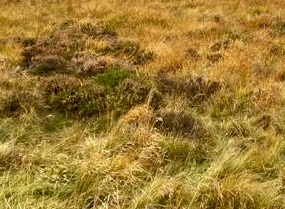
About fifteen thousand years ago, the climate began to warm and the ice sheets that had smothered much of Britain started retreating northward. The southern parts of the country may have supported a sparse arctic grassland, but trees were entirely absent. Sea levels remained low, vast quantities of water were still locked up in ice, so Britain was physically connected to mainland Europe. A broad plain of meandering rivers linked present-day East Anglia with the Netherlands and northern Germany, across a region now submerged beneath the North Sea and often referred to as Doggerland. This land bridge allowed plants, animals, and eventually human settlers to make their way into Britain from the continent, setting in motion changes that would reshape the landscape dramatically.
The pioneer trees arrive
Trees gradually colonised the bare ground. The first wooded areas were likely dominated by birch — species such as Betula nana and B. pubescens that tolerate extreme cold. Although the climate was warming, conditions were still too harsh for many pollinating insects. Birch is wind-pollinated, making it an ideal pioneer species: one that can establish itself on immature or disturbed soils in challenging environments. In doing so, pioneer species modify their surroundings and 'open the door' for others to follow, a process known as succession. Over time, pine, aspen and hazel arrived and took hold, followed later by elm, oak and small-leaved lime. Forests spread across Britain, covering the land except for the highest, wettest and coldest areas.
Reading the past through pollen
How do we know what grew where, and when? Pollen analysis of peat bogs and other sedimentary deposits can reveal which species were present over different periods. The outer wall of a pollen grain — the exine — is extraordinarily resistant to decay, so its distinctive structure remains intact for millennia, allowing researchers to identify species long after the trees themselves have vanished.
The wildwood takes shape
By around six thousand years ago, forest covered most of the British countryside. This great expanse of woodland is often called the “wildwood”, a term popularised by Oliver Rackham in Trees and Woodlands in the British Landscape. The wildwood was at its most abundant during this period: a complex, tangled mosaic of trees, many of them dead or dying from the effects of wind, fire sparked by lightning, and flooding. It would have offered a rich variety of habitats and niches for plants, insects and mammals alike.
Not as dense as you might think
Recent research and pollen analysis published in the Journal of Ecology suggests that Europe’s post-glacial wildwoods were rich in hazel, oak and yew; species that tend to flourish in more open woodland where light reaches the ground, rather than in dense, closed-canopy forest. Hazel produces more pollen and flowers freely in sunlit conditions. Yew, while sensitive to fire, is shade-tolerant and needs some space and light to avoid being outcompeted by taller trees. Its leaves are toxic to most mammals (including humans), which protects it from grazing. The persistence of yew in ancient woodlands, along with its sensitivity to fire, points to a relatively open woodland structure; one maintained, it is thought, by the grazing activity of large herbivores.
Oak, too, is a light-demanding species whose seeds germinate best on disturbed ground. Large herbivores consume huge quantities of vegetation, altering plant biomass and community composition. They also cause physical damage through trampling and bark-stripping. These processes can help create clearings and maintain open areas within the woodland. The resulting light reaching the forest floor would have encouraged a rich ground flora to flourish beneath the canopy.
A living legacy
Britain’s wildwood may be largely gone, but its legacy runs through the landscape. The oaks, hazels and yews that define many of our oldest woodlands are living links to those post-glacial forests. Understanding how they established themselves and how grazing, fire and climate shaped the woodland around them isn’t just a matter of historical curiosity. It offers practical insight for anyone involved in woodland conservation and restoration today. The wildwood reminds us that British forests were never static or uniform; they were dynamic, open and shaped by many animals, and the elements.