On the up, or down?
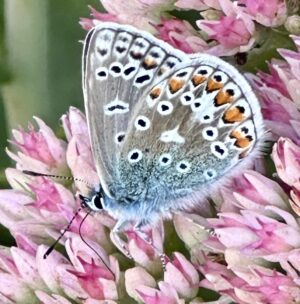
Butterfly numbers have been monitored for the last fifty years. The scheme is organised by Butterfly Conservation, the Centre for Ecology and Hydrology and the Joint Nature Conservation Committee. It relies on thousands of volunteers reporting their sighting, all across the country. Analysis of the surveys [which date back in 1976 survey] show a rather mixed picture in terms of numbers.
The numbers for some species went up whilst others went down. Of our 58 native species, 25 have increased in number whilst 33 showed a decline. The comma, the red admiral and the purple emperor have increased in number. They have extended their range, moving northwards due to the warmer weather; think back to the sun and warmth of last Spring and Summer. Climate change is not without its affect. The large blue which was declared extinct in the last century has been successfully reintroduced to managed grassland in Somerset. Similar conservation work has also helped other ‘rare’ butterflies notably the large blue, the black hairstreak and the silver spotted skipper.
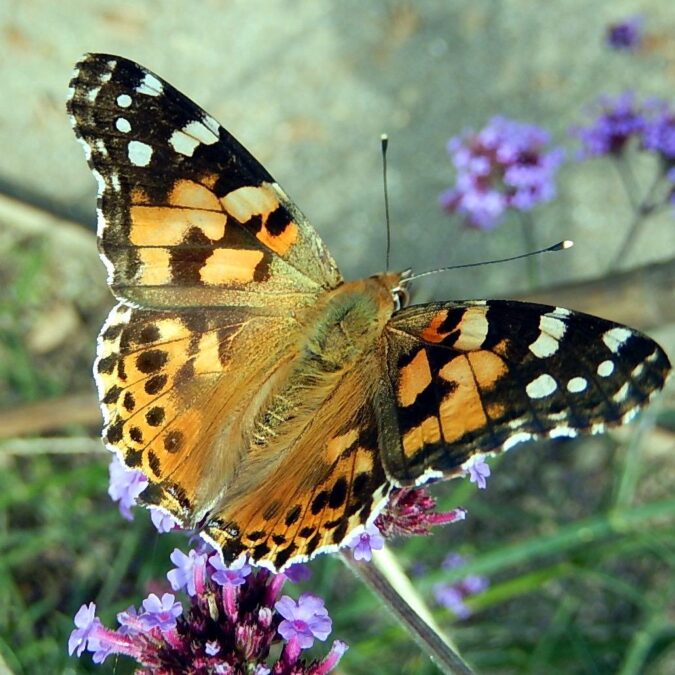
Painted lady
Other butterfly numbers declined, notably the pearl bordered fritillary, the high brown fritillary and the white lettered hairstreak. These butterflies are habitat specialists, that is, they need particular habitats such as wetlands or flower rich woodlands. These butterflies have declined as have their specific habitats. The development of cities, the creation of motorways and the expansion of agriculture has changed and damaged our landscape. Nitrogen pollution (which leads to an increase in soil nutrients through eutrophication) in combination with warmer weather affects grassland species. The grass grows taller, which lowers the temperature and this affectss the development of the caterpillars. The loss of coppicing and other woodland management techniques has reduced the biodiversity / openness of many woodland areas, which affects butterflies such as the high brown fritillary.
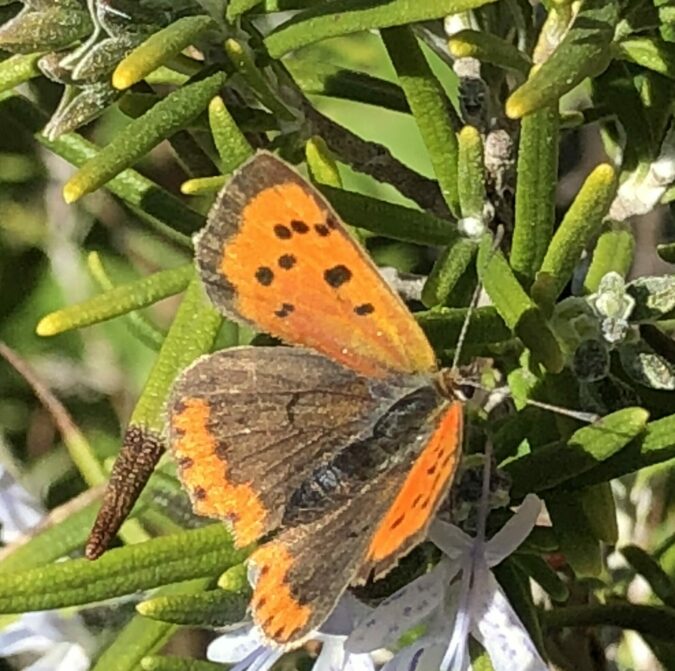
small copper
Given the effects of climate change, pollution, urban development and farming, it is somewhat surprising that some species seem to be maintaining or increasing their numbers.
For detailed information / statistics, see :-
Comments are closed for this post.