Woodlands.co.uk

Blog - veteran trees

Woodland banks

Woodland banks

by The blog at woodlands.co.uk, 15 August, 2025, 0 comments

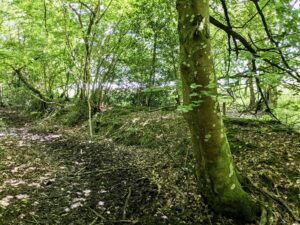
A woodland bank can refer to various structures but usually it refers to a raised earth structure found in a woodland or on the edge of a woodland.  Such banks are usually man-made, though banks can be natural formations. Sometimes, besides the bank there is a ditch, formed where the soil for the bank was excavated.  Banks may date back hundreds of years, possibly even to mediaeval times.  They are found in the U.K and Europe.   Such banks were created to Contain deer or livestock or Mark the boundary of an area of land Woodland banks may support ancient woodland species, such as dog’s mercury, bluebells and wood anemone.  Indeed, they can be biodiversity hotspots, or corridors that help the spread of species.  In some parts of the country, there are ‘hedgebanks’,  these are raised banks which support trees and shrubs on their top surfaces.  Over the years, these may have become field boundaries. Some of the UK’s best known woodlands contain banks, for example, Epping Forest, where the banks delineate old coppicing and former deer / livestock enclosures.  The area was managed by the Royal Foresters.  Wytham Wood is probably the most intensively studied wood in the country as it is owned by the university of Oxford and used for long term ecological research.  It has several wood banks (that support indicator species) with ditches that date back to mediaeval times.  Banks and ditches are also found in Sherwood Forest, which were used to ‘control’ deer in the royal hunting ground. [caption id="attachment_42471" align="aligncenter" width="675"] Woodland ban with mature trees.[/caption] If you wish to investigate woodland banks further, there some digital resources that might be useful - for example The Magic map at DEFRA.   This can many different different features of the landscape e.g. historic boundaries, designated ancient woodland, land use etc. You zoom into your area of interest, and then make use of different layers superimposed on the detailed map of the U.K.  https://magic.defra.gov.uk/home.htm The Ancient Tree Inventory, organised by the woodland trust.  Again, this is an interactive map of ancient and veteran trees.  Woodland banks and ancient trees often ‘coincide’ as trees often marked boundaries / divisions.    https://ati.woodlandtrust.org.uk Thanks to Stuart for images. Stuart is woodlands.co.uk manager for Devon. He holds a degree in Environmental Protection and is passionate about woodlands. He enjoys the hands-on approach that working with Woodlands.co.uk affords him, clearing tracks, putting up gates and fences and getting people started with their woodland. Stuart teaches conservation to NVQ level and is very involved in practical conservation work, carrying out bat surveys, dormouse surveys and building artificial badger sets.  
In praise of insects.

In praise of insects.

by The blog at woodlands.co.uk, 19 May, 2024, 0 comments

Last week's woodlands’ blog talked about the fall in insect numbers across the UK.  This is not just a UK problem, it is far more widespread.  Insects,  bees and bumblebees as pollinators aside,  are important in ecosystems;  there are armies of other insects that are providing ‘services’ for us. When a tree dies in a woodland, bacteria and fungi are important agents in the decay of the tree and the recycling of elements, but they are assisted by beetles. If the dead tree was a veteran, during its lifetime it will have provided  a variety of micro-habitats.  Holes and crevices would have been used by bats,  birds,  insects etc.  Now, the the decaying wood will be support different organisms, from microbes to larger fungi, such as bracket fungi that can erupt from surface of the dead tree.   As the wood decays,  the material may become a ‘home’ for saproxylic beetles. For example, Stag beetle larvae feed on decaying wood (building up fat reserves, which the adults later rely on. it adds humus and fertility to the soil as its nutrients are released. Though bees and bumblebees (members of the order Hymenoptera) are important as pollinators (of many fruit and crop plants, so are the hoverflies key to  the pollination of many wild flowers.  Hoverflies belong to a different group of insects - the Diptera. There are several thousand hoverfly species spread across the world. They are found on every continent with the exception of Antarctica.  Work by Dr. Wotton and his team at Exeter University suggests they are situations where hoverflies may be more effective pollinators than bees and bumblebees, and the role of hoverflies in crop pollination may have been under-estimated.  Hoverflies can carry pollen over considerable distances, and may  visit isolated plants.  The common drone fly (Eristalis tenax) has been known to travel some 100km and carry the pollen of eight plant species.  Hoverflies (or Syrphidae) are also known to migrate over considerable distances.  The female marmalade hoverfly can migrate from Scandinavia to Spain and North Africa, migrating in the autumn to lay their eggs.  In the following Spring, succeeding generations migrate north again.  Some American hoverflies are known to migrate from Canada to the southern states. Insects are not just important in terms of facilitating decay or aiding pollination, some are involved in seed dispersal.  Scientists at Kobe University studied the dispersal of seeds from the fruit of the silver dragon plant.  Using  time lapse photography techniques, they watched to see which animals feed on the plant’s fruit at night. Whilst crickets (order : Orthoptera) ate much of the fruit, earwigs (order : Dermaptera) and woodlice (not insects, but terrestrial crustaceans) also consumed significant amounts of the tiny seeds of the fruit.  Further work demonstrated that many of the seeds survived the passage through the gut of these animals.  So apart from being seed predators, small invertebrates may also help their dispersal, depositing them away from the parent plant. Woodlice are interesting land based crustaceans that generally feed on dead and decaying plant material, helping in the recycling of nutrients. Further examples of the importance of insects in nature can be seen in fig production.  The fig wasp 'gives its life' in the process of pollinating the fig, in return the fig provides a safe ‘nursery’ for the young on the wasp, seed the woodland blog on the fig.  There are many types of fig and each has its own wasp, to ensure successful pollination.  Full details of the life cycle of fig wasps can be followed here.  The association between the wasps and figs is an example of mutualism. This co-dependence probably had its origin some seventy million years ago, and the wasps and figs have co-evolved since then. .
Hedgerows revisited

Hedgerows revisited

by The blog at woodlands.co.uk, 1 October, 2023, 0 comments

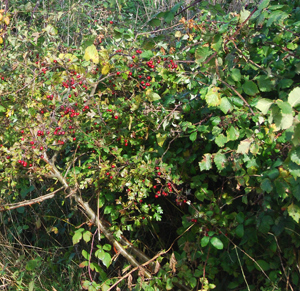
Many hedgerows were planted originally to keep livestock, such as sheep, cattle, pigs, chickens in specific areas. Some hedgerows were planted to define boundaries – ‘who owned which bit of land’.  Hedgerows often surround fields.   The word ‘field’ comes from Old English ‘feld’, meaning 'an area of felled trees / open country'.   The establishment of many hedgerows was associated with the process of enclosure; a change in land use from arable to pasture (for sheep). Open fields and common land were enclosed by hedgerows, over many years the landscape of England changed. The C20th witnessed the opposite process, the removal of hedgerows for the creation of larger fields to accommodate larger machinery.  In the decades following the end of the second Word War, it has been estimated that a quarter of a million miles of hedgerow have been ripped out / lost.  Fortunately, there are now policies in place to halt or even reverse the loss of hedgerow.  Hedgerows are recognised as an integral part of our landscape and play an important role in the maintenance of biodiversity.  They provide habitats for a variety of animals and plants. Many species of birds nest in hedgerows, such as song thrush, yellowhammer and tree sparrow. Different species favour different heights within the hedgerow. Some species nest near the ground such as wrens and dunnocks, whereas others nest higher up (eg. Bullfinches).   The greater the variety of plant species in a hedgerow, the better the supply of pollen, nectar, fruits and seeds.  Ivy for example will produce flowers late in the year and offers a source of nectar and pollen.  Hawthorn, blackthorn and holly offer fruits in the winter months for birds and small mammals. Hedgerows and hedges have to be be maintained.  Such management may involve planting of trees or shrubs to fill gaps, coppicing, laying or cutting back. [youtube=http://uk.youtube.com/watch?v=Andv7a0NPEc 425 350] However, the effects of pruning and cutting back during the bird-nesting season can be disastrous. Mechanical flailing of a hedgerow is fast, effective and the regrowth is generally slower, but its effects can be particularly bad on birds. They may abandon their nests and / or  their eggs or chicks may be destroyed. The pruning / flailing may also reduce the insect populations of the hedgerow (or other other food sources) on which the birds depend.  Hedge pruning maintenance is :- ideally undertaken outside of the nesting season. and  only done every second or third year. [caption id="attachment_25527" align="aligncenter" width="600"] A flailed hedge[/caption] Hedgerows also support vital insect pollinators : butterflies, hover flies, moths and bees. These insects help with the pollination of crops such as oilseed rape, legumes and fruit trees. Other insects can help with crop yields by predating upon crop pests, such as green fly and blackfly (these may spread viral diseases on crops such as sugar beet).  Insects may overwinter in the hedgerow and move into the fields come the Spring, as the aphids start to increase in number.  If trees are left in situ, they may achieve veteran status.  Then their rough bark, cracks, holes and dead wood will support a diverse range of species. Owls, kestrels and bats may come to nest. There are also niches that offer opportunities for epiphytes, mosses and lichens.     The dead wood may be home for saproxylic beetles.   Hedgerows also act as corridors linking to other hedgerows, woodlands etc along which animals can pass (for example, hedgehogs and other small mammals). Hedgerows provide important wildlife corridors across agricultural landscapes. They provide food for insects, small mammals and birds (due to the range of plants and their different flowering and fruiting times). They provide nesting and roosting sites for birds and bats, and ‘homes’ for a variety of small mammals.  Many insect species over winter in hedgerows. The trees and woody shrubs help with carbon sequestration. Hedgerows offer a windbreak, reducing wind speed and hence lowering soil erosion, they may also offer shelter to animal stock.  The roots also help stabilise the soil. [caption id="attachment_40483" align="aligncenter" width="675"] Hedge with beech, nettle, dog rose, brambles, hazel and ash - amongst others[/caption]  
Woodlands web updates 21

Woodlands web updates 21

by The blog at woodlands.co.uk, 19 January, 2023, 0 comments

Ancient Trees A recent report has emphasised the importance of protecting and preserving ancient trees.  Ancient (veteran) oaks can live in excess of a thousand years, as can Yews.  The Bristlecones of California and Nevada may live for some five thousand years ! Such trees represent a massive carbon store; the carbon dioxide from the atmosphere being locked away for a millennium or five!  Not only are such trees a significant carbon store but they also offer a home or food for many other species - fungi, epiphytes such lichens & mosses, plus larval and adult stages of insects, birds and mammals.  As such they localised centres of diversity that contribute to ecosystem stability.  Not only are these trees ‘hotspots’ for species diversity but they are also centres of mycorrhizal activity and connectivity.  Mycorrhizae represent the symbiosis between fungi and plant. Plants ‘register’ wounding. When we are hurt, our nerves register the pain through the movement of sodium and potassium ions along the nerves.  When a plant is wounded, calcium ions are known to move in response, travelling from cell to cell, and leaf to leaf.  However, it is now known (through research at the John Innes Centre in Norwich) that this is not the first response of the plant to physical injury.  When cells are wounded they release glutamate, a form of glutamic acid.  This travels along the cell was and activates channels in the cell membranes that allow the movement of the calcium ions.   A bumblebee pathogen. One of parasites of bumblebees is Crithidia bombi.  It is a protozoan (single celled animal) that reproduces in the gut of the bumble bee. When infected with this parasite the foraging behaviour of the bee is impaired, as is its ability to learn.   A colony will suffer from increased worker mortality.  Now research has shown that floral structure may influence the transmission of this parasite from bee to bee.  The length and shape of the petals seems to be a critical factor.  If the bees ‘crawls’ in a ‘tube’ of petals, then it may leave behind some faeces.  If the bee is infected with the parasite, then it will be present in the faeces.  If the flower is then listed by another bee then it runs the risk of coming in contact with and being infected with the parasite.  Plants that have flowers with shorter petals / corollas are less likely to have faeces deposited within them, and therefore less likely to pass on the parasite to the visiting bumblebees.
woodland web updates - 21

woodland web updates – 21

by The blog at woodlands.co.uk, 5 December, 2022, 0 comments

Ancient Trees A recent report has emphasised the importance of protecting and preserving ancient trees.  Ancient (or veteran) oaks can live in excess of a thousand years, as can Yews.  The Bristlecones of California and Nevada may live for some five thousand years ! Such trees represent a massive carbon store.  The carbon dioxide from the atmosphere being locked away for a millennium or five!  Not only are such trees a significant carbon store but they also offer a home or food for many other species - fungi, epiphytes such lichens & mosses, plus larval and adult stages of insects, and a variety of birds and mammals.  As such the are localised centres of diversity that contribute to ecosystem stability.  Not only are these trees ‘hotspots’ for species diversity but they are also centres of mycorrhizal activity and connectivity.  Mycorrhizae represent a symbiosis between fungi and plant. Plants ‘register’ wounding. When we are hurt, our nerves register the pain through the movement of sodium and potassium ions along the nerves.  When a plant is wounded, calcium ions are known to move in response, travelling from cell to cell, and leaf to leaf.  However, it is now known (through research at the John Innes Centre in Norwich) that this is not the first response of the plant to physical injury.  When cells are wounded they release glutamate, a form of glutamic acid (an amino acid).  This travels along the cell wall and activates channels in the cell membranes that then allow the movement of the calcium ions. A bumblebee pathogen. One of parasites of bumblebees is Crithidia bombi.  It is a protozoan (single celled animal) that reproduces in the gut of the bumble bee. When infected with this parasite the foraging behaviour of the bee is impaired, as is its ability to learn.   A colony may also suffer from increased worker mortality.  Now research has shown that floral structure may influence the transmission of this parasite from bee to bee.  The length and shape of the petals seems to be a critical factor.  If the bees ‘crawls’ in a ‘tube’ of petals, then it may leave behind some faeces.  If the bee is infected with the parasite, then it will be present in the faeces.  If the flower is then visited by another bee then it runs the risk of coming in contact with the faeces and being infected with the parasite.  Plants that have flowers with shorter petals / corollas are less likely to have faeces deposited within them, and therefore less likely to pass on the parasite to the visiting bumblebees.
Veteran trees and an ancient swedish oak

Veteran trees and an ancient swedish oak

by The blog at woodlands.co.uk, 8 August, 2022, 0 comments

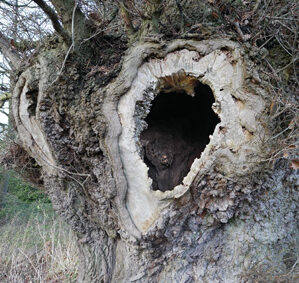
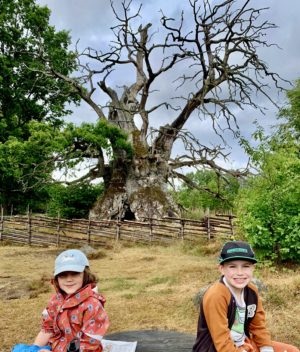
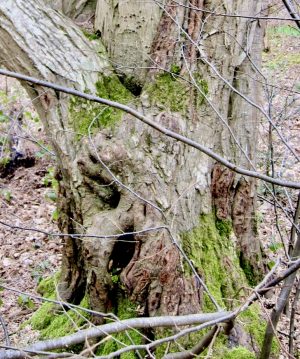
Veteran trees may be defined by a number of features: age size; condition; history; position. Neither age nor size in themselves define veteran status. These features have to be viewed in relation to typical values for each tree species.  Thus, a one hundred year old birch or willow might be ‘deemed’ a veteran but a one hundred year old oak or yew would be a youngster.  To be termed a veteran, a tree should show some of the following features the trunk should be large (for the species) decay holes in parts of the trunk the trunk may show signs of damage and/or bark loss dead wood in the canopy fungal fruiting bodies often present (from heart rot fungi) epiphytes, such as mosses and lichens are present the tree supports a rich variety of different species the shape or position of the tree is of interest the tree may have cultural or historical interest, some  were used as gallows! Some veterans achieve their status through the management of the tree, such as pollarding or coppicing.  There are thousands of ancient trees in the UK and the Ancient Tree Inventory not only offers a way of finding ancient trees across the country but also you can add details of trees). Veteran trees can be found in many countries, though the may go under different names. In Australia, veteran or ancient trees are often connected with the social, cultural, and legal practices of the aboriginal peoples.  In Italy, an Albero Monumentale (‘a monumental tree’) is defined under National Law [number 10, 14th January 2013]. In Sweden, the oldest oak (Quercus robur) is the Rumskulla Oak , also known as the Kvill Oak. It is found in Kalmar County, Småland.  The name Rumskulla derives from its older form Romfarakulla ( = Rome + travel + hill); the area was a resting place for pilgrims that  to made the journey to Rome. It is one of the largest trees in Scandinavia, being some 14 metres (46 feet) high and with a trunk circumference of 13 metres (43 feet). Its girth is still increasing.  In the severe winter of 1708-09, the crown was was damaged and much lost. The tree is over a thousand years old and was first described in 1772.  The tree is now supported by iron bands and wire.  Like many veterans, its centre is hollowed out and it is covered with mosses.   There are many holes, cracks and crevices.   The Rumskulla Oak is registered as a national natural object of interest, with the Swedish Heritage Board. Thanks to Fredrika for the photos.
veteran tree

Veteran trees and veteranisation.

by The blog at woodlands.co.uk, 12 February, 2022, 0 comments

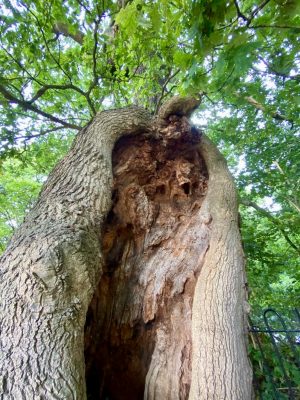
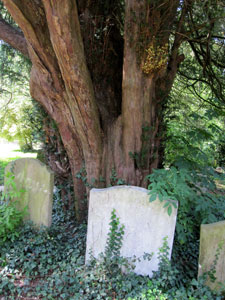
A thousand years ago, significant areas of the country were devoted to wood pasture, that was grazed by livestock.  As time passed, much of this became royal hunting forest - a mixture of woodland, coppice, open land and farms.  As the woodlands were managed (through traditional techniques such as coppicing and pollarding), many of the trees were able to grow to maturity.  They became veteran trees.  Trees such as beech reach maturity after some 200 years, oaks take 400 years and yew 900+.   Such veteran trees can be seen in areas like the Savernake (south of Marlborough) and Sherwood Forests. Saverrnake has veterans like the Big Belly Oak, and Sherwood has the Major Oak.  Sadly, since the nineteenth century many veteran trees and ancient woodlands have been lost due to the expansion of agriculture, housing development and road & rail creation.  Veterans have also been lost from hedgerows, many of which were grubbed out to enlarge fields to allow for increasing mechanisation. As oaks and beeches age so they change, they expand, trunks hollow, cracks and holes appear, heart rot develops and dead wood appears.  Each tree offers a myriad of micro-habitats.  Bracket fungi feed on the dead heart wood, as do stag beetle larvae.   Mosses and lichens live on the bark, attached to crevices that channel the rain down the trunk, bats, woodpeckers and nuthatches inhabit holes. Other birds (like redstarts) nest in the branches and twigs.  The decaying leaf litter beneath the tree offers sustenance to a variety of beetles, and fungi (e.g. oakbug milkcap).  English oaks are associated with more than two thousand species, and more than two hundred are directly dependent on the trees. The loss of so many veteran trees has resulted in an international project to determine if these trees can be ‘replaced’.  It involves a technique termed veteranisation. Younger trees are damaged in order to start the process of decay and ‘ageing’.  The process may include Creating woodpecker-like holes Creating nest boxes for birds / bats Breaking branches Damaging the bark / trunk - to simulate deer / animal damage Inoculation with fungi It is being trialed at some 20 different sites in Norway, Sweden and England.  The project started in 2012 and will run for some 25 years.  It is hoped that such ‘techniques’ could be used to accelerate the formation of veteran trees status with its associated biodiversity. Thanks to Angus for tree jpgs. For further information : https://naturebftb.co.uk/wp-content/uploads/2021/09/Introduction-to-Ancients-of-the-Future-Jamie-Robins.pdf https://www.gov.uk/countryside-stewardship-grants/creation-of-dead-wood-habitat-on-trees-te13 https://www.woodlandtrust.org.uk/media/1798/wood-wise-ancient-trees.pdf  (opens PDF)

Next Page »