Carbon storage in doubt.
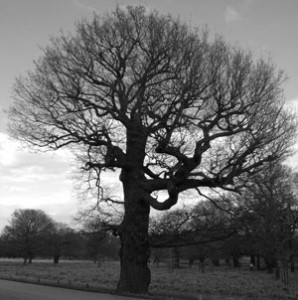
Woodlands and forests play a significant role in slowing climate change. They take in carbon dioxide and water, and use them in photosynthesis. The first products of photosynthesis are sugars and oxygen. The sugars are then used to make more complex organic compounds, such as starch, cellulose and lignin. These are then used in their trunks, roots and branches. It has generally been assumed that the rising levels of carbon dioxide in the atmosphere, would result in an increased rate of photosynthesis. This would in turn lead to increased growth and greater storage of complex materials, such as lignin the main constituent of wood. This would result in carbon being locked away for decades, even millennia.
However, research on oak trees in the States has cast some doubt on this assumption. Whilst trees may use the additional carbon dioxide available for photosynthesis, it may not ‘appear’ in the formation of new wood / growth. This would reduce the amount of carbon stored in woodlands and forests. Instead, some of this carbon seems to be used in leaf or fruit 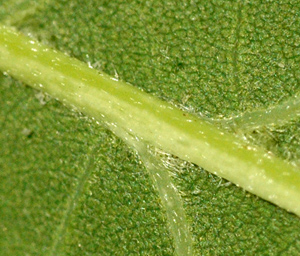 production, or various metabolic processes. Some compounds are used in tree defences, nutrient uptake (an energy consuming process) and mycorrhizal relationships. Studies showed that oak trees (in the eastern states) grew through May, June and July, but that they continued to photosynthesise into early fall (autumn). So a considerable amount of carbon assimilation took place after growth per se had stopped. Growth of the trees as measured by increase in biomass comes to a halt in hot and dry conditions, but photosynthesis continues albeit at a somewhat reduced rate.
This disconnect between growth and photosynthesis is even more pronounced when the weather alternates between very wet and very dry. Knowing how much of the carbon captured in photosynthesis ultimately becomes woody biomass is critical in estimating how woodlands and forests slow global warming / climate change. Indeed, as the weather becomes more unpredictable, the projections of tree growth due to a CO2 richer and warmer world may have to be re-evaluated.
Details of this study can be found here.

Leave a comment