Woodlands.co.uk

Blog - bacteria

First, came the fungi ........

First, came the fungi ……..

by The blog at woodlands.co.uk, 28 May, 2026, 0 comments

Recent research at the Okinawa Institute of Science suggests that the fungi evolved many millions of years ago, indeed perhaps before plants colonised land.  The common ancestor of present day fungi may have arisen 1.4 billion years ago, which is long before anything resembling a land plant appeared.  Next to come were the red algae (probably).  Soft bodied animals appeared in the Ediacaran period, some 635 to 542 million years ago. The first simple land plants appeared approximately 500 million years ago, evolving from green algae in the Cambrian period. The dating of the appearance of the fungi is dependent on the study of few fossil forms of fungi; and DNA studies to create a molecular clock.  The clock is created by a study of mutations, and what have been termed ‘horizontal gene transfers’.  If, as suggested, fungi predate plants by eons, then they had millions of years to evolve and diversify.  They probably formed associations with primitive algae and / or bacteria. It was these organisms that were the first colonists of land, along the damp shorelines of ancient seas.  Fungi are ‘chemical engineers’, they can weather rock, freeing elements like phosphorus and other nutrients.  They likely built the first thin ‘soils’, turning bare rock into something could support the tentative roots of the earliest plants.  Essentially, the land was prepared for colonisation by the early fungi. Even today, fungi can colonise hostile places.  They are often the first organisms to arrive to wildfire burn areas, in the debris of volcanic eruptions, and in pyroclastic flows.  The eruption of Mount St.Helens spewed mud and ash over vast areas, leaving behind a ‘martian’ landscape of grey rubble and ash.  But within 10 days, fungi were beginning to bioengineer the area.  Fine filamentous hyphen threads were beginning of attach to the smaller pebbles / material thrown out of the volcano.  Such fungi have been called ‘phoenicoid fungi” - a reference to the Phoenix rising from the ashes.  They are the first responders.  In California, members of some Native American tribes historically collected burn morels for food after a fire burn.  There is also the possibility of fungi being used eventually to clean up polluted environments and in phytoremediation of abandoned mines, landfill sites etc.  They might also tackle PFAs - these are group of over 10,000 man-made chemicals often called  "forever chemicals".  because they don't easily break down in the environment or the human body.  
Vikings and squirrels.

Vikings and squirrels.

by The blog at woodlands.co.uk, 14 July, 2025, 0 comments

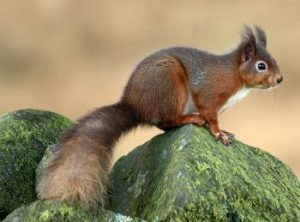
JAcross Europe, the red squirrel is recognised as an endangered species.  The U.K populations are at risk due due to :- Habitat loss Competition with Grey Squirrels The effects of the squirrel pox virus The last two are a result of the introduction of the grey squirrel from America in the 19th century. Red squirrels are at home in all types of woodland and may even be seen in parks and gardens, but they 'like' mixed conifer forests best.  Scotland is home to many of the U.K's red squirrels. The number of squirrels is quite small – estimates of their number vary, perhaps there are less than 300,000* across the whole of Britain.   The status of red squirrel populations is a matter of considerable interest. [caption id="attachment_42416" align="alignleft" width="300"] Screenshot[/caption]  In 2014, it was noticed that some members of the Scottish red squirrel populations had abnormal growths on their ears, snout and limbs. Further investigations found that the squirrels were suffering from leprosy.  Leprosy  is a bacterial infection,  caused by two different species of mycobacteria: Mycobacterium leprae and Mycobacterium lepromatosis.   The two types of  bacteria have slightly different distributions in the squirrel populations of the U.K.  Whilst leprosy in squirrels was first reported in 2014,  it is likely that the disease has been around in squirrel populations for much, much longer, probably hundreds of years. Profesor Verena Schünemann,  Christian Urban et al have studied bacterial DNA extracted from human skeletons, dating from 400 CE to 1400 CE with deformities associated with leprosy.   They 'reconstructed' the genetic makeup of mediaeval forms of the bacterium.  Leprosy was not uncommon across Europe in mediaeval times - indeed up to the sixteenth century.   Disease, in its many forms , was a common part of life -  dysentery, diphtheria, typhoid, smallpox, and plague meant that life expectancy was limited. The last indigenous case of leprosy in the UK dates back to 1798.  In humans, leprosy causes muscle and nerve damage, which lead to deformity, blindness and disability.   Interestingly, research by Dr. Sarah Inskip has revealed that a pre-Norman skull [found in Hoxne in Suffolk] had a leprosy strain related to a form known to affect squirrels.  The same strain has also been found in medieval scandinavian skeletons.  It is possible that the  trade in squirrel pelts (and meat) could have contributed to the spread of the disease. Strong trade connections with Denmark and Sweden were in full flow in the medieval period.  Squirrel fur was also used as a lining for fine clothes and squirrels were kept as pets by some. The historical spread of leprosy is not fully understood.  The disease may have passed from squirrels to humans or vice versa in historical times.  Further study of the microbes that cause this disease (and that in squirrels) will help determine how the disease is acquired and transmitted.    The risk to human health is low. (Even so, good hygiene should be followed during any contact with wild animals). Professor Anna Meredith  (University of Edinburgh) is researching into this disease in squirrels.   Further reading / articles: https://www.newscientist.com/article/mg14819991-200-virus-blamed-on-invading-squirrels/ https://www.science.org/doi/10.1126/science.aah3783 https://www.theguardian.com/science/2017/oct/25/medieval-love-of-squirrel-fur-may-have-helped-spread-leprosy-study-reveals https://www.sciencedaily.com/releases/2017/10/171025103109.htm
Grey squirrel damage.

Grey squirrel damage.

by The blog at woodlands.co.uk, 22 July, 2024, 0 comments

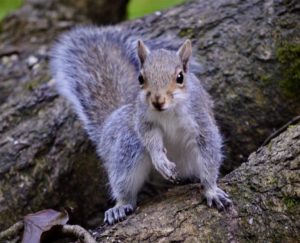
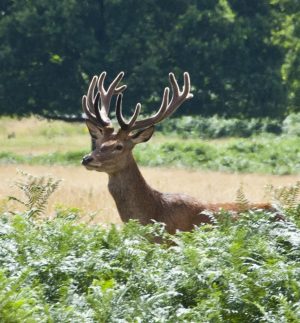
Much has been written about the explosion of the UK deer population in recent times, and the damage to woodlands through their browsing activities.  However, the grey squirrelis associated with tree damage.  The grey squirrel is not just the 'cheeky chap' who steals the bird food in the garden, it is a serious pest.    The grey squirrel is a non-native species.  It was introduced in the 19th century.  The squirrels have spread across the country and have displaced the native red squirrel from many areas (either through competition or disease).  The grey squirrel's bark stripping activity now poses a threat to the sustainable management of woodlands. Gnawing of the bark means that they can get to the sweet, sap filled tissue (phloem) just beneath the bark. This tissue is responsible for the movement of sugars and other organic molecules around the plant (known as translocation). If the gnawing extends around the stem then the tree is ‘ringed’ [i.e a complete circle of bark and underlying tissue is removed]  then the tree us likely to die.  The squirrels tend to take bark from the main stem (and branches). The bark stripping may : Lead to the loss of particular tree species (for example, beech) Lead to the loss of insect / spider and fungal species associated with the loss of tree species, i.e. a loss of biodiversity allow fungal infection of the tree Reduce carbon capture Reduce the economic value of timber Act as a disincentive to creating new woodland for timber In order to reduce squirrel damage, it is important to Start inspecting for damage in late February as damage typically occurs in early Spring.  Examine the base of trees for damage. Look for ‘tester patches’ made by squirrels (to which they may well return later). Check young, broadleaf trees as they are particularly favoured by the squirrels.  Oak and beech are quite vulnerable to damage (see image of damaged beech trunk below). Recent research* at Bangor University has investigated the microbiome of the squirrel in relation to its bark stripping activity.  The microbiome of the gut refers to the various micro-organisms found with the intestines.  Analysis of bacterial DNA found in the colon of great (and red) squirrels revealed that grey squirrels had 'oxalobacter' bacteria in their colons.  These bacteria are able to 'release / access' calcium from the tree bark to the squirrels.  Calcium is an important nutrient in terms of bone building and is also involved in muscle contraction. had  a more diverse bacterial population in the colon. These findings may help explain why the grey squirrel 'outcompetes' the red squirrel.  Their more diverse gut microbiome may mean that they can access a greater range of resources. For example, grey squirrels can digest acorns, which red squirrels cannot;  this is possibly associated with tannin content of acorns. In order to reduce damage in a woodland, the number of grey squirrels may need to be managed.  This can be done though trapping or shooting.  Trapping is a legally acceptable and effective way of controlling grey squirrels in most situations. Grey squirrels can be trapped throughout the year though March to September is a good time as food is less abundant. Through autumn, berries, nuts and seeds [natural foods] are available so trapping is less successful.  Details of the various types of traps and their use / placement may be found at: https://greysquirrelcontrol.co.uk/trapping-method.php https://www.britishredsquirrel.org/wp-content/uploads/2016/07/Grey-Squirrel-Best-Practice.pdf https://basc.org.uk/pest-and-predator-control/grey-squirrel-control-with-live-capture-traps/ https://www.britishredsquirrel.org/wp-content/uploads/2016/09/Trapping-Protocol.pdf  https://bpca.org.uk/a-z-of-pest-advice/squirrel-control-how-to-get-rid-of-squirrels-bpca-a-z-of-pests-/188983 To go down the ‘shoot to kill’ route then there are a number of rules and regulations to observe.  Details may be found in the link below : http://www.britishredsquirrel.org/grey-squirrels/grey-control/ It is hoped that eventually a form of oral contraception will be developed, which will offer a non-lethal and humane means of population control. Full details of this research work may be found here

Next Page »