Woodlands.co.uk

Blog - Search results

Plants and pollinators face problems.

Plants and pollinators face problems.

by The blog at woodlands.co.uk, 10 August, 2026, 0 comments

The last few months have been exceptional in terms of daily temperatures, and rainfall or rather the lack of it.  The effects are clear to see across the countryside - dry and parched lawns, crops stunted or failing and wild fires in many areas.  These are some of the obvious effects of the recent heatwaves, and indeed climate change.  However, there are also some more subtle effects of these high temperatures. The rising temperatures have a direct impact on the interactions between pollinators and flowers. The production of scents by flowers depends on the plant’s  metabolism.  Warming can have two effects : it can alter the amount of the scent / volatile oils produced  it can change the type of volatile oils / scent produced by the flower.   As a result, flowers may no longer emit the same chemical signals to which their pollinators are accustomed.  Bees and other pollinators may become ‘confused’ and unable to forage for nectar and pollen effectively. [caption id="attachment_43681" align="aligncenter" width="675"] Hover fly[/caption] However,  the effects of these high temperatures are not confined to the plants. Bees, bumblebees, hoverflies, butterflies and moths are also affected by increased temperatures.  They are ectothermic organisms, which means that their body temperature is largely determined by the environmental temperature that they experience. Whilst cold temperatures will result in relative inactivity, during heat waves the temperatures may well exceed their thermal limits (what they can tolerate).  Not only will the external temperature warm their bodies, but the use of their flight muscles will also generate heat.  Consequently, their ability to forage may be reduced.  The higher temperatures may also impact on their nervous system so that their sense organs may not be able to detect the scents and signals that flowers are producing.  Consequently, both plant and pollinator can no longer ‘communicate’. [caption id="attachment_43682" align="aligncenter" width="675"] marmalade hover fly[/caption] Further information : https://academic.oup.com/aob/article/137/7/2055/8541414  
Changing the welsh landscape

Changing the welsh landscape

by The blog at woodlands.co.uk, 17 July, 2026, 0 comments

Woodlands make up only 15% of the land cover in Wales.  Much of the land use is intensively farmed grassland.  However, it is the expressed intent of the Welsh Government to create thousands of hectares of new woodland (by 2050) as part of the Net Zero Wales plan.  The creation of new woodland will capture and store large amounts of carbon, through the uptake of carbon dioxide for photosynthesis.  However, it will have another important benefit, it will help promote insect diversity. Insect numbers have declined in recent years.  A significant survey was conducted by the Centre for Ecology and Hydrology and Butterfly Conservation Wales.  It involved surveying some 300 sites (1 km x 1 km) across Wales.  It found that: There were up to twice as many insects in woodland areas as compared to farmed grassland areas, and Hedgerows made an important contribution to insect abundance.  Without hedgerows, the number of pollinators in farmland areas could fall by 20%+. The type of tree cover is also important. Timber plantations, which tend to be monocultures, do not offer much benefit to pollinators.  Pollinators tend to do well along the edges of and gaps in natural (deciduous) woodland.  Woody shrubs and tree species in hedgerows and woodland offer: Food for insect larvae, many of which feed on leaves. Nectar and pollen for adult insects Nesting sites and shelter for a variety of animal species [caption id="attachment_32951" align="aligncenter" width="650"] Woodland edge[/caption] The report stressed the importance of natural pollinators (as opposed to managed honeybees) such bumblebees, carder bees, communal bees, hover flies, butterflies and moths. Further details of the report can be found here
Food for the bees.

Food for the bees.

by The blog at woodlands.co.uk, 3 July, 2026, 0 comments

Many of the recent investigations into bees has focused on honeybees and bumblebees, with relatively little research on the problems facing solitary or communal bees.  A  female solitary bee must find a nest, collect pollen, then lay eggs and provide food for her offspring.  In contrast, communal bees share a common entrance to a nest where there are a number of females, but each female maintains her own area and offspring. There is no hierarchy within the communal nest, for example, no queen. It is known that the diet of bees has changed over the years.   In the past, the bees were able to forage and collect pollen and nectar from a wide variety of native plants.  However, the loss of ‘natural wild’ areas means that their diet is often dominated by a small number of plants, such brambles, clover and dandelions. Studies have indicated that some pollens have low levels or lack certain amino acids.  Bees need the same essential amino acids as us.  Without a supply of these particular amino acids  the development and growth of bees is impaired,  disease resistance is reduced the ability to raise the brood is compromised.   So, it is important to find ways to offer our pollinators a range of plants / pollen to provide all their essential nutrients.  An abundance but limited range of flowers (and hence pollen / nectar) will not necessarily meet the needs of the pollinators.  The changing floral landscape may be more challenging for the solitary and communal bees.  Much depends on how far they can forage and how flexible they are in terms of their food sources.  A species that can forage over a wide area and that can collect pollen from a number of different flowers might well survive in a nutritionally deficient area.  Solitary bees that only forage over short distances (when compared to honeybees) are likely to be challenged by the nutritional status of nearby flowers, and the changing agricultural / urban environment.  Poor nutrition could lead to rapid population declines in solitary species.  Bees that live in colonies and have a social organisation can share resources and possibly change their foraging efforts.  It is important that measures are found to support the diverssity of native plants both in rural and urban locations if populations of the various pollinators are to be maintained. Further information on solitary bees and the changing climate can be found here.
Plants talk.

Plants talk.

by The blog at woodlands.co.uk, 3 June, 2026, 0 comments

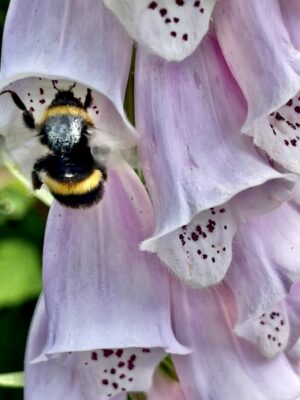
We can communicate in many ways, other animals may  message each by vocalising or gesturing.  Some release air-borne chemicals (pheromones) to attract a mate.  Plants also communicate by chemical signals that they release into the environment. The most obvious example is the release of scents to attract pollinators.   These floral scents are usually oils, made from volatile organic compounds (VOCs).  VOCs are carbon based compounds, such as the terpenes. They usually have a strong and pleasant odour.  They form partt of the scent of many plants, for example, honeysuckle, roses, jasmine, lilac, and mock orange.  Different plants produce different scents.  These different chemical signatures help pollinators identify particular species, and locate the nectar on offer. The VOCs produced by ripe fruit help attract animals that assist in seed dispersal. [caption id="attachment_43370" align="aligncenter" width="675"] Buff tailed bumblebee visiting a foxglove[/caption] VOCs are also produced by leaves when plants are under attack.  These may deter the attacking organism directly, e.g. caterpillars, or they may attract an organism that predates upon the herbivore. When pollen beetles feed on oil seed rape, the plants release VOCs which attract the attention of insects (a type of wasp). The wasps lay their eggs in the larvae of the pollen beetles. The pollen beetle larvae are then ‘eaten alive’, by the developing wasp larvae.  Sometimes, VOCs are produced by stressed or attacked plants,  these VOCs ‘warn’ nearby plants of the same species. These plants can then activate their defences before they are attacked. This helps ensure the survival of some of the population. Recently, it has been suggested that mycorrhizal systems act as a physical and chemical ‘means of communication’ between the trees in a woodland, in what has been termed the ‘wood wide web’. The term was coined by Dr. Suzanne Simard, a forest ecologist at the University of British Columbia to describe the complex relationships between fungi and plants in woodland ecosystems.  Interestingly, VOCs can influence air quality and atmospheric processes.  In a woodland,  the scent of pine or other conifers may permeate the air.  Pines release volatile compounds, such as alpha-pinene.  Recent research has established that these volatile compounds / vapours are not only responsible for the characteristic scent, but also contribute to the formation of aerosols in the atmosphere* both in and around such woodlands and forests.  In the presence of sunlight, VOCs can interact with the gas nitric oxide to form ground level ozone, which contributes to smog formation. Forests can be a significant source of VOC emissions. The production of VOCs is affected by environmental  conditions.  VOCs release generally goes up with an increase in temperature, as the plants metabolism increase.  An increase in temperature also helps in the evaporation / volatilisation of plant oils and scents. Water availability and light intensity also affect VOC release.  * An aerosol is a ‘mixture’ of very small particles (solid or liquid) in air; other examples of aerosols include mist, cigarette smoke, or car exhaust fumes Addendum : Heavier and far rarer VOCs are the sesquiterpenes, larger molecules that trees in the Amazon release when exposed to drought.  These reactive molecules help form tiny particles that seed clouds and scatter sunlight. These emissions could change the weather and climate over the whole region.  For full details see : https://www.earth.com/news/amazon-trees-emitted-never-before-seen-chemicals-during-drought/  
Carder bees - important pollinators.

Carder bees – important pollinators.

by The blog at woodlands.co.uk, 18 May, 2026, 0 comments

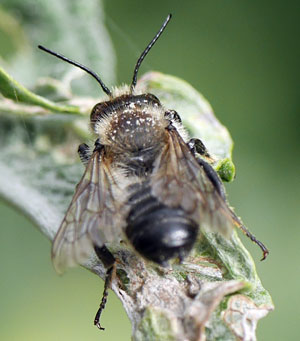
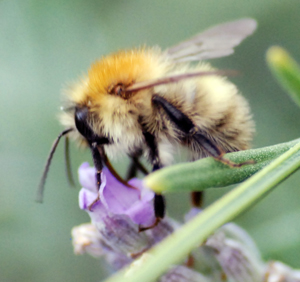
There are some 270 species of bee to be found in the UK.  Most of these bees are solitary bees. Solitary bees do not form colonies like the honey bee, with a queen and workers. Twenty four are types of bumblebee,  although two of these bumblebees may be extinct in the UK.  Included in the bumblebee category are the carder bees. Their name relates to their ability to ‘knit’ together plant materials / fibres to form a nest*.  The six species of carder bees in the UK are listed below : The common carder bee The brown banded carder bee The moss carder bee The red shanked carder bee The ruderal carder bee The shrill carder bee The common carder bee (Bombus pascuorum) is quite widespread and is found in gardens, the edges of woodland, and farmland throughout the country.  It is a social insect, forming colonies with worker bees.  Their yearly cycle is not dissimilar to that of bumblebees.  In spring, queen carder bees emerge from hibernation and establish new colonies. These develop throughout the spring and summer, adding workers.  By late summer, new queens and males are formed, and in autumn the old queen and workers die.  The new queens overwinter and emerge in the following spring. [caption id="attachment_43305" align="aligncenter" width="675"] Common carder bee[/caption] Carder bees tend to build their nests on or near the soil surface, using moss, dried grass or similar plant material.  The shrill carder bee favours flower-rich grassland areas to build its nest.  As so many of these diverse grasslands have disappeared over the last century, it explains the rarity of this particular bee.   Carder worker bees are a ginger / warm brown colour. Carder bees are noted for their ‘long tongues’, i.e. their mouthparts have a long proboscis [feeding tube].  This allows them to reach the nectar inside flowers with a long, tubular shape (such as foxgloves, honeysuckle and clover).  It also means that they are not in direct competition with ‘shorter tongued’ bees, who can only access open flowers.    Whilst visiting flowers, they act as pollinators of both wild flowers and farmland crops. As pollinators, they help promote the transfer of pollen from plant to plant, promoting outbreeding which in turn helps maintain variation with a species. The bees actively forage from spring into autumn and can thrive in our extensively modified landscape, so they are key pollinators in both rural and urban areas. * Originally, the term a carder referred to person who combs out and cleans fibres of wool / cotton before spinning.
Woodland updates

Woodland updates

by The blog at woodlands.co.uk, 26 April, 2026, 0 comments

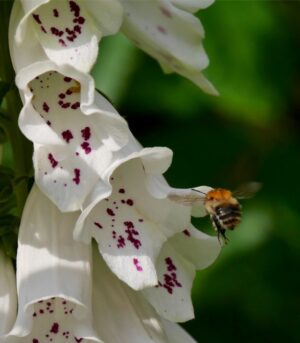
Lighting up the trees. When there is thunder and lightning, there is sometimes a phenomenon known as St Elmo’s Fire.  It appears as an eerie ‘violet / blue ’ light on the masts of ships’ or church spires and it may be accompanied a slight buzzing sound. Sometimes it can be seen on the horns or antlers of animals  and in the right conditions may light up forest canopies with a faint, flickering eerie glow.   This has now been investigated by Patrick McFarland (and colleagues) - a meteorologist at Pennysylvania University. He has produced photographs / videos of coronae (electrical discharges) on the very tips of trees during thunderstorms.  Back on campus, the phenomenon was reproduced by exposing a branch from a spruce tree to a strong electrical field created between charged metal plates.  The waxy tips of the spruce needles glowed with a purple light; an  artificial St Elmo’s Fire was produced . (Further details to be found in the New York Times or at Wikipedia : https://en.wikipedia.org/wiki/St._Elmo's_fire ). Interesting fact : In 1751, Benjamin Franklin hypothesized that a pointed iron rod would light up at the tip during a lightning storm, similar in appearance to St. Elmo's fire.   A ray of hope ? A survey of land holdings in Scotland, where nature restoration / rewilding has been encouraged, has indicated that bird and insect pollinators are flourishing.  The study involved the Northwoods rewilding network; this includes some 100 farms, crofts and woodland sites - which are quite widely dispersed but covering more than 30,000 plus acres.  The survey compared areas of the rewilded land with neighbouring areas that were managed more conservatively / traditionally.  Bird populations were assessed at five of the sites and butterflies and bumblebees at six.   The birds doing well in such areas included the spotted flycatcher, cuckoos and woodcocks.  Butterflies that were recorded were the painted lady, green veined white, red admiral, scotch argus butterfly and the peacock. Bees included the buff-tailed bumblebee, the common carder, early and tree bumblebees.   Further details in The Scotsman [Katharine Hay, Friday 6 March 2026] or Apple News : https://apple.news/ AWyx1qpa9SbeOg-2HGmMtXw [caption id="attachment_38081" align="aligncenter" width="675"] Bumblebee visiting foxglove[/caption]
The importance of hedgerows.

The importance of hedgerows.

by The blog at woodlands.co.uk, 17 April, 2026, 0 comments

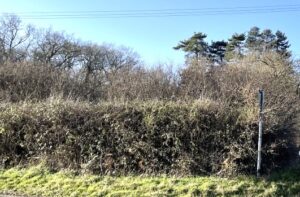
Woodlands and hedgerows are important features of our countryside.  Just as woodlands vary across the country, so do hedgerows.  A hedgerow usually includes a number of tree and shrub species, but may also include walls, banks, fencing and gates.  They may have been planted recently or may be ancient, dating back to the time of the enclosures. It has been estimated that there are over half a million kilometres of hedgerow across England, and the majority are actively managed.  In a managed hedgerow, the trees and shrubs have their form and shape altered.   The trees and shrubs that form the basics of a hedgerow include hawthorn, hazel, oak, holly, blackthorn, ash and yew. These may form the main body of the hedge but there are many other plants that contribute to its structure, such as bramble, honeysuckle and ivy, many wild flowers plus mosses, bryophytes, fungi and lichens.  [In urban settings, species like  privet, yew, box and holly may form the basis of the hedge / hedgerow.] [caption id="attachment_42838" align="aligncenter" width="675"] Beech hedge in garden[/caption] Consequently, hedges come in a variety of shapes and sizes and can include many different species. Rural hedges are often a mix of shrub and tree species, such as hawthorn, blackthorn, hazel, ash and oak. They were / are often planted to form boundaries around fields in managed agricultural landscapes.  Historically, many hedgerows were planted to keep livestock, such as sheep, cattle, pigs, chickens in specific areas. Other hedgerows were planted to define boundaries as in ‘who owned which bit of land’.  Hedgerows often surround fields.   The word ‘field’ comes from Old English ‘feld’, meaning 'an area of felled trees  or open country'.  Hedgerows are important as they offer habitats / niches for a variety of plants and animals. Not only do they provide ‘food and lodgings’ for many animals, they also act as biological corridors, supporting plant and animal connectivity across our landscape.  The flowers, fruits, berries and nuts are an important source of food for many invertebrates, birds and mammals. [caption id="attachment_24651" align="aligncenter" width="600"] Sloes on Blackthorn[/caption] Animals such the harvest mouse, the hedgehog and the vole may be found nesting in a hedgerow, and it offers food and / or homes for blue tits, and yellowhammers. They also support important insect pollinators, butterflies, hover flies, moths, bumblebees and bees. These insects may help with the pollination of crops in adjacent fields planted with oilseed rape, legumes or fruit trees. Other insects, such as ladybirds can help with crop yields by predating upon crop pests, such as green fly and blackfly (these aphids may spread viral diseases on crops such as sugar beet).  Sadly, hedgerows declined significantly in the last century, due mainly to intensification of agriculture. Fortunately, the destruction / loss has slowed since the 1990’s, though neglect and damage are significant threats even today.  Good management may involve planting of trees or shrubs to fill gaps, coppicing, laying a hedge or ‘considered’ cutting back.  However, there is no standardisation of the management of hedgerows and they can be harmed by excessive cutting back or flailing.   The effects of heavy pruning and cutting back during the nesting season can be disastrous. Whilst mechanical flailing of a hedgerow is fast and effective,  the regrowth is generally slower and its effects can be particularly bad for birds. [They may abandon their nests and / or  their eggs or chicks may be destroyed.] The pruning / flailing may also affect insect populations of the hedgerow (and / or other other food sources) on which the birds and other animals depend.  Another threat can be the use of agricultural chemicals [pesticides and herbicides] next to the hedgerow. [caption id="attachment_42843" align="aligncenter" width="675"] A managed hedge[/caption] For further and detailed information on hedgerows, visit : https://hedgelink.org.uk/guidance/importance-of-hedgerows/  
Moths - secret pollinators?

Moths – secret pollinators?

by The blog at woodlands.co.uk, 24 November, 2025, 0 comments

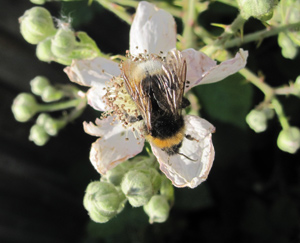
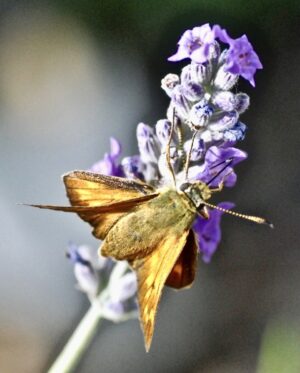
Honeybees, bumblebees and butterflies are always cited as being important for flower pollination. Indeed, without them many of our food crops would ‘fail’.  But what about moths?  Well, recent research has found that they too are efficient pollinators.  A recent study compared the role of nocturnal and day time pollinators.  Much scientific research has focused on daytime pollinators, like honey bees and bumblebees, but little is known about the night time pollinators.  So a study was devised, which focused on the day and night visitors to bramble flowers. Bramble may be a bit prickly to us but for bees and other insects it is important source of nectar and pollen, from early spring through to autumn.  The study was carried out out in the summer moths (when night is only one third of the daily cycle).  Trail cameras were used to record visitors to the bramble flowers over three days, also special bags were used to cover the flowers for different times in order to determine the effectiveness of the different pollinators on pollination and fruit formation.  One group of the bramble flowers was covered up for the three days.  A second group was bagged up for the day time.   The final set was covered only at night.  The number of pollinator visits was recorded as was the resulting pollination and fruit formation.   At night, moths were the only insect visitors of the pale pink / white flowers of the bramble, and they also proved to be very effective pollinators. It is not clear why moths were more effective, perhaps the time they spend visiting a flower is a critical factor.  They do spend more time rummaging in a flower than day time insects [hoverflies, butterflies, bees etc].     There are only some sixty species of butterfly in the UK but over two thousand species of moth.  But like butterflies, moths are vulnerable with many of our larger moths in decline.  The challenges that they face as the same as those that threaten many insects namely: Pesticides Habitat loss Climate change But moths face an additional challenge - artificial light at night. This interferes with the feeding behaviour of their larvae / caterpillars, it also affects the feeding and breeding of the adults.   Thus, moths are not only important pollinators but a vital component to the biodiversity of an ecosystem.  They also are a food source bats and birds. Moths can be helped by: By allowing a patch of brambles and / or wild flowers in your garden Persuading the council to allow wild flowers to grow and flourish on roadside verges, ‘spare’ plots of land etc. Asking the local council to reduce night time lighting where it safe to do so.   At home, limiting the use of outdoor lights at night, draw curtains and blinds to limit light spill to the exterior. As insects are in decline generally, (see the  woodlands.co.uk splatometer blog) it is important to help our pollinators - ensuring that they still ‘have a home’ at the end of the day.  

« Previous Page — Next Page »