How did the grey squirrel arrive in the UK?
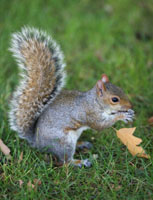
Here is an answer to all those questions on the Red squirrel, grey squirrel blog asking about the introduction of grey squirrels!
Grey squirrels (Scirius caroliniensis) are native to North America and were first released in the UK in 1876 in Henbury Park, Cheshire. It’s not clear why they were introduced and the Victorians had no idea of the risks of introducing non-native species. Perhaps they were just a decorative and interesting “exotic” in the park; part of the fashion for collecting that the Victorians enjoyed so much.
There were further introductions around the country and it wasn’t long before it became clear that they had taken to their new home like a duck to water (or a squirrel to trees). Within the space of 25 years, for instance, grey squirrels had colonised an area of some 300 miles between Argyll and Stirlingshire in Scotland.
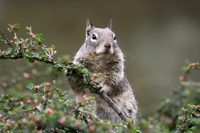 Although they are bigger and have a reputation for being aggressive, they do not kill red squirrels and there is evidence that red squirrels were already on the decline because of loss of habitat and disease. The greys have just taken up the space vacated by the reds. The grey’s success (there are about 66 greys for every red) seems to be down to the fact that they are more successful in competing for food. They are also prolific breeders with 2 litters a year of between 3 and 7 kits. This is why extermination programs have not worked – clear the greys out of one area and the neighbouring colonies just move in.
Grey squirrels also carry the squirrel pox virus which, although it doesn’t seem to harm the greys, is a serious infection for red squirrels.
Current thinking on conservation for red squirrels is that the best route to boosting numbers is to encourage the habitats most suited to them. The Forestry Commission is working in partnership with various conservation bodies including the Mammal Trust at Kielder Forest in Northumberland.
Comments are closed for this post.
Discussion
Look up 11th Duke of Bedford if you’re looking into the introduction of grey squirrels in parts of England
Hello,
I am a researcher just beginning a book about the grey squirrels introduction into England. I know this post was written many years ago, but I wonder if you could provide the sources for where you got the information on Henbury Park, the other grey squirrel introductions, and the spread. It is all very interesting, and I’d especially love to dig into it further. Cheers!
There are a number of blogs here on red and grey squirrels (in the U.K.) – which address some of the points you raise. People are largely concerned that the grey squirrels (introduced species) will displace the red squirrels (native species).
https://www.woodlands.co.uk/blog/flora-and-fauna/the-spread-of-the-grey-squirrel/
https://www.woodlands.co.uk/blog/flora-and-fauna/red-squirrel-grey-squirrel/
https://www.woodlands.co.uk/blog/flora-and-fauna/damage-by-grey-squirrels/
Apart from the blogs there is a lot of information / papers on the web – try searching with Google Scholar eg :
https://scholar.google.co.uk/scholar?hl=en&as_sdt=0%2C5&q=red+squirrels&btnG=
See https://www.woodlands.co.uk/blog/flora-and-fauna/the-spread-of-the-grey-squirrel/
Blogs
5 June, 2022