First, came the fungi ……..
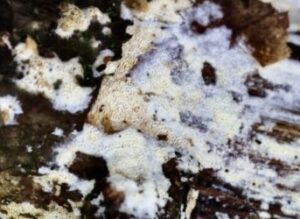
Recent research at the Okinawa Institute of Science suggests that the fungi evolved many millions of years ago, indeed perhaps before plants colonised land. The common ancestor of present day fungi may have arisen 1.4 billion years ago, which is long before anything resembling a land plant appeared. Next to come were the red algae (probably). Soft bodied animals appeared in the Ediacaran period, some 635 to 542 million years ago. The first simple land plants appeared approximately 500 million years ago, evolving from green algae in the Cambrian period.
The dating of the appearance of the fungi is dependent on the study of few fossil forms of fungi; and DNA studies to create a molecular clock. The clock is created by a study of mutations, and what have been termed ‘horizontal gene transfers’. If, as suggested, fungi predate plants by eons, then they had millions of years to evolve and diversify. They probably formed associations with primitive algae and / or bacteria. It was these organisms that were the first colonists of land, along the damp shorelines of ancient seas. Fungi are ‘chemical engineers’, they can weather rock, freeing elements like phosphorus and other nutrients. They likely built the first thin ‘soils’, turning bare rock into something could support the tentative roots of the earliest plants. Essentially, the land was prepared for colonisation by the early fungi.
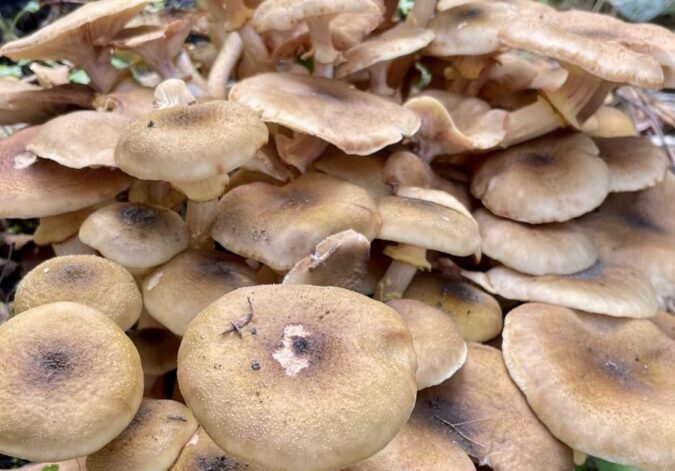 Even today, fungi can colonise hostile places. They are often the first organisms to arrive to wildfire burn areas, in the debris of volcanic eruptions, and in pyroclastic flows. The eruption of Mount St.Helens spewed mud and ash over vast areas, leaving behind a ‘martian’ landscape of grey rubble and ash. But within 10 days, fungi were beginning to bioengineer the area. Fine filamentous hyphen threads were beginning of attach to the smaller pebbles / material thrown out of the volcano. Such fungi have been called ‘phoenicoid fungi” - a reference to the Phoenix rising from the ashes. They are the first responders. In California, members of some Native American tribes historically collected burn morels for food after a fire burn. There is also the possibility of fungi being used eventually to clean up polluted environments and in phytoremediation of abandoned mines, landfill sites etc. They might also tackle PFAs - these are group of over 10,000 man-made chemicals often called "forever chemicals". because they don't easily break down in the environment or the human body.
Comments are closed for this post.