The dandelion – a prolific plant.
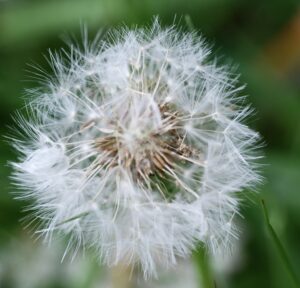
Dandelions are ubiquitous. You will see them by the roadside, growing up in pavements, in your garden. As my lawn has turned brown with the unrelenting heat, the odd patch of green is a dandelion holding on to life. They have spread more or less world wide. Their original range was probably through Europe and Asia, but now they are to be found on all continents with the exception of Antarctica. Once they arrive in an area they can spread quickly. Each dandelion stalk may produce up to 200 seeds, each with its characteristic ‘parachute’ for dispersal. As the seeds are wind blown, they may travel considerable distances with their ‘parachutes'. A single plant may produce ten or more flower stalks, so this can amount to a lot of seeds from a single plant. Each flower head is actually a collection of many small flowers tightly packed together. This collection of florets is termed a capitulum, which is also seen in daisies.
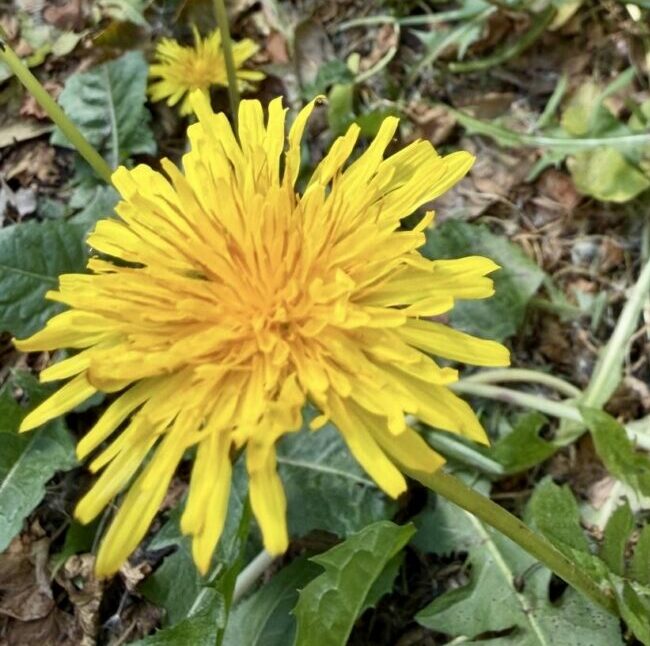
flower / capitulum of dandelion
Once dispersed, the seeds germinate producing a tap root which grows down into the soil, seeking water and minerals. The seedlings can survive in hostile places, like the cracks between paving stones on the streets or your brick drive. Unlike most flowering plants, dandelions can form seeds without pollination. They reproduce by a sort of sub-sexual mechanism known apomixis*. This has resulted in some 200+ variants or microspecies in the U.K.
The species name Taraxacum officinale gg. has the gg. added to it (standing for aggregate), in recognition of the many variations / microspecies of the plant. Many of these variants have been identified by Professor John Richards over the last forty years. The common name ‘dandelion’ comes from the French ‘dent de lion’ hence lion’s tooth; this refers to the jagged / toothed edges of its leaves. The Taraxacum part of the name is more difficult but it may derived from a mediaeval Arabic plant name.
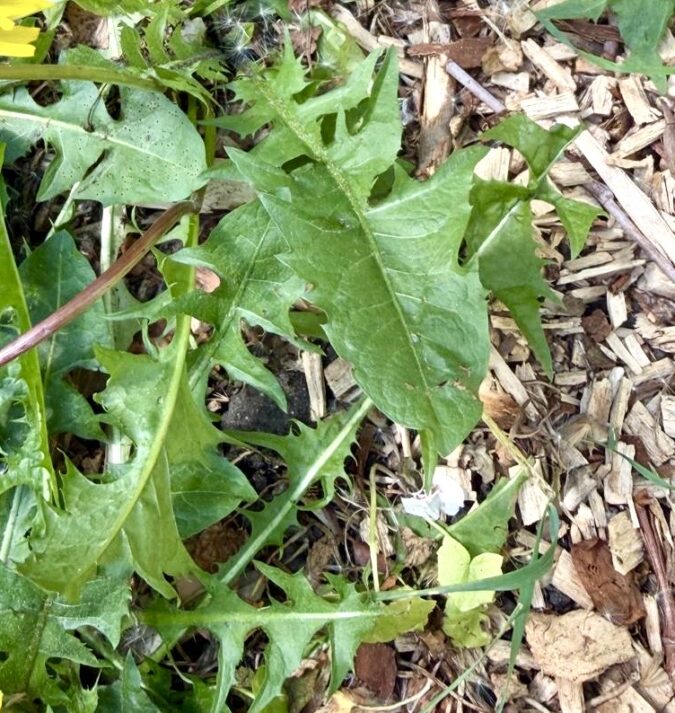
'toothed' leaf of dandelion
Dandelion flowers are important plants for our bees, providing an important source of nectar and pollen early in the year. Dandelions are also used as food plants by the caterpillars of some moths and butterflies and moths. The roots of the dandelion are a food source for various soil dwelling insects; for example the grubs / larvae of cockchafers.
Dandelions formed part of the herbalist’s repertoire as the leaves have a mild diuretic action; that is, they promote urine production. They have also been described as a hepatic or liver support herb. The leaves contain vitamins A, C and K and a number of bitter compounds (such as the sesquiterpene lactones). The bitterness of the leaves is favoured by some chefs as part of a salad.
* though sexually reproducing ancestral forms occur in Southern Europe.
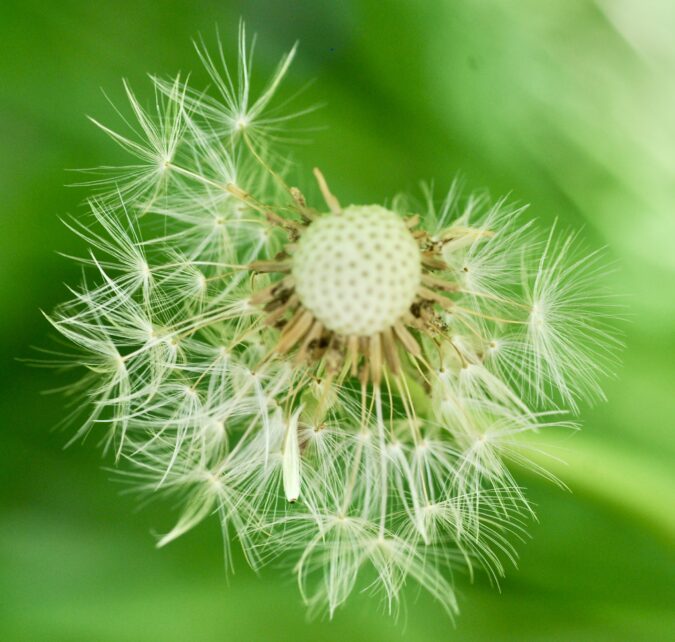
seeds with their 'parachutes'
Leave a comment