Plant resilience.
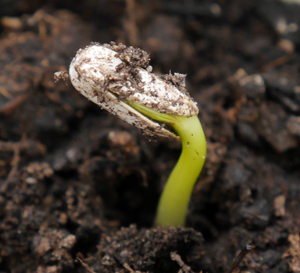
Plants need resilience to survive the vagaries of climate. They are ‘fixed’, they cannot escape challenging conditions. Plants need to be able to either tolerate or recover from adverse conditions for growth, from drought, heat waves or soil degradation. In other words, they need resilience. Back in the 1930’s a soviet biologist Trofim Lysenko claimed to have developed techniques that would revolutionise agricultural yields. For example, he claimed that vernalization, that is exposing wheat seeds to humidity and low temperature, could greatly increase crop yield. He even claimed that he could transform one species of wheat into another by planting in autumn for two to four years. He believed that the plants had changed, and gained resilience. Lysenko's work'suggested it would be possible to change the nature of species by exposing them to particular environmental conditions.
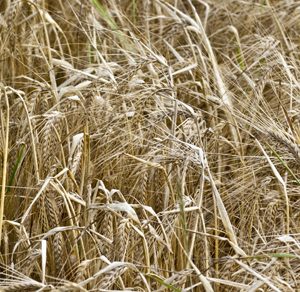 That plants could be modified in this way, rather than through plant breeding, sat well with the political atmosphere of that time in Russia. Lysenko was portrayed as a genius who had developed a technique that would lead to the improvement of Soviet agriculture and increased crop yields. During this period, the soviet people were experiencing famines. Lysenko’s ideas held sway for many years, but by the 1950’s mendelian genetics and the nature of the genetic material [DNA] were slowly accepted. Lysenko’s claims did not lead to vast increases in agricultural yield, though they did lead to the deaths of many Soviet geneticists, notably the President of the Soviet Agriculture Academy, Nikolai Vavilov, who had been Lysenko's mentor. Lysenko's work was eventually recognized as fraudulent but sadly not before the lives of many were lost and the reputation of Russian biology was destroyed.
There is some evidence, dating back centuries, that seeds can acquire a degree of resilience through certain pre-germination treatments. Back in Roman times, Pliny the Elder noted that seeds soaked in water with honey had improved germination. Further, it was observed that cabbage seeds could resist insect attack if treated with a juice from houseleeks before germination. These observations might be regarded as the first attempts to induce resilience in plants. 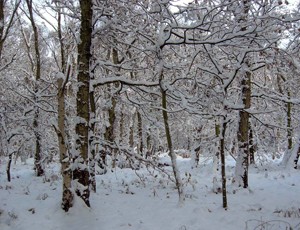 The seedling stage of plant growth is one where the plant is particularly susceptible to environmental changes. Chinese scientists have recently discovered that rice can develop a form of “memory” or resistance for cold tolerance. By exposing cold-sensitive rice to cold stress over several generations, they found that some plants developed a cold tolerance that was inherited.
There is evidence that the growth and establishment of tree seedlings has been problematic in recent years. Their shallow root systems, lack of carbon reserves and tender leaves make them vulnerable to heat, drought, wind etc. The exposure of seeds to particular environmental conditions and / or chemicals prior to germination has much to commend it if it enhances their resilience. Work in the late 1960’s by a researcher at Nottingham University [Walter Heydecker] suggested that this might be possible. He suggested the ‘priming’ of seeds. , This involved the seeds being wetted and then dried, or exposed to a salty solution. This was said to lead to increased germination and seedling vigour. 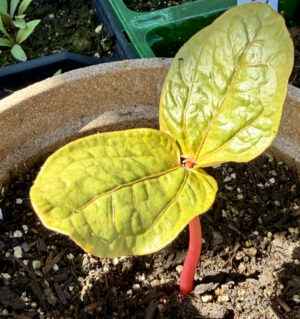 More recently, scientists working in Cyprus have suggested a number of physiological, biochemical, and molecular techniques to induce resilience in seeds against climatic stress. Such seed priming could provide benefits, as
- improved germination rate
- greater drought tolerance,
- increased vigour and yield
- faster maturity
With our changing weather [eg.warmer, drier summers], priming techniques might offer greater resilience to our crops, and tree seeds and seedlings.

It discusses historical ideas about plant adaptation, including Trofim Lysenko’s discredited theories, and contrasts these with modern understanding of plant physiology, genetics, seed treatment, and climate resilience. It also highlights the vulnerability of young tree seedlings and the potential benefits of seed-priming techniques such as controlled hydration or exposure to saline solutions.
Oleg
28 August, 2026