A place to live – leaves.
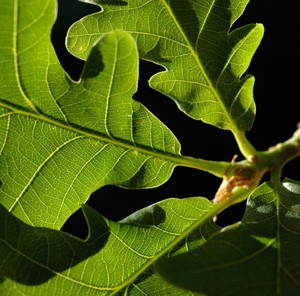
Generally speaking, leaves are quite small, but collectively they present a massive surface area to the environment. The total surface of leaves is significantly greater than the surface area of the Earth. Leaves are the organs of photosynthesis, not only do they make the basic chemicals for the plant, but they replenish the oxygen in the atmosphere.
Generally speaking, a leaf has two surfaces. One surface (the adaxial) is presented to the sun, the other (the abaxial surface) is shielded from the light to some extent. Both surfaces are covered with a waxy layer (the cuticle), which helps restrict water loss. The underside of the leaf has many tiny pores, the stomates, which can open and close to allow the exchange of gases and water vapour. The lower surface may be covered in minute 'hairs'. These create an unstirred layer, so that air next to leaf has a high water content and thus water loss through the stomates is reduced. The veins of a leaf contain xylem tissue which delivers water and mineral salts, and phloem which transports sugars and other organic compounds from the leaf.
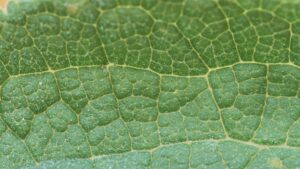
adaxial surface
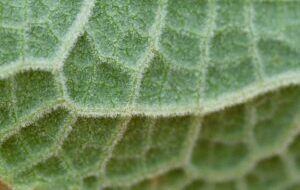
abaxial surface
The upper surface and lower surface of a foxglove leaf. Whilst the veins can be seen on the top surface, they are ridged and covered in hairs on the lower surface.
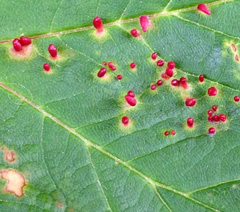
galls on sycamore
Once a leaf has grown then its size, shape and the veins remain constant, but during the course of the year other things can and will change. For example, in autumn the coloured pigments in the leaf break down and many compounds are transported out of the leaf as it undergoes senescence. The leaf may be subjected to attack, caterpillars and leaf miners may eat its tissues. Certain wasps may lay eggs within the leaf so that a gall develops. Greenfly use their piercing mouthparts to access sugars and other compounds from the phloem. Bacteria may infect the leaf either through wounds inflicted on the leaf, or by penetrating the stomates. To some micro-organisms, a leaf is ‘home’; it is a habitat. Rather like it is now common to talk about our gut microbiome or the microbiome of the skin, so each leaf has a microbiome.
Recently, microbiologists from China and Germany have studied the microbiome of oak leaves. Specifically, they examined the microbiome of the leaves of the pedunculate oak. They examined how the organisms present changed during the course of a growing season. 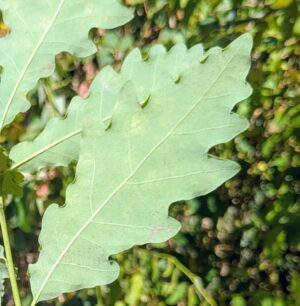 They found that the upper and lower sides of the leaves had different communities of micro-organisms. Both surfaces shared the same sorts of bacteria, but they varied in the amounts / proportions of the bacteria on the two surfaces. Furthermore the differences between the upper and lower surfaces changed as the seasons changed. The diversity of organisms on the lower surface of the leaf fell as the year progressed. Some of the bacterial DNA on the lower surface was that of bacteria which could be found on / in aphids and whitefly. Some of the bacteria found were associated with fermentation of sugars.
The study did not investigate fungal species on the leaves, but it does indicate that there are complex microbial communities present on leaves, and that the two surfaces offer different ‘opportunities’ for micro-organisms. Similarly, it has been established that there is a root microbiome. The root microbiome is a complex community of bacteria, fungi, archaea, and viruses living in and around plant roots. This microbiome helps the plant take in nutrients, fight diseases, and cope with environmental stress.
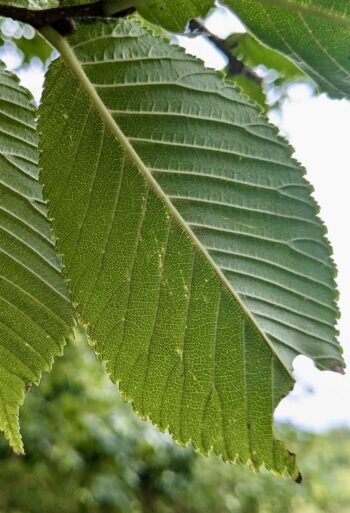
Hornbeam - abaxial surface
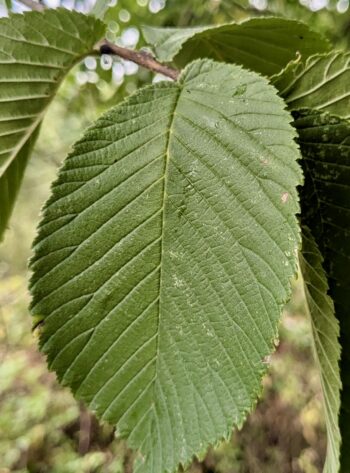
Hornbeam - adaxial surface
Leave a comment