Himalayan Balsam – the invasion.
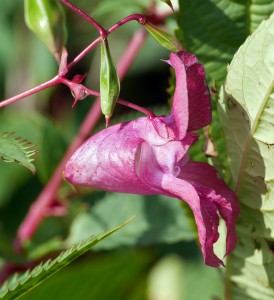
Non-native species can be a concern if they become invasive. They can affect or even take over ecosystems. The effect of Rhododendron ponticum in some woodlands has been disastrous. Invasive plants can:
- lead to the extinction / loss of native species
- alter the species diversity of an area
- change the community structure
- alter the way in which species interact
- change the microbiome of the soil
The loss of native plants may occur through competition for light, nutrients, water, or space. Some invasive species have the potential to alter the physical or chemical environment. They may do this by exuding chemicals that inhibit the growth of other species; such exudates are said to be allelopathic. The Tree of Heaven (Ailanthus altissima), which was introduced to the U.K. in the eighteenth century from the Western Himalayas, releases a substance [ailanthone] into the soil. This kills off many native plants and helps the tree take over entire areas.
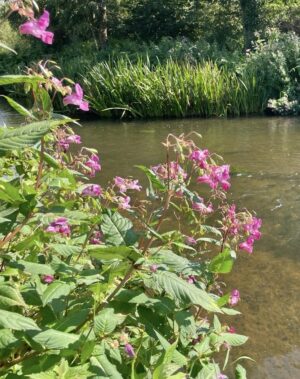
Another introduced plant is the Himalayan Balsam (Impatiens glandulifera). As an introduced species, it arrived here without any of its natural ‘enemies', no organisms that either feed on it (insects, caterpillars, etc.) or parasitize it (fungi, bacteria). Also, a single plant can produce between 800 and 2500 seeds. For an annual plant, it is surprisingly tall, sometimes growing to a height of six feet. It has been able to spread; it did not stay in Victorian gardens. It is now found on waste land, roadsides, railway lines, in damp woodlands, and on river banks and it poses significant problems. For example, when riverside stands die back in the autumn, it leaves the soil relatively bare and unprotected, which increases the risk of erosion.
Studies have shown that the balsam produces naphthoquinones. These chemicals leach from the leaves and exude from the roots and are thought to affect :
- soil fungi associated with mycorrhizal formation
- the germination of native plants.
Recently, researchers found that the balsam produces greater amounts of naphthoquinones at the start of the growing season, which would give the plants an advantage over native species by interfering with their germination and early development. The balsam would then be able to outcompete native plants for light and mineral sources. When the plants die in the autumn, their decomposition releases significant quantities of nutrients into the soil, which could benefit native plants. If the balsam plants have been growing in riparian environments, then these nutrients may leach into the rivers/streams, increasing the risk of eutrophication.
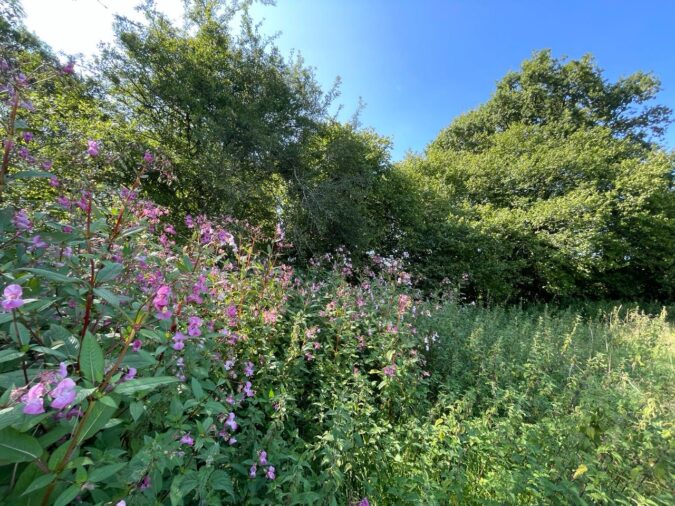
There is an interesting article on the Himalayan Balsam and its possible allelopathic effects here: https://pubmed.ncbi.nlm.nih.gov/41297495/
Thanks to Anton for images.
Leave a comment