Woodlands.co.uk

Blog

Can bracken be defeated?

Can bracken be defeated?

by The blog at woodlands.co.uk, 20 February, 2026, 0 comments

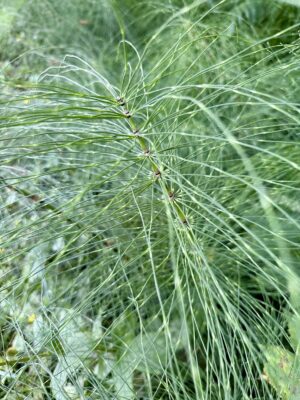
Pteridium aquilinum otherwise known as Bracken, is a common fern in many woodlands.  It is a vigorous and resilient species found throughout the UK.  When trees are felled or spaces appear in woodlands, bracken is quick to colonise taking advantage of the increased light. It grows quickly and its fronds can limit the growth of young trees through its dense shading. Similarly at the end of a growing season, the dying fronds can literally smother germinating seedlings and young saplings. Before dying down, bracken can store many materials in its extensive underground rhizome system.  It can tolerate adverse weather and difficult soil conditions  but generally prefers not to be in waterlogged  soils. It is not subject to significant grazing pressure or attack by insect pests or pathogens.  Consequently, it is a highly competitive species, reducing biodiversity.  Some woodland plants can survive in its presence, if they grow in early spring before the emergence of the fronds. [caption id="attachment_5892" align="alignleft" width="240"] A TICK[/caption] Bracken contains metabolites, which when ingested by animals, like cattle, have been linked to cancer of the bladder. It contains a toxin Ptaquiloside and the young leaves when crushed or eaten release hydrogen cyanide. Bracken is also known to harbour ticks, which can spread Lyme Disease. So, it not surprising that bracken is regarded as a weed by managers of woodland, field and pasture; it needs to be controlled, preferably eliminated.  But how to do this is problematic.  A number of strategies have been employed with varying degrees of success.  In woodland, the main objective is to suppress its vigour so that saplings can fully establish themselves . In the past, bracken had a number of uses – for example, as animal bedding which was later composted to give a nutrient-rich mulch.  Also, used for thatching, as a source of potash (pot ash = plant ashes soaked in water in a pot giving a soluble form of potassium K+).  This harvesting of bracken in historical times probably helped limit its spread. However, it is now spreading and its dominance in some areas / habitats is a concern. Bracken can be weakened by the cutting or crushing of the fronds, particularly if this is repeated on a regular basis.  This is both time consuming and expensive. Ploughing the soil, this cuts the underground rhizomes, exposing them on the  surface where they might dry out or freeze.  Ploughing has to be done carefully, as can significantly disturb the soil which can lead to erosion. Pigs can have the same effect as ploughing if the soil is shallow.  Generally these methods are now used. Other techniques included the burning of leaf litter and woody material but this has little effect on reducing the vitality of the bracken, in fact, the release of nutrients from the resulting ash may encourage the growth of the bracken.  Wood chip mulches are similarly ineffective, as are artificial mulches / membranes (difficult to secure them). Herbicides, such as asulam and glyphosate are effective in reducing fronds emerging after its application.  Asulam did little harm to young trees and other plant species, however its use is no longer approved of.  The use of glyphosate is also problematic. It has been suggested that it may be geotoxic & carcinogenic [EFSA 2017 Risk Assessment: Glyphosate]. The UK considered a ban, but as of last year its use was still allowed. Recent work [by Forestry England et al] has revealed an alternative herbicide that may be useful in controlling bracken - namely amidosulfuron. It works by inhibiting enzymes which control amino acid and protein metabolism.  It is thought to have low toxicity to mammals, and is stabile in light. Early trials indicate that it might be suitable for the suppression of bracken in strands of norway spruce, oaks, scots pine, sitka spruce and silver birch. [caption id="attachment_42998" align="aligncenter" width="700"] During the Age of Dinosaurs) ferns were among the most abundant ground level vegetation and a significant food source for many herbivorous dinosaurs.[/caption]
Promising conifers

Promising conifers

by The blog at woodlands.co.uk, 13 February, 2026, 0 comments

The UK generally experiences a temperate oceanic climate, which is characterised by mild temperatures, moderate rainfall, and relatively small temperature changes between the seasons.  It is not surprising that there have been some 500 species successfully introduced to gardens and arboreta since 1500. This compares to the thirty something native tree species.  It is perhaps not surprising that introduced species of conifer are used to make up the bulk of plantations / forests for timber production.  Of these, Sitka Spruce is the most common; the others are Scots pine (a native species) Corsican pine,  Norway spruce European larch Hybrid larch Japanese larch Douglas fir and  Lodgepole pine With the exception of Scot’s pine, all are introduced species.  Sitka Spruce accounts for one fifth of forest cover in the UK and half of the timber produced.  The 'value' of Sitka is that it :- grows in a wide range of sites / soils tolerates wind exposure has a high initial growth rate is not a favourite of deer, especially if alternatives are available. gives high yields of timber However, there are problems with being over reliant on a limited number of species.  Three significant challenges could be   Climate change Extreme weather events Introduced pests and pathogens. Our climate is changing to hotter, drier summers coupled with milder, wetter winters.  Extreme weather events, like the storm of 1987 can reek devastation of large areas of forest.   Pests and diseases can rapidly spread through plantations / forests that are essentially monocultures.  The globalisation of world trade has made it 'easier' for pathogens and pests to move around.  Recent years has seen a significant increase in disease, for example, needle blight and phytophthora; also the pest - the appearance of the eight toothed spruce bark beetle.  There is a finite risk that something could arrive and devastate Sitka Spruce populations, and have dramatic effects on the timber industry.  Worse still would be the arrival of multiple pests or pathogens which could initiate a collapse of a forest ecosystem. If the range of tree species planted was increased then the impact of such introductions would hopefully be reduced.  There is also some evidence that a variety of species helps improve resistance to natural disturbances and offers a degree of resilience (though mixed species stands are not always more  resistant to drought).  Consequently, work is underway to determine which, if any, other conifer species might be planted to  Reduce the reliance on traditional timber-producing species Increase resilience and diversify commercial forests. Between 2015 & 2018, Forestry Research Et al. set up across the country a number of clear fell sites, these ranged from Breckland in the east to northern Scotland.  The sites offered a range of soil types and different weather conditions.  The experimental plots measured some 32 x 32 meters, and the trees were spaced 1.9m apart.  The 25 trees ar the centre of each plot were measured throughout the experiment.  Each site studied the establishment and growth of some 19 species.  Scots Pine was planted at each site as a 'control' as it was anticipated that it would establish and grow at all trial sites.  Douglas Fir was also included in these trials as it was thought to be 'under used' in national planting schemes [it only represents 4% of the UK total coniferous growing area], and might be used in a wider range of sites than at present.   The trees at each site had their height and root collar diameter measured, survival was also recorded. Trees included in these trials trials included  Norway spruce Noble fir Grand fir Pacific silver fir Maritime pine Western red cedar Leyland cypress, amongst others. The trials have yielded some interesting observations.  There were significant differences in the performance of the various species at the different locations.  For example, growth and establishment of most trees tested was poorest at Thetford on the Breckland. Interestingly, the inclusion of Douglas Fir proved worthwhile as it performed well, establishing and growing well even on poor / infertile soils, such as that at Thetford.  Data from Europe suggests that it can even maintain growth when experiencing draught, so it would appear to be more versatile than previously thought.  It could also prove to be a viable alternative to Sitka spruce, especially in the south or eastern parts of the UK where it may become hotter and drier in the future.   Another species that did quite well was Maritime Pine, which is thought to be relatively resistant to needle blight (as compared to Corsican pine) and it dealt well with the dryness at Thetford.  Unfortunately, it was not included in the trial Scottish sites.  It would seem to have potential as a fast growing and robust species on sheltered, free draining sites. Other species did not fare well, for example, Macedonian Pine did not establish well on any of the Scottish sites.  European silver fir performed poorly at all sites, and largely failed at Thetford.  It, together with pacific silver fir, grand fir, western red cedar, and coast redwood may not be suited for establishment on clear fell sites, though they might be ok in more shaded conditions beneath other trees.  The Oriental and Serbian Spruce did not establish on any of the sites. Further details of these trials can be found here: https://academic.oup.com/forestry/advance-article/doi/10.1093/forestry/cpaf048/8229725?login=false  or as a PDF here: https://academic.oup.com/forestry/advance-article/doi/10.1093/forestry/cpaf048/8229725 ,
Diet and Digestion in Grey squirrels & Red squirrels.

Diet and Digestion in Grey squirrels & Red squirrels.

by The blog at woodlands.co.uk, 6 February, 2026, 0 comments

Whilst it can be amusing to watch the antics of a grey squirrel hopping about in your garden, they are generally seen as a pest.  In your garden, you might find some of your bulbs have disappeared or in the fruit season, some of your soft fruits might be ‘missing’.  However, in woodland and forests they are adept at stripping bark from trees, which obviously wounds the trees, distorts growth and may allow for the entry of pathogens.  Grey squirrel damage to trees in England and Wales has been estimated to cost £37m a year in lost timber value and reduced carbon capture. The squirrels tend to select vigorous trees as they have a bark with a rich sap content, such as  sycamore, beech, birch and oak.  It has been suggested that they targeted such trees for their sugar content, as much bark stripping activity occurs in May to July, a period when the tree would be actively photosynthesising and transporting sugars around the tree in the phloem tissue (bast).  However, recent work suggests that they may be after micro-nutrients, such as calcium.   [caption id="attachment_41889" align="alignleft" width="300"] squirrel[/caption] Scientists from Bangor University have investigated and compared the microbiome of grey and red squirrels.  The microbiome refers to the make-up on the bacteria and other microbes present in the gut.  They help in the breaking down of food materials, and the production of vitamins.  They found the intestinal (caecum*) microbiome or microbiota of grey squirrels is more diverse than that of red squirrels, and where there were bacterial species in common then the amounts differed. These findings might help explain why grey squirrels can, for example,  digest acorns readily despite their tannin content, whereas red struggle to make full use of this plentiful food supply.   The grey squirrel gut also has a bacterium - Oxalobacter.  This bacterium can change the insoluble calcium from tree bark into a more digestible form.  Calcium levels in trees tend to rise in late spring / early summer when squirrels indulge in bark stripping.  Red squirrels strip bark less frequently than greys, this may be due to their somewhat more limited, less diverse microbiome.  The microbial diversity of grey squirrels may enable them to use a greater range of materials than the red squirrels, perhaps explaining in part their spread and the displacement of the red squirrel. Another factor leading to the displacement of the red squirrel has been the spread of the squirrel pox virus into the red squirrel population.  This virus has little effect on grey squirrels but leads to sickness and often death in red squirrels.  The grey squirrel also harbours another threat to red squirrels - the adenovirus.  Again grey squirrels seem unaffected by this, but red squirrels develop severe intestinal damage.  This difference may again be related to the difference in the microbiome of the two types of squirrel. Note : the caecum is a pouch within the gut, between the small and large intestine where the digestion of cellulose etc takes place, it is 'rich' in bacteria. More detail on grey squirrels in the links below :  https://www.microbiologyresearch.org/content/journal/jmm/10.1099/jmm.0.001793 https://pubmed.ncbi.nlm.nih.gov/38354038/ https://www.bangor.ac.uk/news/2024-02-21-gut-bacteria-may-explain-why-grey-squirrels-outcompete-reds-new-research and https://rfs.org.uk/insights-publications/rfs-reports/report-overview-the-cost-of-grey-squirrel-damage-to-woodland-in-england-and-wales/
Resilient squirrels?

Resilient squirrels?

by The blog at woodlands.co.uk, 3 February, 2026, 0 comments

Across Europe, red squirrels are found in coniferous forests and deciduous woodlands.  Populations are found in Spain and Italy, up in parts of Scandinavia, and into parts of Western Russia.  This distribution suggests that the red squirrel can cope with a variety of environmental / climatic conditions. An important haven for red squirrels in the UK is the Isle of Wight, whose ‘isolation’ keeps the population away from the introduced American grey squirrels. The island has enough trees and hedgerows for the estimated population of some 3000+  red squirrels and for the population to grow. Their diet consists mainly of tree seeds, complemented with insects, birds’ eggs and some fungi. Grey squirrels have replaced red squirrels in many parts of the UK. To investigate if red squirrels might be able to cope with a changing climate (such as warmer and drier summers, reduced rainfall etc), Alyson Buchanan of Bournemouth University has used computer climate models to assess whether the squirrels could survive in changed conditions (such as might occur with climate change).  The computer simulations revealed that it is likely that red squirrels can indeed cope with Temperature changes and Reduced rainfall  That is, the red squirrel has a natural ability cope with, or has a resilience to different climatic conditions.  Other factors are, of course,  important in determining the survival of populations, notably Habitat availability Disease e.g squirrel pox Competing species Positive conservation measures to help the red squirrel.
a bad day for sparrows.

a bad day for sparrows.

by The blog at woodlands.co.uk, 29 January, 2026, 0 comments

In recent decades, extreme climate events such as tropical storms, droughts, floods, wildfires, heat waves, and cold snaps have increased in both frequency and intensity. These events have the potential to reshape human populations and ecosystems across nearly all regions of the world. According to the Intergovernmental Panel on Climate Change (IPCC), such events are projected to intensify further in the coming decades. Very strong hurricanes are expected to become more common, wildfires to burn hotter and spread farther, and heat waves to last longer. Extreme events pose severe risks not only to human populations but also to biodiversity and the structural integrity of ecosystems. They can reek changes in species in a number of ways. One of the earliest studies of the biological consequences of an extreme climate event was carried out by Hermon Bumpus at Brown University.  [caption id="attachment_42667" align="aligncenter" width="675"] Brown University campus[/caption] In February 1898, an unusually severe and prolonged storm brought snow, sleet, and rain to Providence, Rhode Island. After the storm, Bumpus collected a large number of incapacitated sparrows (Passer domesticus), of which 72 survived and 64 perished. He measured a range of body characteristics in both groups. The birds varied in length from 152 mm to 167 mm, with an average of 159.5 mm. Individuals whose body length was close to this average were more likely to survive, whereas those at the extremes were more likely to die. Very long-bodied birds were particularly vulnerable. In addition to body length, [caption id="attachment_42669" align="alignleft" width="300"] Elementary lessons in zoölogy, by Needham, James G. 1896[/caption] Bumpus measured traits such as weight, femur length, humerus length, sternum length, and skull width. Interestingly, he also noted that males were more likely to survive the storm than females. Bumpus’s work represents one of the earliest investigations of natural selection in the context of an extreme climate event. Since his study, relatively few investigations have directly examined the selective pressures imposed by such events.  However,  certain lizards on the Turks and Caicos Islands have been found to have larger sticky toe pads after experiencing Hurricanes Irma and Maria, when compared to ‘pre-hurricane’ lizards.  The next generation of lizards also had larger toe pads, which suggests a heritable feature and hurricane driven selection. Nevertheless, such research suggests that extreme climate events [such as high winds, extreme temperatures, flooding] can generate 'short lived' but strong episodes of natural selection, and may drive rapid evolutionary change.   [caption id="attachment_43023" align="aligncenter" width="675"] a sparrow[/caption] Further reading : https://www.cell.com/current-biology/fulltext/S0960-9822(25)00955-8 Sparrow leg anatomy from 'Elementary lessons in zoölogy, a guide in studying animal life and structure in field and laboratory' by Needham, James G, 1898. Accessed from Archive.org  
Invaders - wallabies!

Invaders – wallabies!

by The blog at woodlands.co.uk, 24 January, 2026, 0 comments

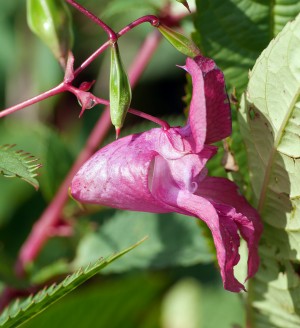
The nineteenth century saw the introduction of many ‘exotic’ or non native species.  Some of these introductions have proved to be invasive, for example the Himalayan balsam.  Invasions have also included animals. For example, muntjac, parakeets and grey squirrels.  More recently, there have been many sightings of wallabies. Their presence is thought to be due to escapees from wildlife parks, zoos and possibly private collections. It has been suggested that some were released during the WW2 as people were unable to look after them.  On the Isle of Man, there is a thriving population of red necked wallabies, which dates back to the 1960’s.  A recent survey (2023 & 2024) using thermal imaging and drones estimates the population to be around one thousand animals, possibly more.  The grassy and woodland habitats are not dissimilar to those in Tasmania, though the climate in the Isle of Man is somewhat cooler and wetter.  Here, there are no predators and they seem to have adapted well to the somewhat cooler conditions. They feed on heather, bracken, bilberries and grasses.  The local wildlife trust is concerned that the animals may be having a detrimental effect not only on the native vegetation but also the local fauna - such as ground nesting birds.  On the plus side, there are those who think their presence helps to support the local tourism industry. Beyond the Isle of Man, there have been many sightings of wallabies across the U.K, ranging from Cornwall to Scotland.  Sightings are more common in the South.  In some areas sightings of wallabies are no longer reported as the animals are ‘common place’. The Chilterns being a possible hot spot for sightings.  However, at present it seems that there is little evidence for self sustaining populations though this might change as our climate becomes milder.  There was a small population in the Peak District but it has since died out, possibly due to a harsh winter in 2010.  This population arose from the introduction of five wallabies by a local landowner, Henry Brocklehurst,  the  wallabies formed part of his private zoo at Swythamley. Featured image : thanks to Sandid on PIxabay  
Death on the moor

Death on the moor

by The blog at woodlands.co.uk, 21 January, 2026, 1 comments

Dartmoor is famous for is diverse landscapes, many of which which sit on top of one of the largest granite areas in the country.   There are wet heaths, dry heaths, oak woodlands and blanket bogs.  The oak woodlands contribute massively to biological diversity of the area as the trees are covered with rich flora of mosses, liverworts and lichens. The SW area often experiences strong winds and has acidic soils.  The biodiversity of the area explains why it has been designated as a Special Area of Conservation.  It is one of our National Parks, which attracts many thousands of visitors.  A ‘normal‘ feature of heath and moorland is swathes of heather.   Due to its tolerance of acidic conditions and relative infertility, heather is generally a prominent member of the local flora.  This was once true of the moorland communities on Dartmoor, but the situation is changing. The change is due to a grass - known as purple moor grass (Molinia caerulea). Molinia is native to the UK but is also found in Europe, Asia and parts of Africa. It grows well on acid soils with a pH between 3.5 and 5, and it too can tolerate poor soils. During of the last 50 years,  Molinia has spread extensively in Dartmoor, Exmoor, the Pennines, the Peak District, the Yorkshire Dales and  parts of Wales.  Sadly, areas of purple moor grass support little in terms of insect or indeed bird life.  Herbivores like sheep and cattle tend to avoid it preferring other sources of vegetation, such as heather.  Indeed its nutritional value is not great and actually falls as summer progresses.  The grass is relatively unaffected by fungal / bacterial disease.  It forms deep roots and tussocks, which help protect its buds. The cover of heather on Dartmoor has fallen substantially in recent times, and in places has been replaced by an expanse of purple moor grass.  The features that made Dartmoor special are being lost. Possible factors contributing to changes on the moor: The practice of burning the moorland to encourage fresh shoots for sheep, cows, livestock.  Fires destroys many species but the young shoots of Molinia are ‘protected’ to a degree within the tussocks, and the deep roots also help ensure survival. Nitrogen deposition may be another factor.   A range of nitrogen compounds from farming (fertilisers, animal waste), traffic emissions and industry are released into the atmosphere and are deposited in significant amounts (circa 29 kg per hectare / year). Changes to moorland drainage.  As peat dries, the purple moor grass seems to thrive. There are limited funds available to the National Park for maintenance / repair. The subsidies (termed Headage payments) paid to farmers for the number of animals that graze on the moor. The combined effect of the above means that the moorland ecosystem is struggling, losing its integrity and climate changes (e.g. hotter, drier summers) do not help.   Essentially, the moorland is dying. There are places where the natural vegetation / flora of heather, bilberry and mountain ash are to be found, which suggests that restoration might be possible. What can be done? Create dams and embankments to retain water so that areas become wetter, and plant clumps of the moss - Sphagnum, which is vital for peat formation.  The water / wetness would also help reduce the risk of fire. Plant trees, like those found in woodland areas of the moor, which once established would tend to shade out the purple moor grass. Reducing the grazing pressure on the moorlands. Further reading https://www.theguardian.com/environment/2025/jul/16/dartmoor-is-dying-how-the-uks-national-parks-turned-into-biodiversity-deserts https://www.theguardian.com/commentisfree/2025/jul/15/sheep-destroying-british-habitats-taxpayers-dartmoor-farming https://dartmoorpreservation.co.uk/is-dartmoor-dying/
Changing times?

Changing times?

by The blog at woodlands.co.uk, 15 January, 2026, 0 comments

Researchers from the Open University have studied how ancient woodland habitats have changed in recent times.  Of the 43 woodlands studied; some were near to urban areas, whereas others were sited in rural locations.  The change in the nature of these woodlands was ‘measured’ by comparing historical records, herbarium specimens and surveys of the woodlands with present day surveys and analysis.   The study was particularly interested in ‘indicator species’ (eg bluebells, yellow archangel) associated with ancient woodland. Ancient woodland indicators are generally slow to colonise, but may be ‘stress tolerant’ and can persist after woodland disturbance or indeed, tree removal.  The study looked at how they fared with the spread of non-native species, such as the Spanish Bluebell, Rhododendron ponticum, swamp stonecrop (Crassula helmsii), Buddleja davidii, and Japanese knotweed (Fallopia japonica). These can outcompete native species, leading to local extinctions.  Woodlands near urban areas might be expected to be affected by the spread of such plants from gardens, parks etc. Pollution, which degrades air quality and also affects nutrient availability.  This may be due to fertiliser run-off from agricultural land or particulates and heavy metals from roads / industry.  Rural woodlands are perhaps more likely to experience fertiliser run-off than urban ones, this can increase nitrate and phosphate levels in the soil.  However, the drainage of particulates and various pollutants from roads and motorways has recently been recognised as problematic. The research indicated that the presence of native species in both urban and rural areas was relatively unaffected over the last thirty years.  However, the number of non-native or alien species in urban woodlands has risen significantly, affecting their species make-up. Thus, the study identified a large number of alien species recorded in ancient woodlands near to urban settings but these are largely absent from rural sites.   Biotic homogenisation can occur as non-woodland and alien species start to move into our ancient woodlands, leading to changes in the native plant communities.  A significant  proportion of ancient woodland in England is near to urban sites.  Clearly, there is a need for improved and careful monitoring of ancient woodlands near urban areas. 

Next Page »