The beech tree
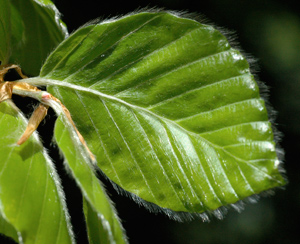
The beech has been referred to as the “Queen of British trees”. Beech woodlands contribute to the landscape, especially in Southern England. The tree grows well on free draining soils (like light loam, or those formed on chalk and limestone). The tree is well represented in areas such as the Cotswolds, The Chilterns and the Downs.
A mature tree can reach a height of some 40 metres, with a large, dense and domed canopy. In Spring, its leaves emerge from the cigar shaped buds and are edged with ‘silky hairs’. At first, they are a bright, lime green colour but darken as they mature. In winter, the leaves exhibit the phenomenon of marcescence, that is they wither and turn brown during the autumn but many are retained on the tree (or bush when used as hedging) for some months. The dense canopy favours the growth of species like Dog’s mercury, certain orchids and the red helleborine in the ground flora. Holly, white beam and Yew may also grow forming a sub-canopy. Beech also provides a home for rare species such as the ‘cheese snail’ (Helicodonta obvoluta) and rove beetles.
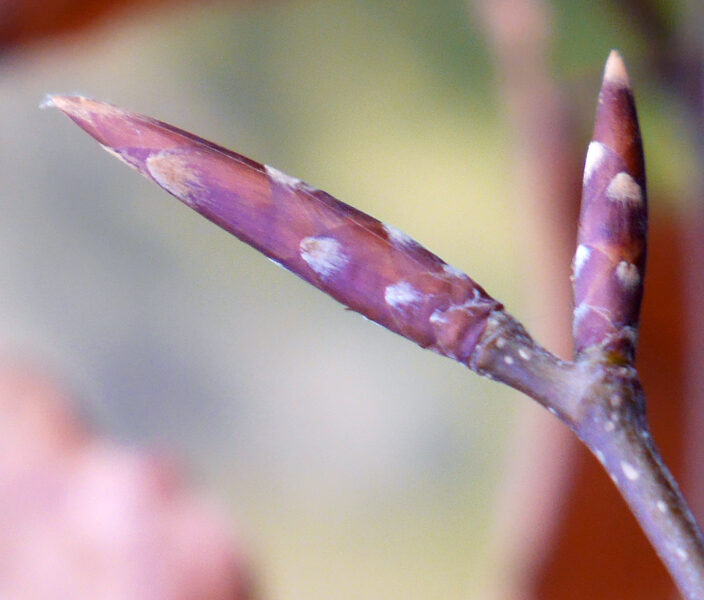
Beech Buds
When fertilised the flowers produce nuts, that is edible seeds called beech mast. The seeds are an important food source for many woodland animals, such as mice, voles, birds and squirrels. In the New Forest, pigs are allowed to feast on the nuts, especially in those years when the nuts are produced in copious quantities.
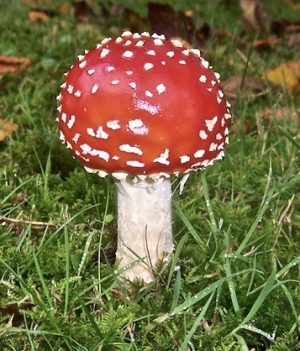 Beech trees are notable for the mycorrhizal associations that they form. Fungi that are often associated with these symbioses include
- Fly agaric
- Beechwood sickener
- Porcelain fungus
- False truffle
- Beech milksop
- Rooting bolete
The fungal threads (hyphae) extend out from the roots into the soil, help access to minerals (such as phosphate and nitrate) and water. In return, the fungi receive a supply of carbohydrate. It has been suggested that these fungi may connect one tree to others in the wood, forming what has been termed the wood wide web.
The benefits of mycorrhizal associations include
- Nutrient uptake
- Greater drought resilience
- Defence against pathogens
- Improvements in soil ‘structure’
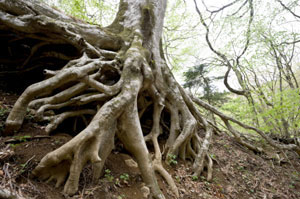 Despite these fungal associations, beech trees are susceptible to drought. They have a relatively shallow rooting system. After the drought in the summer of 1976, many beech trees died. It is perhaps not surprising that people are concerned about the ‘health’ of beech trees in light of climate change. This is bringing warmer winters, periods of droughts and extreme weather, all of which can reduce growth. Indeed, a study by researchers at the University of Liverpool looked at beech growth as measured by analysis of annual growth rings and masting data [over more than forty years], found that growth was indeed reduced (by circa 28%). Resources were directed towards reproduction {seed production / masting} rather than growth.
This shift in weather patterns may see the range of beech trees moving northwards over a period of time.
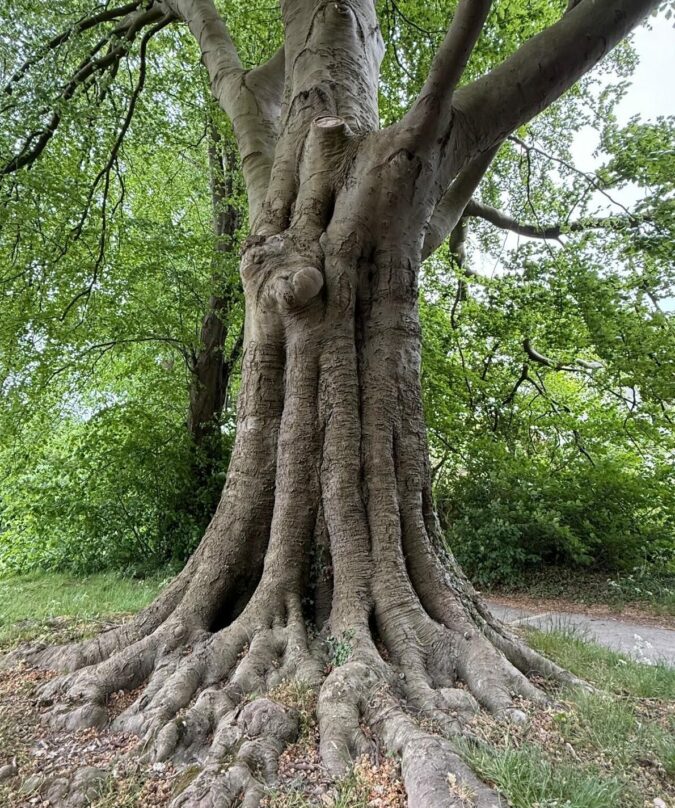 Beech trees may persist for many years so that trees reach ‘veteran status’, offering habitats such as hollows, cavities and dead wood. These offer homes for birds, beetles and various wood boring insects.
Conservation of beech woodland focuses on
- Promoting natural regeneration
- Retaining / protecting veteran trees
- Reducing the grazing pressure / damage of deer and grey squirrels.
Leave a comment