The importance of hedgerows.
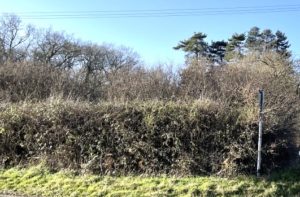
Woodlands and hedgerows are important features of our countryside. Just as woodlands vary across the country, so do hedgerows. A hedgerow usually includes a number of tree and shrub species, but may also include walls, banks, fencing and gates. They may have been planted recently or may be ancient, dating back to the time of the enclosures. It has been estimated that there are over half a million kilometres of hedgerow across England, and the majority are actively managed. In a managed hedgerow, the trees and shrubs have their form and shape altered.
The trees and shrubs that form the basics of a hedgerow include hawthorn, hazel, oak, holly, blackthorn, ash and yew. These may form the main body of the hedge but there are many other plants that contribute to its structure, such as bramble, honeysuckle and ivy, many wild flowers plus mosses, bryophytes, fungi and lichens. [In urban settings, species like privet, yew, box and holly may form the basis of the hedge / hedgerow.]
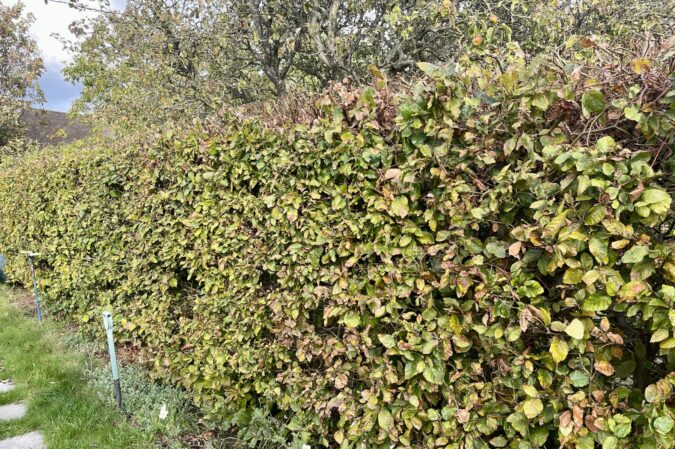
Beech hedge in garden
Consequently, hedges come in a variety of shapes and sizes and can include many different species. Rural hedges are often a mix of shrub and tree species, such as hawthorn, blackthorn, hazel, ash and oak. They were / are often planted to form boundaries around fields in managed agricultural landscapes. Historically, many hedgerows were planted to keep livestock, such as sheep, cattle, pigs, chickens in specific areas. Other hedgerows were planted to define boundaries as in ‘who owned which bit of land’. Hedgerows often surround fields. The word ‘field’ comes from Old English ‘feld’, meaning 'an area of felled trees or open country'.
Hedgerows are important as they offer habitats / niches for a variety of plants and animals. Not only do they provide ‘food and lodgings’ for many animals, they also act as biological corridors, supporting plant and animal connectivity across our landscape. The flowers, fruits, berries and nuts are an important source of food for many invertebrates, birds and mammals.
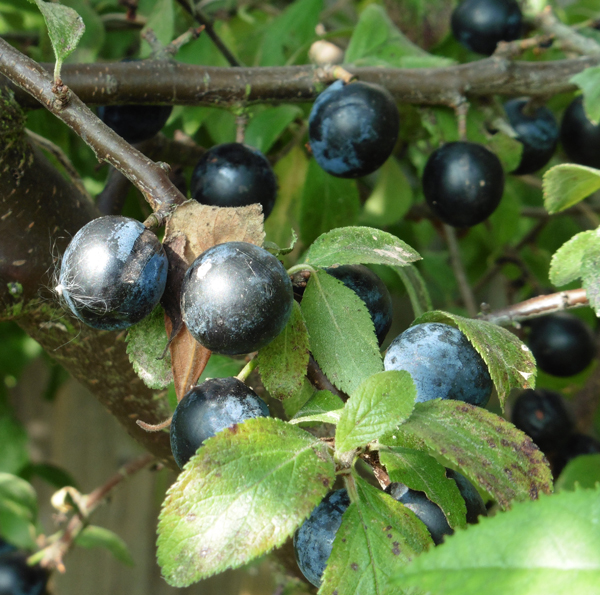
Sloes on Blackthorn
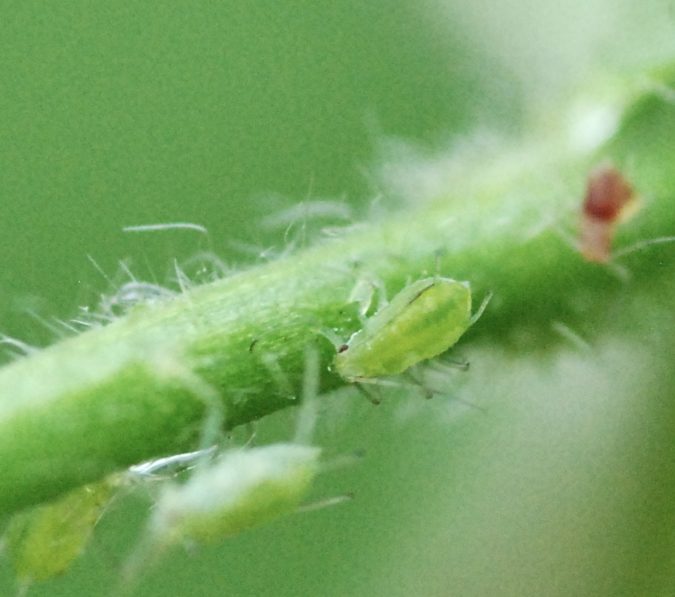
Animals such the harvest mouse, the hedgehog and the vole may be found nesting in a hedgerow, and it offers food and / or homes for blue tits, and yellowhammers. They also support important insect pollinators, butterflies, hover flies, moths, bumblebees and bees. These insects may help with the pollination of crops in adjacent fields planted with oilseed rape, legumes or fruit trees. Other insects, such as ladybirds can help with crop yields by predating upon crop pests, such as green fly and blackfly (these aphids may spread viral diseases on crops such as sugar beet).
Sadly, hedgerows declined significantly in the last century, due mainly to intensification of agriculture. Fortunately, the destruction / loss has slowed since the 1990’s, though neglect and damage are significant threats even today. Good management may involve planting of trees or shrubs to fill gaps, coppicing, laying a hedge or ‘considered’ cutting back. However, there is no standardisation of the management of hedgerows and they can be harmed by excessive cutting back or flailing. 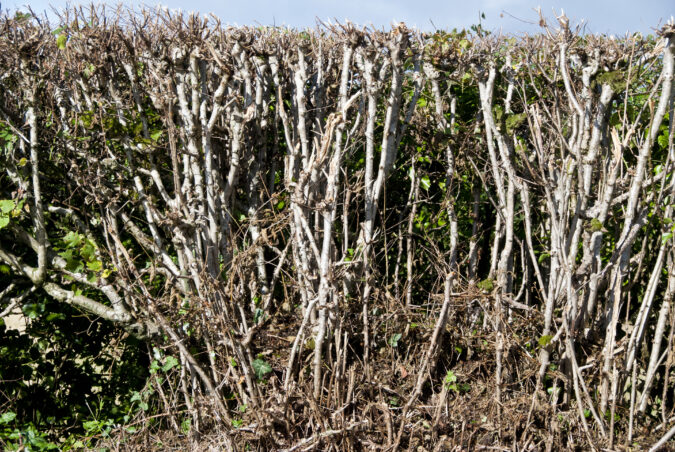 The effects of heavy pruning and cutting back during the nesting season can be disastrous. Whilst mechanical flailing of a hedgerow is fast and effective, the regrowth is generally slower and its effects can be particularly bad for birds. [They may abandon their nests and / or their eggs or chicks may be destroyed.] The pruning / flailing may also affect insect populations of the hedgerow (and / or other other food sources) on which the birds and other animals depend. Another threat can be the use of agricultural chemicals [pesticides and herbicides] next to the hedgerow.
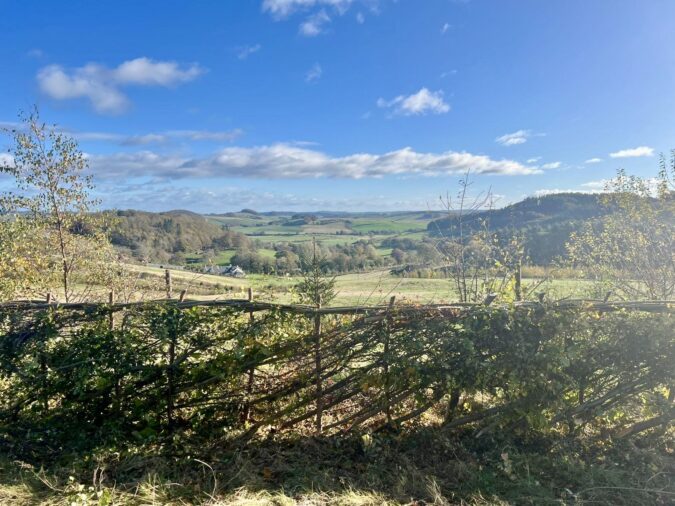
A managed hedge
For further and detailed information on hedgerows, visit : https://hedgelink.org.uk/guidance/importance-of-hedgerows/
Comments are closed for this post.